SEC responsible for 46% of all crypto lawsuits in 2022; Unregistered offerings rack up most cases
- Throughout 2022, a total of 41 crypto lawsuits were filed, and the Securities and Exchange Commission was responsible for 19 of them.
- Between 2018 and 2022, Unregistered securities offerings emerged as the leading type of lawsuit.
- On Thursday, the SEC fined crypto exchange Kraken $30 million and shut down their staking service for selling unregistered services.

The state of regulations in the crypto market remains undefined, but the growing concerns of losses arising from this sector are evident in the legal proceedings. The rising lawsuits in the crypto market are proof that the authorities are only going to become harsher going forward.
Crypto lawsuits take a hike
According to a research study by HedgewithCrypto, the year 2022 noted a 46% increase in the total number of cryptocurrency matters-related lawsuits. With about 41 lawsuits filed throughout the 12 months, the total figure rose by seven compared to 2020's 34 cases.
Out of these 41 lawsuits, 19 were filed by the Securities and Exchange Commission (SEC), while 22 came in the form of class action securities lawsuits. The SEC has been relentless in its pursuit of the crypto market, and the same was noted back in 2020 as well when 64% of all suits that year were filed by the commission. Although the figure was reduced in 2022, SEC-filed lawsuits still represented 46% of the 41 suits.
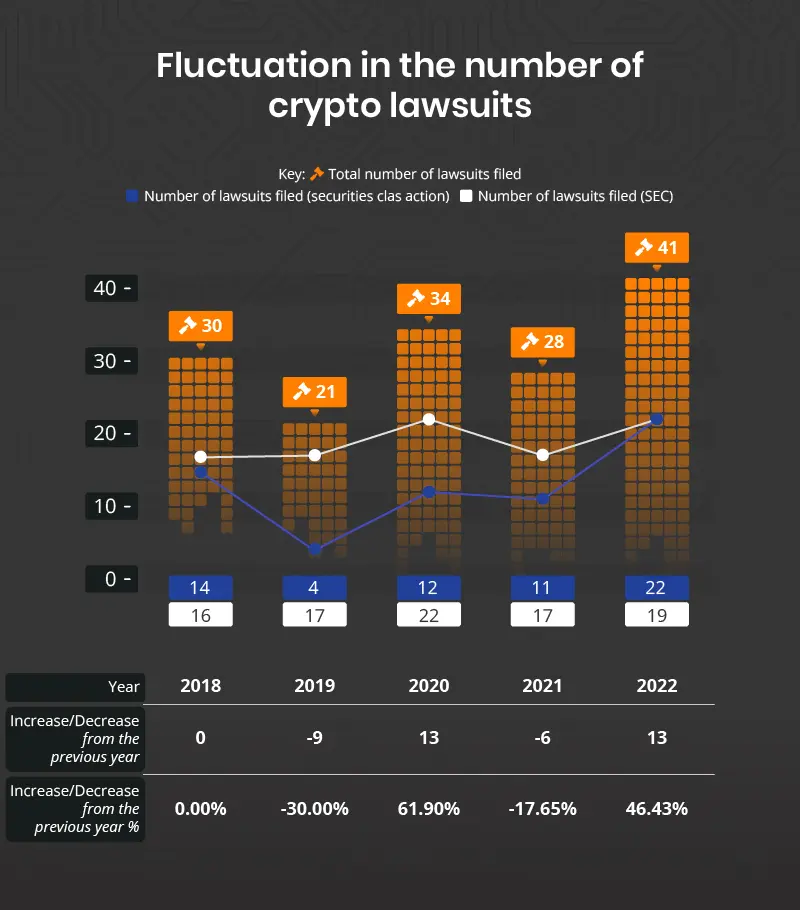
Crypto lawsuit growth from 2018 to 2022
While many causes have been attributed to these lawsuit filings, the leading cause has been unregistered offerings of crypto assets or services. Since 2018, about 53 out of the total 153 lawsuits filed have fallen under this category.
Other leading causes included Initial Coin Offering (ICO) fraud, defrauding investors as well as non-disclosure of payment for crypto promotion.
Nevertheless, unregistered offerings racked up about 40% of all lawsuits, and the SEC is consistently pursuing it still. The same was observed on Thursday when the SEC charged the crypto exchange company Kraken with selling unregistered crypto staking service programs.
SEC continues its attack
According to the SEC, Kraken was found engaging in unlawful conduct as the company was selling its staking services under the claim of providing an annual return of 20%.
Kraken settled the charges with the commission by agreeing to pay a fine of $30 million in disgorgement, prejudgment interest, and civil penalties. The company also shut down the selling of its crypto-staking services.
Rumors about the SEC banning staking in the United States have been doing rounds, but the Kraken takedown was the first incident of the same. Coinbase CEO Brian Armstrong, who has been at heads with the SEC, tweeted on Thursday in regards to the same, saying,
"We're hearing rumors that the SEC would like to get rid of crypto staking in the U.S. for retail customers. I hope that's not the case as I believe it would be a terrible path for the U.S. if that was allowed to happen…Regulation by enforcement doesn't work. It encourages companies to operate offshore, which is what happened with FTX."
Since staking is one of the biggest crypto services in the market right now, banning it would bear a severe impact.
2/ Staking is a really important innovation in crypto. It allows users to participate directly in running open crypto networks. Staking brings many positive improvements to the space, including scalability, increased security, and reduced carbon footprints.
— Brian Armstrong (@brian_armstrong) February 8, 2023
Ethereum would end up taking most of the heat as the world's second-biggest cryptocurrency network just recently switched to the Proof of Stake (PoS) consensus method from Proof of Work. Ethereum is also soon set to enable staked ETH withdrawals, which could cause significant harm to the network if the rumors cause panic in the market.
Author

Aaryamann Shrivastava
FXStreet
Aaryamann Shrivastava is a Cryptocurrency journalist and market analyst with over 1,000 articles under his name. Graduated with an Honours in Journalism, he has been part of the crypto industry for more than a year now.