Retail investors pull back from crypto and rotate into equities
- Retail rotates $3 billion from spot-Bitcoin ETFs into equity markets.
- Flows are directed toward artificial intelligence and mining stocks.
- The October crash erased $19 billion, triggering the exodus.

The October crypto crash left a mark that retail investors have not forgotten. A Wintermute report drawing on JPMorgan Chase data shows a clear rotation away from digital assets and toward equities, with the numbers backing that trend at every level. Bitcoin once traded near $126,000. Today it hovers around $66,000, cut in half by a combination of geopolitical pressure and fading retail appetite for risk.

The October selloff was brutal in its speed. Over $19 billion in positions disappeared, with $7 billion unwinding in a single hour. Events of that magnitude change behavior. Investors who watched portfolios shrink in real time tend to look for steadier ground, and right now that ground sits in equity and gold ETFs, both of which have absorbed billions in fresh inflows over the past three months.
The evidence from ETF flows makes the rotation hard to argue against. Spot Bitcoin ETFs have shed $3 billion in net outflows over the past three months, a number that captures not just panic selling but a deliberate reallocation. Equity ETFs absorbed much of that capital, and gold ETFs picked up the rest. The flight to gold fits the moment — oil prices surged after the latest Middle East escalation, inflation expectations ticked up, and traders moved toward assets with centuries of history as a store of value.
Ethereum bleeds outflows while stablecoins absorb billions
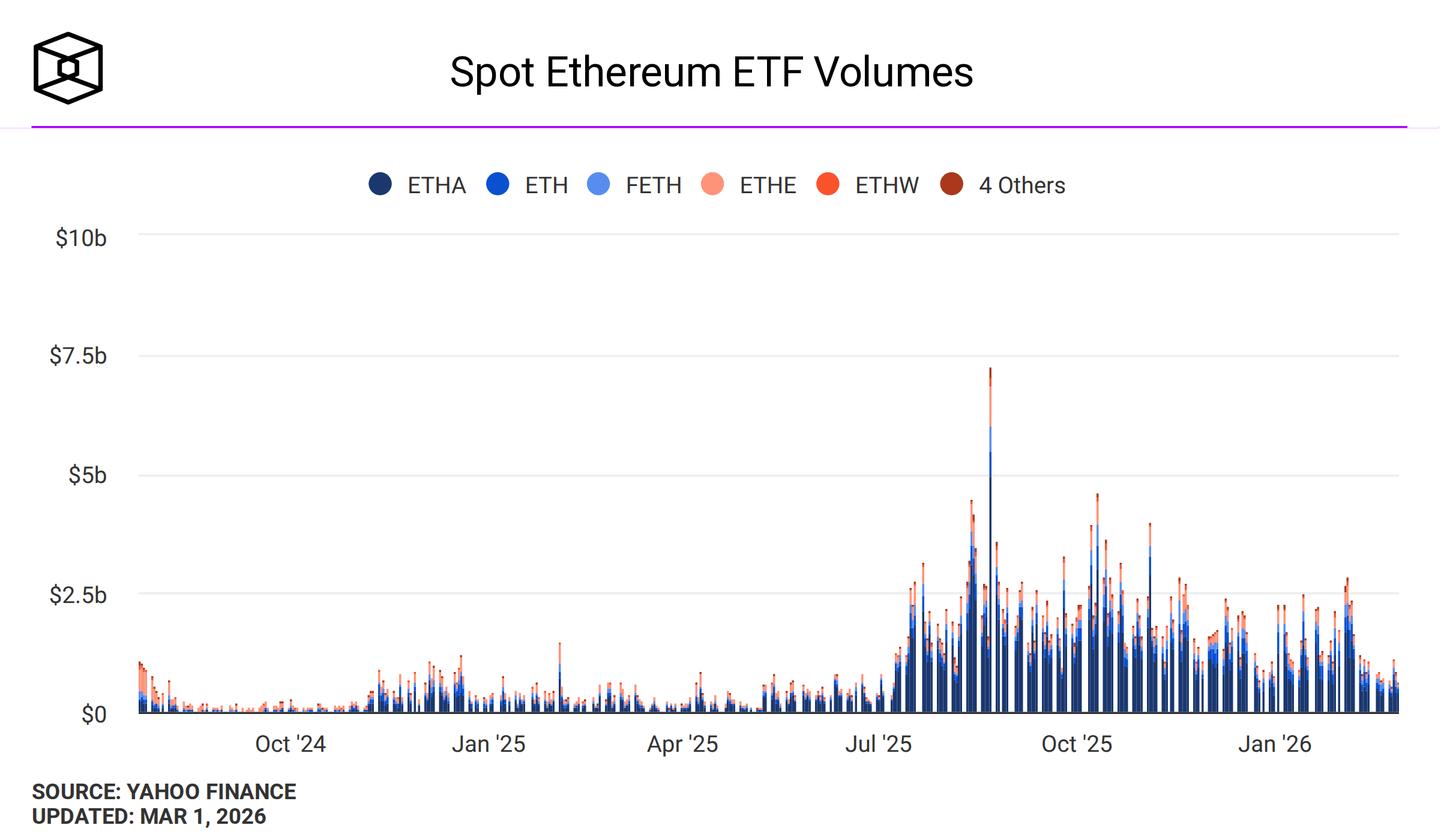
Spot Ethereum ETFs posted outflows for two consecutive weeks, reinforcing the idea that appetite for altcoin exposure has cooled faster than for Bitcoin itself.
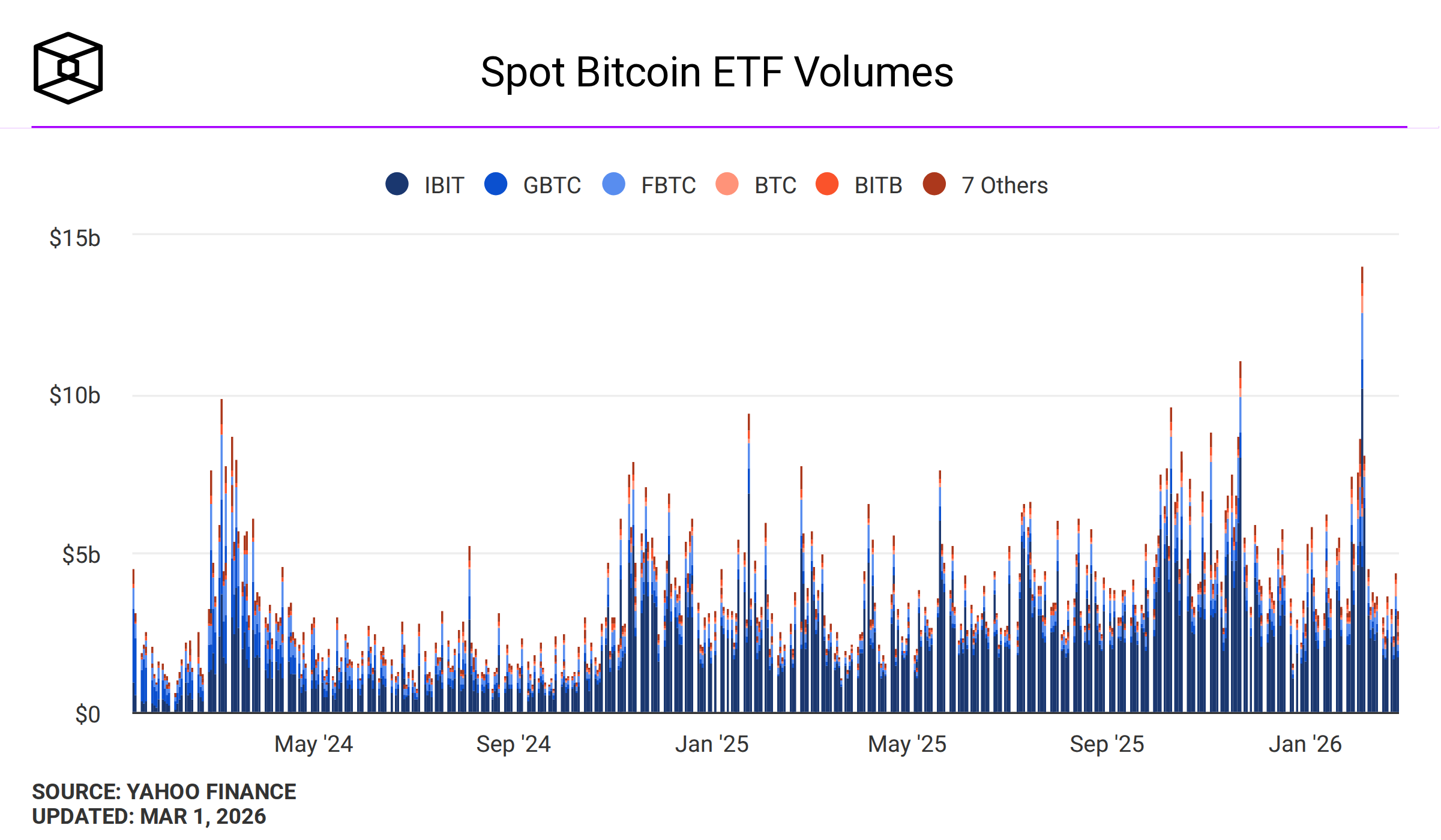
Bitcoin ETFs, by contrast, managed $446 million in net inflows for the most recent week, suggesting that a subset of institutional buyers still views the current price level as an entry point worth acting on.
Stablecoins tell a different story entirely. USDT, USDC, and algorithmic options like USDe pulled in $45.6 billion in net inflows over the last 90 days. Investors are not leaving crypto completely — many are parking capital in dollar-pegged assets while they wait for clearer signals on direction. Stablecoins give traders a way to stay inside the infrastructure without carrying price risk, and the inflow data confirms that strategy has seen wide adoption.
On the institutional side, the hedging activity stands out. Bitcoin ETF holders and corporate treasuries have been buying put options to protect against a drop below $60,000. Buying downside protection at that level signals genuine concern about a sharper correction, not just routine risk management. When the buyers of those contracts include entities with large long exposure, it means they see a scenario where prices fall further and they want a financial cushion in place before it happens.
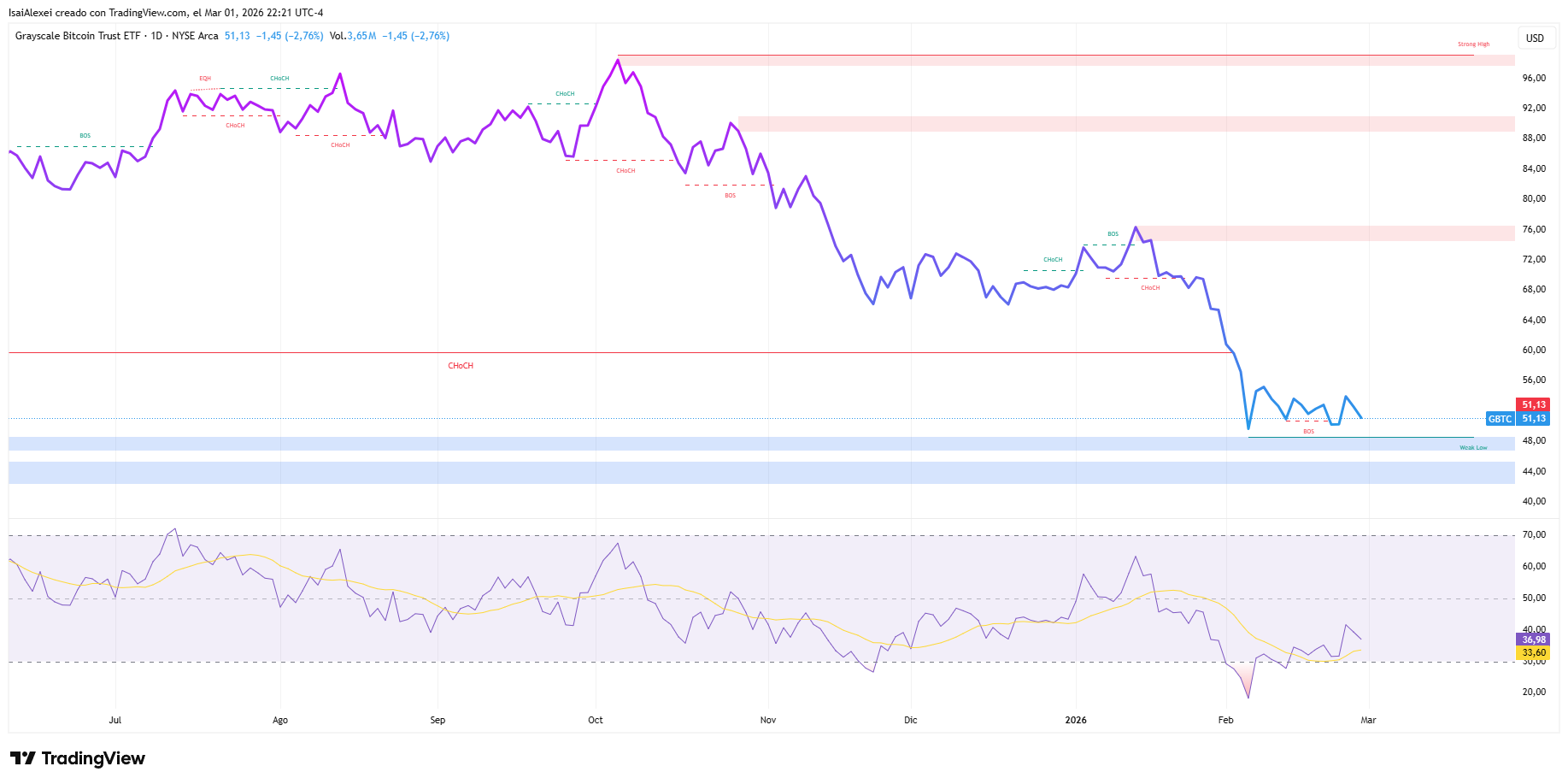
The Grayscale Bitcoin Trust offers one more data point worth reading carefully. Its RSI-14 sits at 37.06, pushing toward oversold territory, while its 20-day moving average at $30.67 sits well below the 50-day at $36.08. The technical picture reinforces the broader narrative: selling pressure has outpaced buying for long enough to leave the asset in stretched conditions.
Retail investors did not abandon crypto in a single dramatic moment. The rotation happened gradually, driven by a crash that hit fast, a Bitcoin price that dropped by half, and alternatives — equities, gold, stablecoins — that offered either stability or optionality without the same downside exposure. The capital flow data confirms the shift is real, measured, and still in progress.
Author

Isai Alexei
Independent Analyst
I am Isai Alexei. I work as a journalist and financial analyst covering cryptocurrency markets and traditional securities. I have spent ten years analyzing digital assets, trading activity, and market structure.