Miners, gaps and a giant short: Five things to know for Bitcoin price now

A basket of bearish signals suggests further problems for BTC/USD, but a higher CME futures gap is among the causes for hope this week.
Bitcoin (BTC) faces a challenging week as $9,000 support fades and uncertainty increases after the halving — what should you look out for in the coming days?
Cointelegraph’s weekly summary takes a look at five factors likely to influence Bitcoin’s price action in the short term.
Miner outflows fuel BTC price pressure
The weekend’s trading saw fresh downside for BTC/USD as bears took the market below $9,000.
This followed a tough few days last week, during which miner sell-offs suddenly increased dramatically.
As Cointelegraph reported, miners were selling more than they earned, despite their incomes already being 50% lower due to the halving two weeks ago.
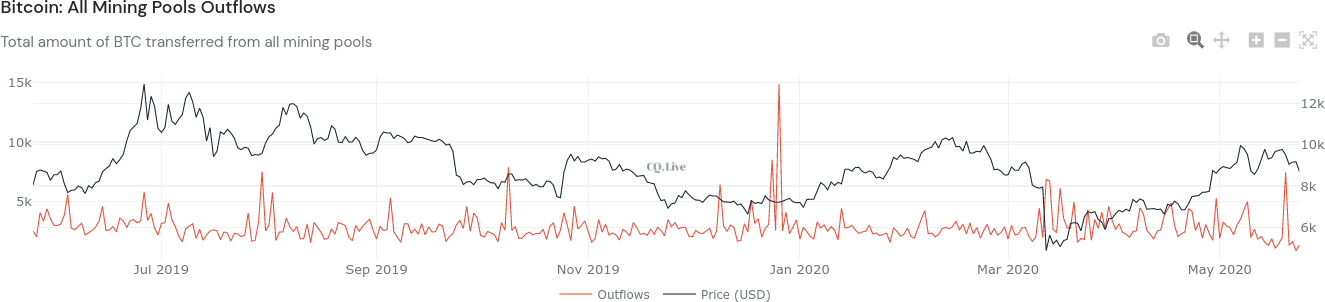
Bitcoin mining pool outflows 1-year chart. Source: CryptoQuant
Should that practice continue, it will pile further pressure on the price, which has already seen rejection closer to $10,000.
Support levels lower in the $8,000 range may be Bitcoin’s only firm hope of a bounceback if losses continue. The 200-day moving average currently sits at almost exactly $8,000.
New futures gap above $9,000
Volatility since Friday opened up a modest gap in CME Group’s Bitcoin futures markets. Formed when one week’s trading ends at a different point to where the next one begins, these “gaps” have a tendency to get filled by markets later on.
This time, the gap lies between around $9,065 and $9,180. Bitcoin would need to reclaim the $9,000 mark to fill it, but such behavior is common enough to remain possible even under downward pressure.
Sometimes, BTC/USD rises or falls to fill a gap, before immediately reverting to nearer its previous position.
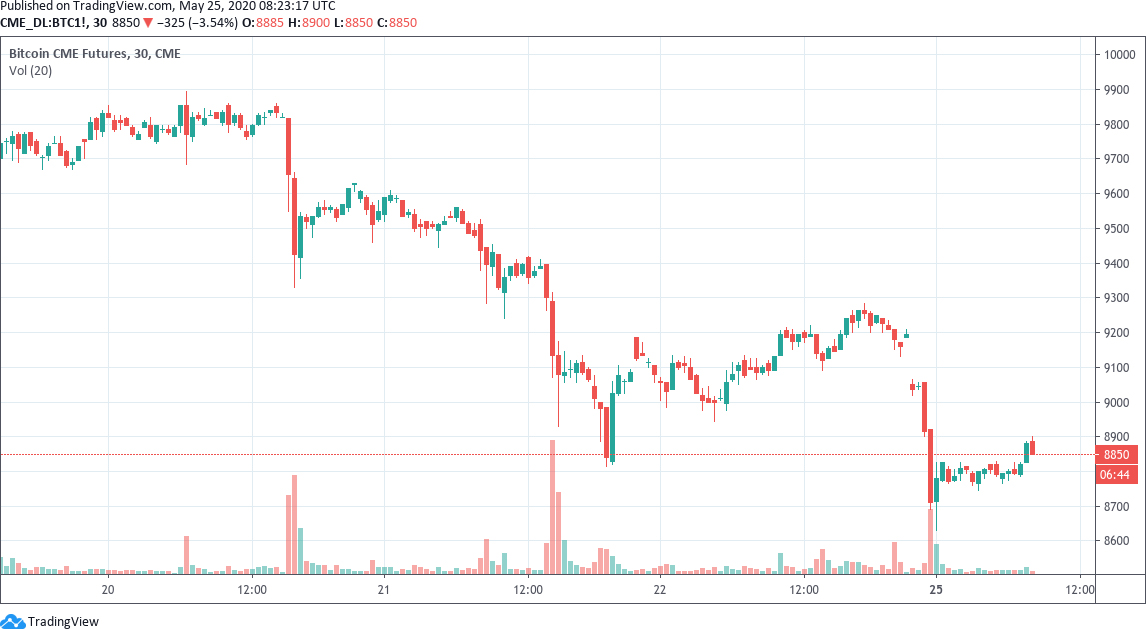
Bitcoin futures chart showing the latest gap. Source: TradingView
Difficulty adjustments could mimic 2018
Bitcoin’s fundamentals nonetheless join with mining data to produce a gloomier prognosis for market sentiment.
Network difficulty, a measure of the effort required to mine on the Bitcoin blockchain, is currently on course to drop 6.3% at its next adjustment in ten days’ time.
The previous adjustment four days ago was 6% — a downward shift next time would produce the first back-to-back difficulty lowering since Bitcoin’s price lows in December 2018.
Far from a bad sign, reducing difficulty is one of Bitcoin’s most important self-stabilization features. By evening out the playing field for miners, more activity is incentivized, which in turn boosts security and profitability.
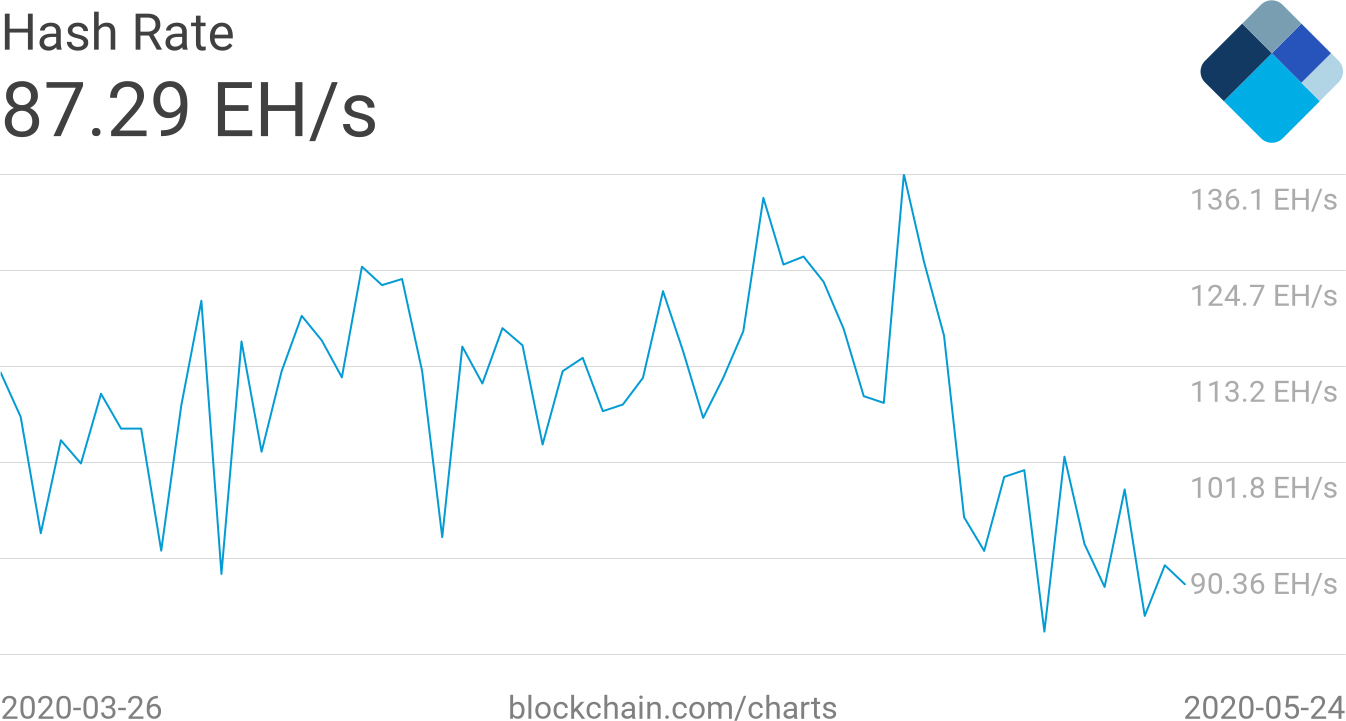
Bitcoin 7-day average hash rate 2-month chart. Source: Blockchain
Meanwhile, network hash rate — a rough interpretation of the computing power dedicated to Bitcoin mining — is stabilizing at around 95 quintillion hashes per second, down from all-time highs of near 140 quintillion.
Stocks climb under the shadow of major short
On traditional markets, meanwhile, fresh bearish signals are also afoot.
Hitting the headlines this week, in particular, is a worrying short position on the S&P 500, which is currently closing in on its own 200-day moving average from below.
“This level is certainly worth watching,” James McCormick, a senior strategist at NatWest Markets told Bloomberg.
McCormick was referencing an in-house signal which is now at its “most bearish” since 2016.
Overall, markets were trending up on Monday, with European markets following U.S. futures behavior into the open. As Cointelegraph noted, Bitcoin has been increasingly oblivious to mainstream market activity in recent weeks, a process commonly referred to as “decoupling.”
Fear and Greed gets cold feet again
One soothing outcome of the past week’s bearish trend has been at least a softening of the Crypto Fear & Greed Index.
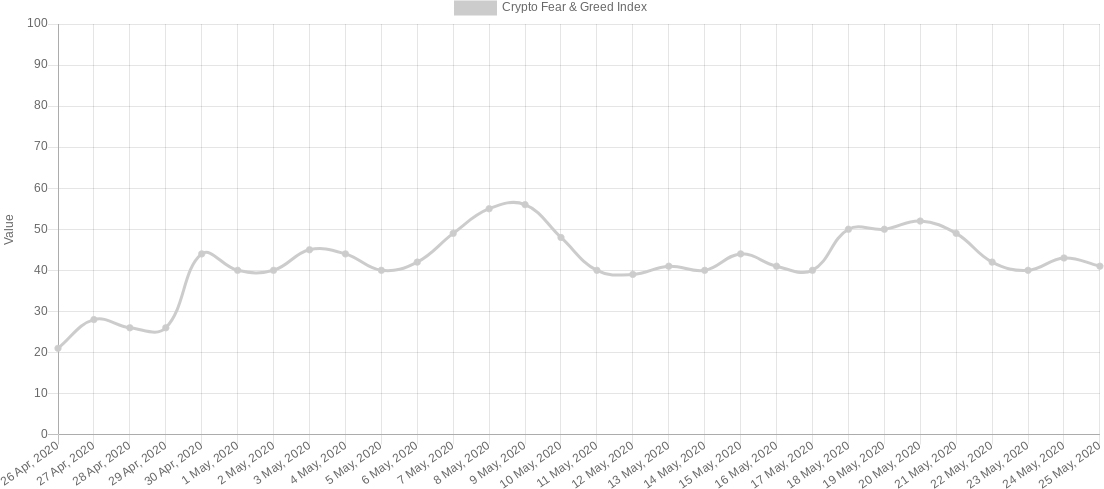
Crypto Fear & Greed Index 1-month chart. Source: Alternative.me
Designed to measure the rationality of market sentiment, the 1-100 reading sounds the alarm — either “greed” or “extreme greed” — when readings are near 60 or higher.
On Monday, the index was down at 41, a “fear” reading, having been as high as 56 in May.
Author

Cointelegraph Team
Cointelegraph
We are privileged enough to work with the best and brightest in Bitcoin.