Cardano price is hot, but data shows pro investors haven't warmed up yet

ADA has gained 57% in the past 3 weeks but derivatives data shows pro investors aren’t bullish yet.
Cardano (ADA) has been in the spotlight lately and this is partially because of its early 2021 price performance and the fact that its huge fan base has been anxiously awaiting the launch of the network's smart contract capability in the upcoming Alonzo upgrade.
While the rise of DeFi took place and the total value locked in decentralized finance applications soared above $76 billion, Cardano investors have been waiting nearly four years to the project to deliver on all its promises.
Traders are now trying to determine whether the 50% rally since July 21 was backed by positive expectations or fundamentals. The movement could have been a "return to the mean," signaling that previous bearish trades were closed after two month negative performance.
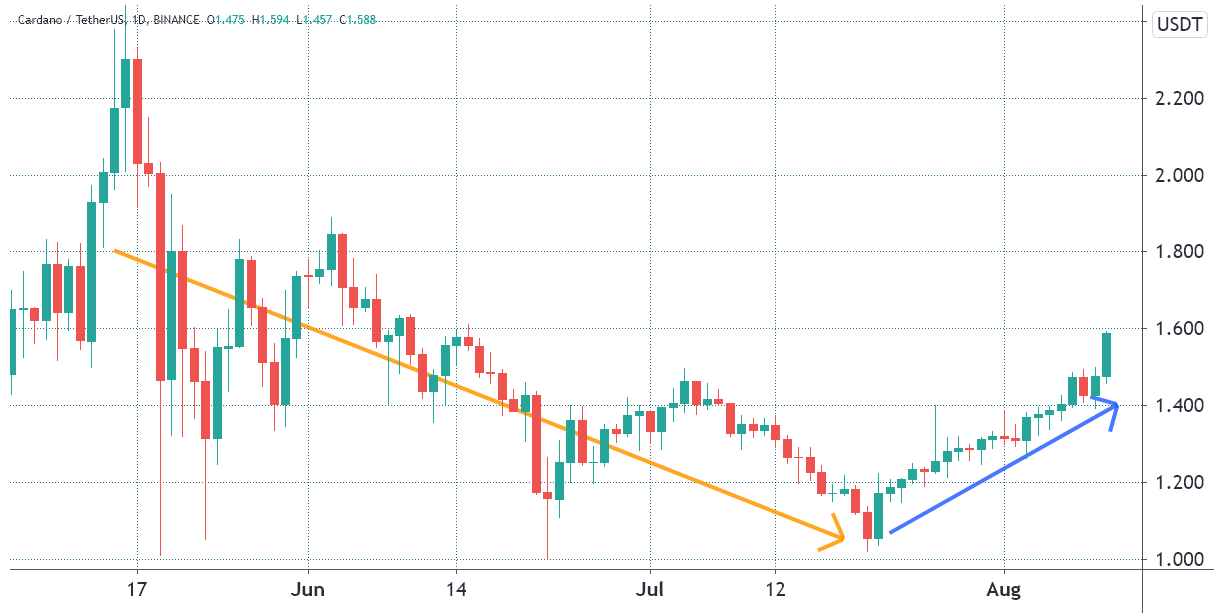
ADA/USDT. Source: TradingView
Cardano has been performing negatively partially because of the failed estimates from Cardano founder, Charles Hoskinson, who estimated that the network would have "hundreds of assets," along with "thousands of DApps" by July.
Hoskinson did defend himself on YouTube by saying that more than $10 million in nonfungible tokens (NFTs) have been sold through the network but this pales in comparison to his previous estimates.
On July 14, IOHK, the blockchain development team behind Cardano, migrated the Alonzo testnet to an intermediary stage that allows developers, validators, and stake pool operators. And on July 16, the Cardano-based Spores Network, an NFT and DeFi marketplace project, raised $2.3 million.
Despite these bullish developments, veteran technical analyst Peter Brandt said that Cardano's price chart formed a classical "Head and Shoulders" pattern that could lead to a 60% or higher crash.
Futures open interest is growing, but what about investor optimism?
Let's take a look at ADA's derivatives data to cross-check how professional traders are dealing with this duality.
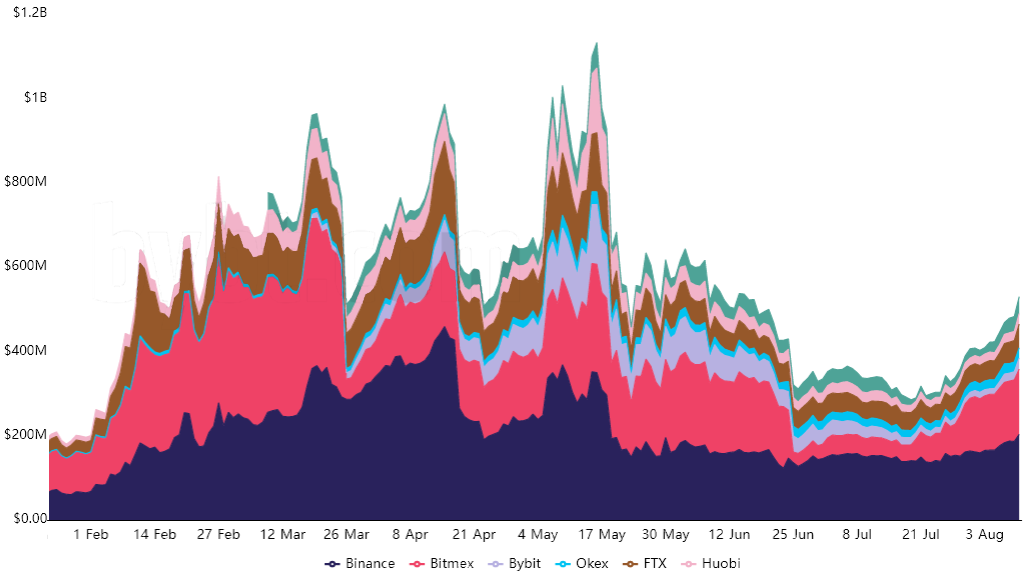
ADA futures aggregate open interest. Source: Bybt
After peaking at $1.13 billion on May 16, the aggregate open interest on ADA futures contracts plunged to a $285 million low on July 19. Still, traders' interest in the altcoin appears to be rapidly increasing because the indicator currently stands at $530 million.
Longs (buyers) and shorts (sellers) are matched at all times, even though their leverage may vary, so viewing the funding rate is a better way of determining how bullish or bearish those investors are.
Derivatives exchanges will typically charge the side demanding excessive leverage every 8-hour, and this fee is paid to the opposing side. Neutral markets tend to display a 0% to 0.03% positive funding rate, which is equivalent to 0.6% per week and indicates longs are the ones paying it.
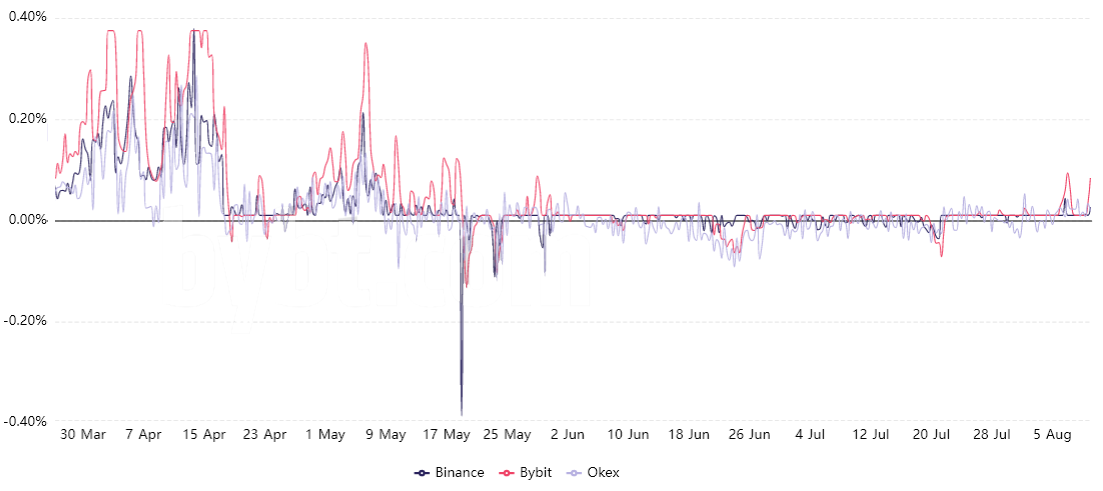
ADA USD / USDT margined futures 8-hour funding rate. Source: Bybt
Ever since the May 19 crash, Cardano's funding rate has been ranging from zero to slightly negative, indicating that shorts are the ones demanding more leverage. Nevertheless, on Aug. 7, there were early signs of a trend inversion, but it is not yet confirmed.
Professional traders are slightly bearish
It is also useful to confirm that the quarterly futures contracts premium reflects a trend similar to the one seen in perpetual contracts because these fixed-date instruments do not have a funding rate adjustment. Therefore eventual demand imbalances are reflected by a price difference to the regular spot markets.
A negative premium is a bearish situation, known as backwardation, and healthy markets should display a 0.2% to 1% premium.
Retail traders usually avoid these instruments to avoid the hassle of calculating the futures premium or having to manually roll over positions nearing expiry.
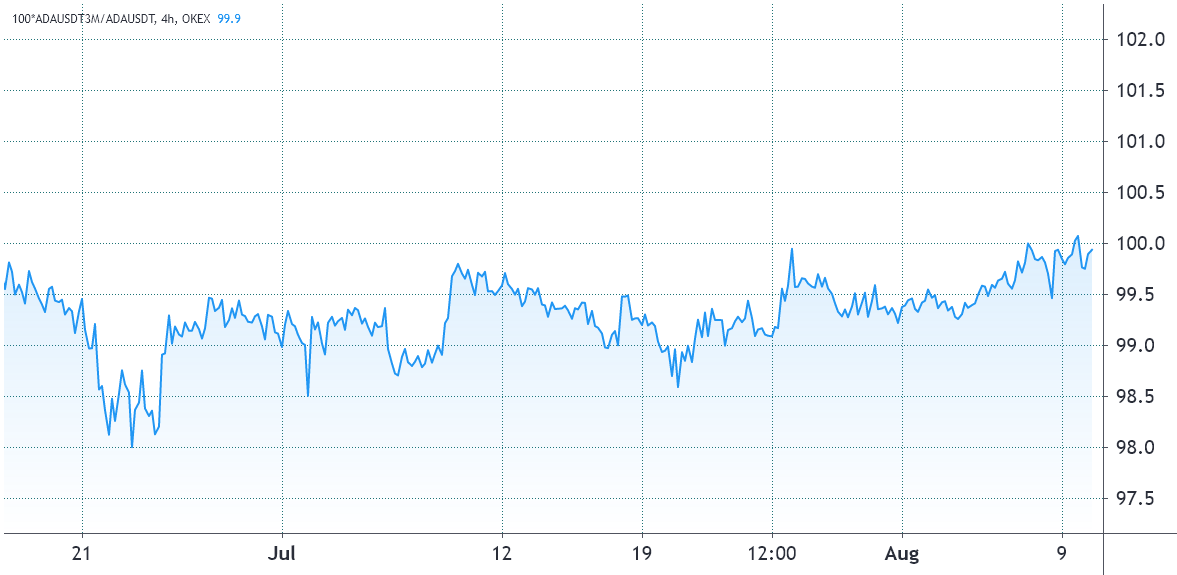
OKEx Sept. ADA/USDT futures premium to the regular spot market. Source: TradingView
As shown above, the discount on futures contracts that have been ongoing since May 20 started to vanish. Although far from a neutral-to-bullish scenario, it reveals a demand increase from longs.
Consequently, derivatives indicators show that investors are not yet bought on Cardano's promises to deliver decentralized applications and tokens. This might be a reaction to the over-extended rally of early-2021 or simply a lack of trust with the continued delays in development.
Author

Cointelegraph Team
Cointelegraph
We are privileged enough to work with the best and brightest in Bitcoin.