BTC miners dump over 2,800 BTC in 24 hours as Bitcoin price dips below $26,000
- Bitcoin price has failed to recover from the more than 11% crash, resulting in the cryptocurrency trading at $25,899.
- Bitcoin mining difficulty is at its all-time high, which is a good sign for the network but not for the miners.
- To adjust the losses borne from BTC crashing, miners are shedding from their reserve, selling $72 million worth of BTC in a day.

Bitcoin price crash brought losses to everyone - investors and traders and did not even spare miners. The people who have been validating the blocks on the network bore the brunt of the market as they faced unprecedented losses, forcing them to move to sell for a long time.
Bitcoin price crash causes distress to miners
Bitcoin price had been hovering around $30,000 before it crashed this month, and at the time of writing, the cryptocurrency could be seen under the $26,000 mark. The biggest cryptocurrency in the world has already failed all its attempts to chart a recovery and is presently declining further below the lows of the August crash.
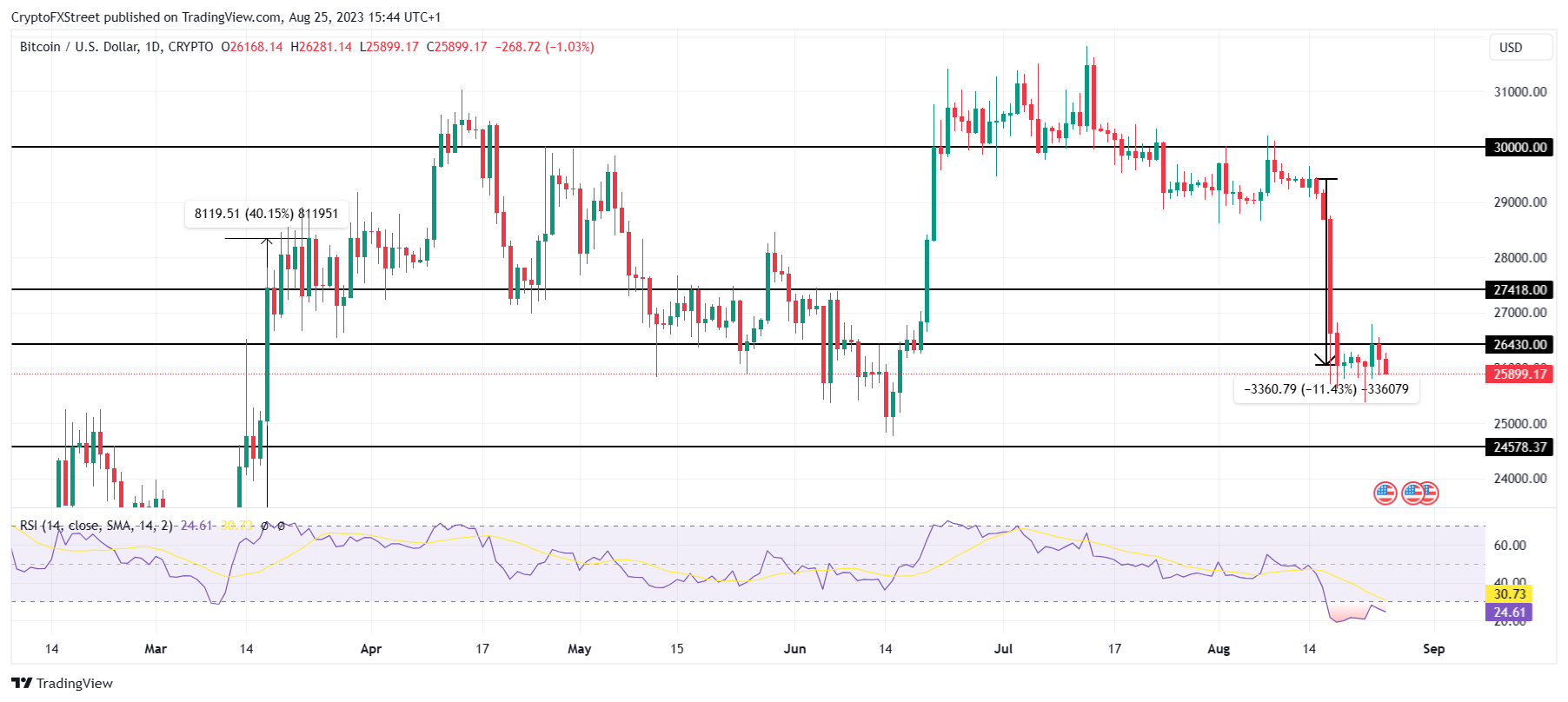
BTC/USD 1-day chart
Following the crash, the Bitcoin mining difficulty hit an all-time high, which, while a good thing for the network, is actually concerning for the miners. An increase in mining difficulty is usually a sign of growing competition as more miners join the network in a bid to make profits. This bolsters the security of the network, keeping it safe from a 51% attack (an attack where one miner(s) controls 51% of the blockchain validation, killing decentralization).
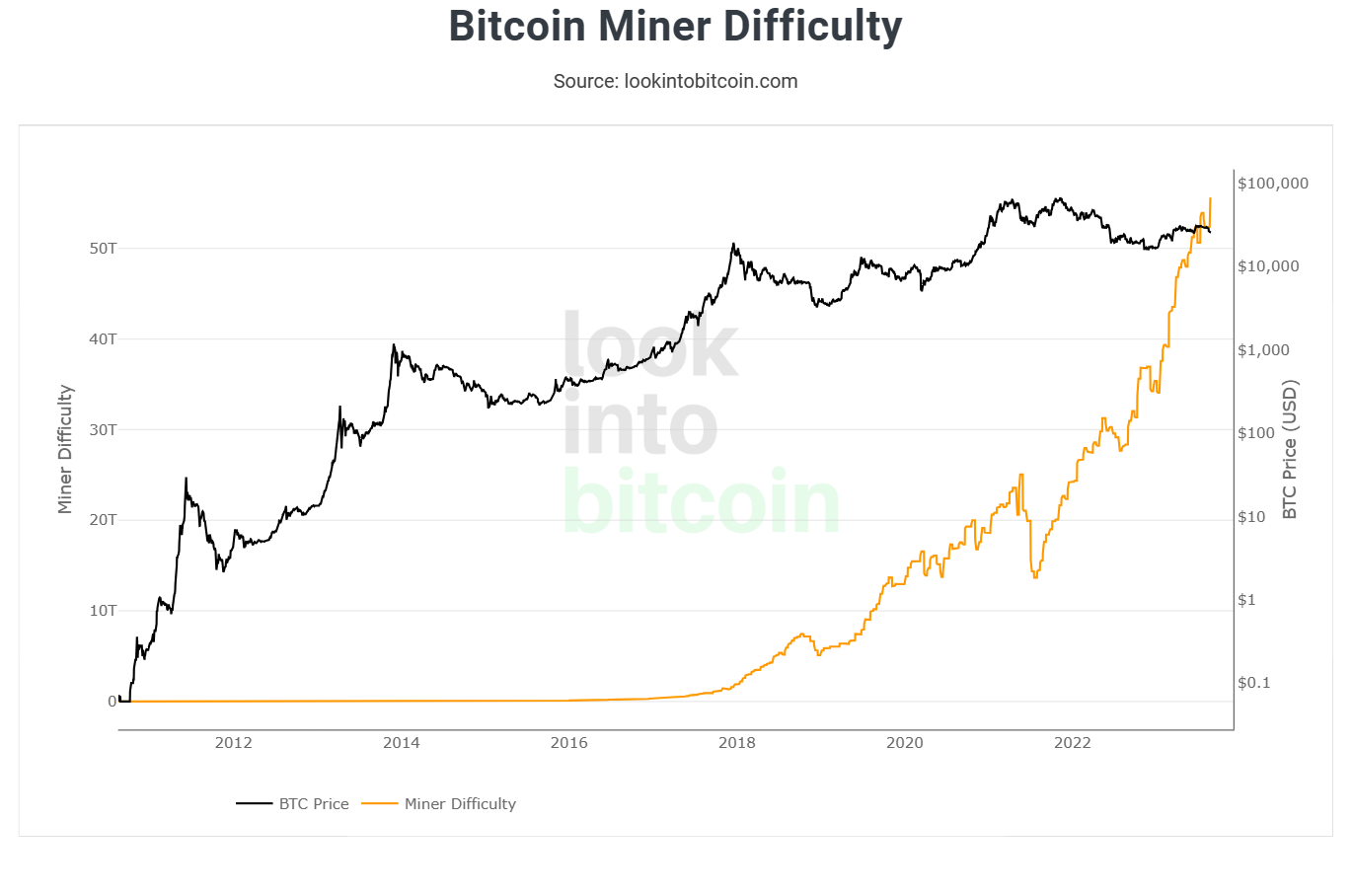
Bitcoin mining difficulty
This increase in competition, combined with an increase in block validation difficulty as well as the low price of BTC, thanks to the recent crash, dropped a bomb of losses on the miners. Consequently, these miners had to sell the BTC they held in their reserves. The miner reserve currently holds about 1.843 million BTC, which 24 hours ago was around 1.846 million BTC.
In the span of a day, Bitcoin miners sold about 2,803 BTC worth approximately $72.8 million, the highest to cover the losses they have been experiencing. Since operation costs (costs amounting to constantly running mining rigs) are consistently increasing, the miners are forced to sell their holdings in order to pay their bills.
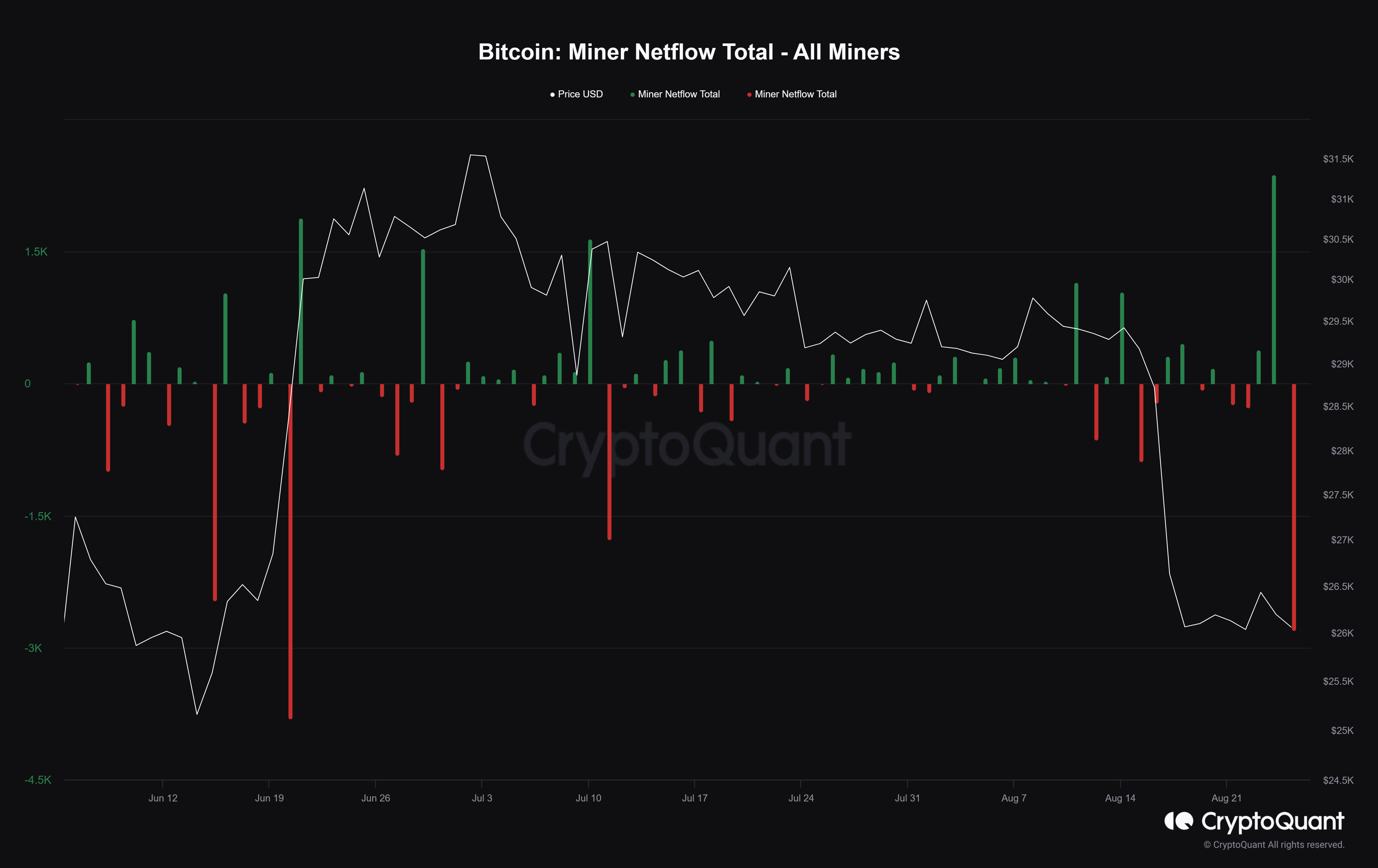
Bitcoin miner outflows
These losses are expected to be minimized going forward, provided Bitcoin price bounces back to reclaim $26,430 as a support floor. However, if the bearishness does not subside, BTC could slide to June lows of $25,126.
Bitcoin, altcoins, stablecoins FAQs
What is Bitcoin?
Bitcoin is the largest cryptocurrency by market capitalization, a virtual currency designed to serve as money. This form of payment cannot be controlled by any one person, group, or entity, which eliminates the need for third-party participation during financial transactions.
What are altcoins?
Altcoins are any cryptocurrency apart from Bitcoin, but some also regard Ethereum as a non-altcoin because it is from these two cryptocurrencies that forking happens. If this is true, then Litecoin is the first altcoin, forked from the Bitcoin protocol and, therefore, an “improved” version of it.
What are stablecoins?
Stablecoins are cryptocurrencies designed to have a stable price, with their value backed by a reserve of the asset it represents. To achieve this, the value of any one stablecoin is pegged to a commodity or financial instrument, such as the US Dollar (USD), with its supply regulated by an algorithm or demand. The main goal of stablecoins is to provide an on/off-ramp for investors willing to trade and invest in cryptocurrencies. Stablecoins also allow investors to store value since cryptocurrencies, in general, are subject to volatility.
What is Bitcoin Dominance?
Bitcoin dominance is the ratio of Bitcoin's market capitalization to the total market capitalization of all cryptocurrencies combined. It provides a clear picture of Bitcoin’s interest among investors. A high BTC dominance typically happens before and during a bull run, in which investors resort to investing in relatively stable and high market capitalization cryptocurrency like Bitcoin. A drop in BTC dominance usually means that investors are moving their capital and/or profits to altcoins in a quest for higher returns, which usually triggers an explosion of altcoin rallies.
Like this article? Help us with some feedback by answering this survey:
Author

Aaryamann Shrivastava
FXStreet
Aaryamann Shrivastava is a Cryptocurrency journalist and market analyst with over 1,000 articles under his name. Graduated with an Honours in Journalism, he has been part of the crypto industry for more than a year now.