Bitcoin needs a further correction for sustained growth

After weeks of rapid growth, Bitcoin (BTC-USD) entered the maximum turbulence zone falling below $94,000. BTC is currently trading at $93,764 and continues to trend downward, having exited the ascending channel. Moving averages indicate the presence of a short-term bullish trend for Bitcoin. Prices broke through the area between the signal lines downwards, which indicates pressure from sellers and a potential continuation of the fall from the current levels.
Analysts point to the current euphoria in the market and possible overheating, as well as the somewhat calmed post-Trump victory hype, which will likely strengthen the correction. However, without it, a further sustained growth above $100,000 is likely possible. According to market data and forecasts, Bitcoin may need further correction to consolidate its position and continue moving towards new highs.
Risks of market overheating
According to Rekt Capital, the current Bitcoin price is significantly above the orange moving average, which has historically served as a support level in bull markets. At the moment, this line is located at $66,000 and continues to rise along with the price of Bitcoin. In 2017, this level repeatedly prevented price collapses, which underlines its importance. However, if Bitcoin continues to move towards $100,000 without a correction, this may intensify signs of overheating, as confirmed by the Pi Cycle indicator.
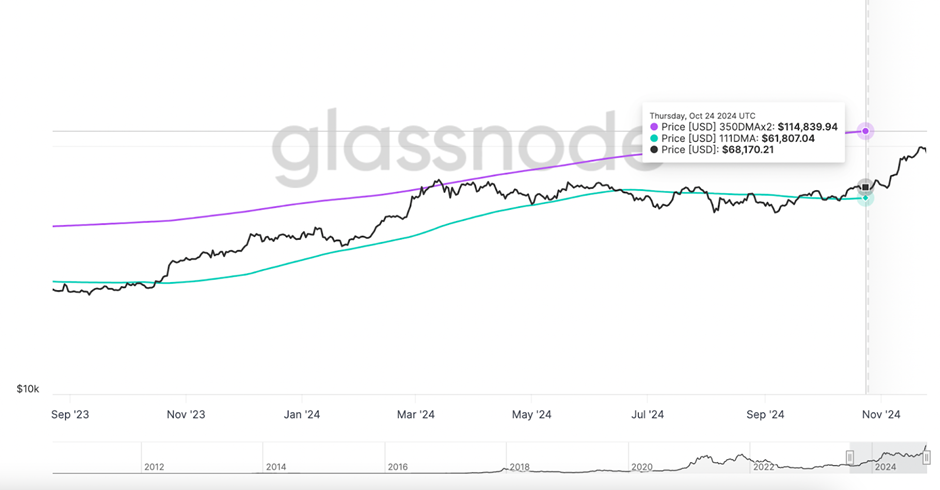
The Pi Cycle tool, which tracks the intersection of moving averages, indicates a high probability of a correction. Analysts believe that a further price decline in the coming weeks will cool the market and postpone the indicator's intersection, which is more consistent with historical patterns. Otherwise, short to medium-term turbulence is possible against the background of a sharp growth.
Nikita Zuborev, Chief Analyst at BestChange.com, a cryptocurrency exchanger directory, agrees that the market is entering an increased turbulence phase:
"Current metrics suggest that this bull run for BTC won't stop at $130,000. Initially, the market had factored in $70,000-80,000 by Trump's inauguration, but this threshold has now risen to $100,000. Over the next two months, numerous macroeconomic reports and data will be released. Additionally, the Federal Reserve is likely to lower rates once more if the meeting schedule remains unchanged. This could lead to heightened Bitcoin volatility, with potential swings both upward and downward."
Key resistance and support levels
The next important psychological barrier is the $100,000 mark, which has already shown resistance in recent weeks. The fall below $94,000 might be a correction cycle before the next ATH value. Historical data shows that after such corrections, the Bitcoin price usually updates historical highs.
The market is also showing increased volatility against the background of the expiration of $9.4 billion in BTC options. According to Deribit, a significant share of these options is "in the money", which increases expectations of sharp price movements in the coming weeks. Such a development traditionally leads to active consolidation and a temporary decline.
Factors holding back growth
One of the factors holding back an immediate breakthrough of $100,000 is the macroeconomic situation. US Federal Reserve Chairman Jerome Powell announced a possible pause in interest rate cuts. The high base rate makes it difficult to access capital, slowing the inflow of funds into markets, including cryptocurrencies.
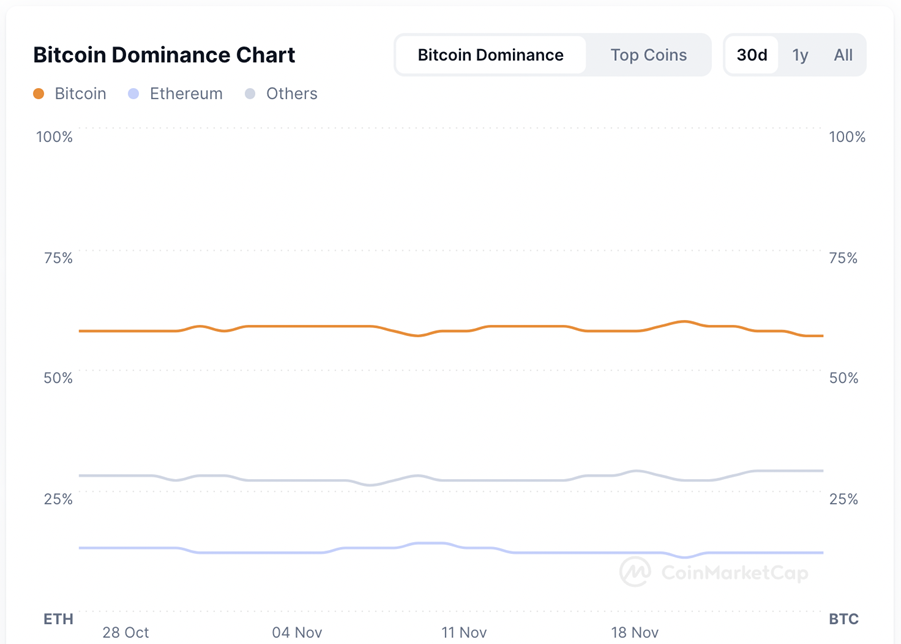
Bitcoin is also showing a decrease in its market dominance. According to CoinMarketCap, the indicator has fallen from 60.1% to 57.9% over the past few days, indicating a redistribution of funds into alternative cryptocurrencies. This may be an additional signal of the need for a correction to strengthen Bitcoin's position.
Positive expectations and long-term prospects
Despite the current challenges, the long-term outlook for Bitcoin remains positive. One of the key drivers of continued growth is the interest of institutional investors in Bitcoin ETFs. These instruments make the market more accessible to large players, which contributes to an increase in capitalization.
Another positive factor is the upcoming halving, which is scheduled for 2024. Historically, halvings have reduced the supply of bitcoin in the market, which has contributed to the price increase. Analysts note that the current growth cycle may peak in September-October 2025 if the traditional structure of bull markets continues.
Volatility and market expectations
Volatility is expected to increase this week due to the expiration of large options contracts. The put/call ratio of 0.46 indicates a balanced sentiment among investors. However, high funding in the futures markets indicates possible leveraged liquidations, which may lead to a short-term decline in the price.
According to QCP Capital, perpetual funding levels have reached their highest since March, and the yield basis on all exchanges, including CME, is above 15%. This market condition may be a signal for a further correction, which will help to eliminate the congestion of long positions and stabilize the market.
"With BTC's break of key resistance and it's multi-month range, the market is certainly in a state of euphoria. Perp funding is very elevated and basis yields are at seven-month highs," as noted by QCP Capital analysts.
A correction in Bitcoin in the current environment is necessary to maintain sustainable growth. Overcoming the psychological barrier of $100,000 could be a key event in the coming weeks, but this will require eliminating overheating in the market. The long-term outlook remains optimistic, especially given the interest of institutional investors and the approach of halving, which makes Bitcoin one of the main investment opportunities in 2024.
Author

Julia Magas
Independent Analyst
Julia Magas is an analyst and writer specializing in cryptocurrency and fintech market trends. Her work has been featured in leading financial publications such as Nasdaq, InvestorPlace, Cointelegraph, and Investing.