Bitcoin January slump nothing new in ‘post-halving years’ – Analysts

A major Bitcoin correction in the first month of a year after the blockchain sees a halving is historically not unusual, according to analysts who have compared previous cycles.
“Bitcoin dumping in January has historically been a common occurrence in post-halving years,” crypto analyst Axel Bitblaze told his 123,000 X followers on Jan. 12. “We all know what happened after the 2017 and 2021 dumps.”
Bitcoin BTC $93,125 has lost 10% so far this month in a fall from its high of $102,300 on Jan. 7 to just below $92,000 before recovering slightly to now hover around $94,000.
In January 2021, the next most recent post-halving year, Bitcoin fell more than 25% from over $40,000 to just above $30,000 by the end of the month. It then skyrocketed 130% to a new all-time high of $69,000 by November.
In January 2017, the year after the 2016 halving, Bitcoin slumped 30%, falling from $1,130 to $784. It then surged 2,400% that year, culminating in an all-time high of $20,000 by December.
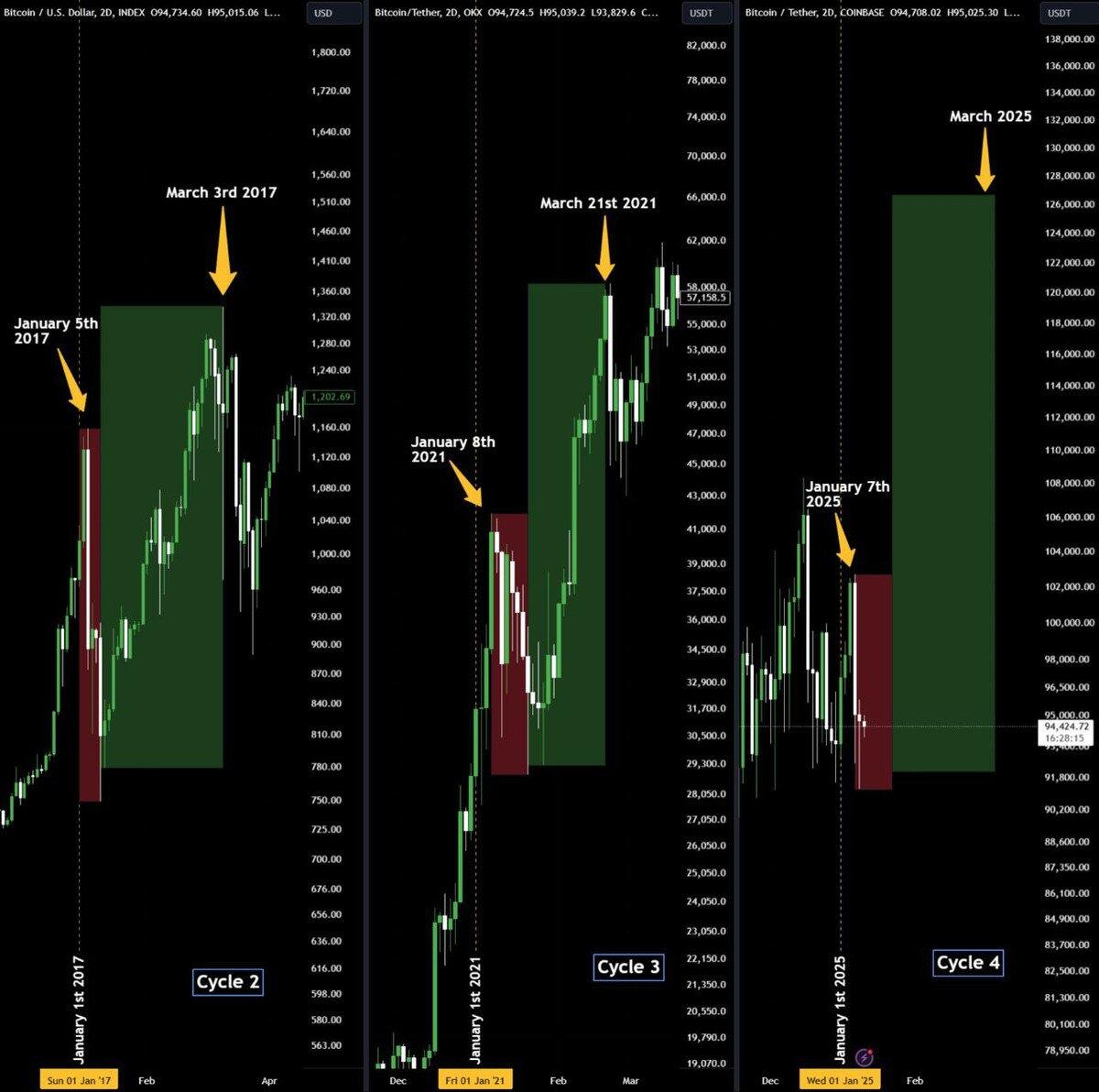
Bitcoin post-halving year January slumps. Source: Axel Bitblaze
Meanwhile, YouTuber and analyst Crypto Rover observed that Bitcoin has consistently dropped in the first half of the month for the past year.
“This is just a small dip compared to what we’ve seen before,” he said.
“Bitcoin has NOT reached the ultimate hype/pump phase,” posted the finance analysis Stockmoney Lizards X account on Jan. 12. “This cycle has more fuel in the coming 12 months.”
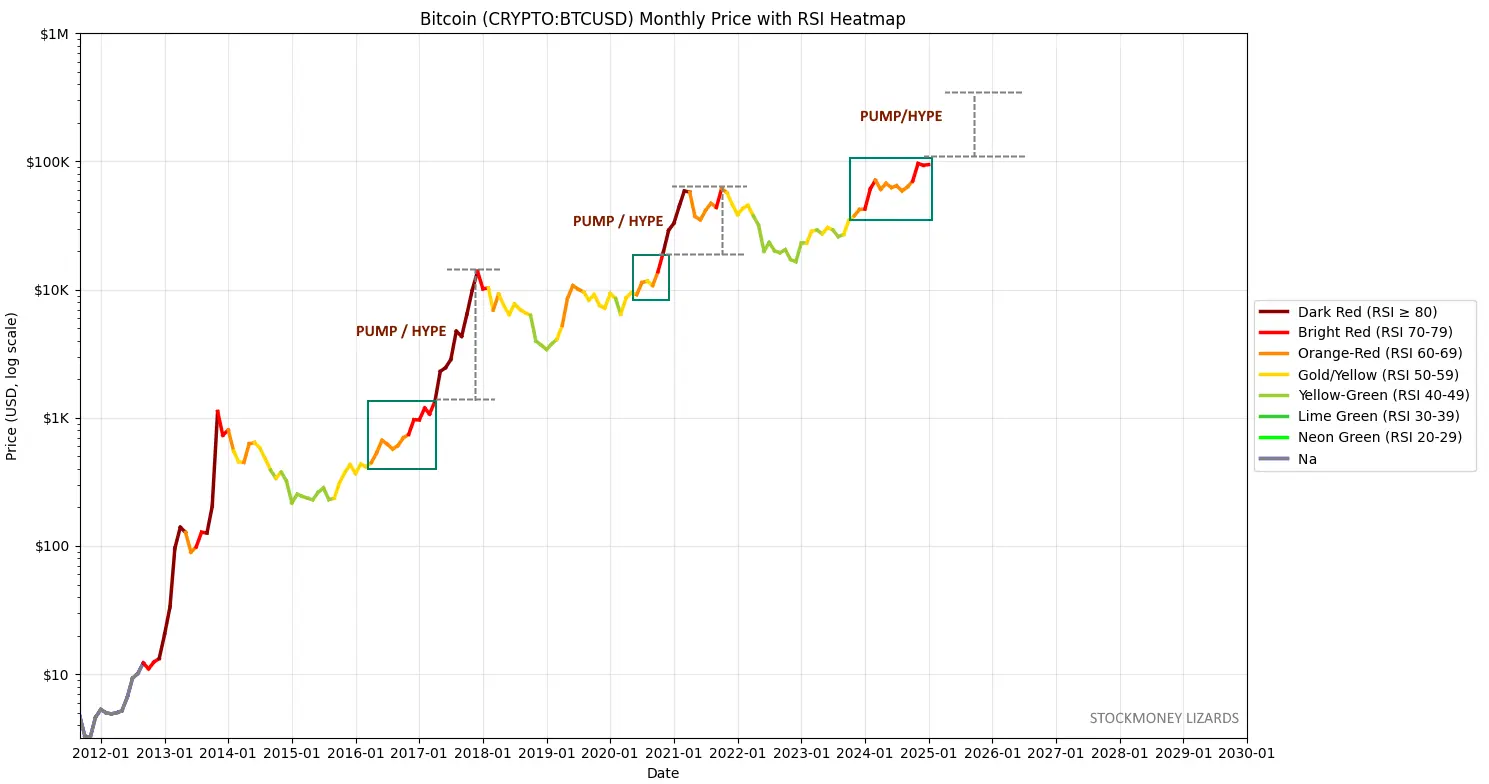
Bitcoin monthly chart with RSI color coding. Source: Stockmoney Lizards
The analyst acknowledged that things were a bit different in every cycle but added that “with mass adoption, pro-crypto governments worldwide, ETFs, etc. I think it underlines our hypothesis.”
A 130% move similar to that in the peak year of the previous cycle could send BTC prices from current levels to over $200,000 before the end of 2025.
On the flip side, a pullback of the magnitude seen in January of the last two cycles could send prices below $70,000.
Author

Cointelegraph Team
Cointelegraph
We are privileged enough to work with the best and brightest in Bitcoin.