|

Yen stabilises, but intervention risks remain

USD/JPY is holding near 156.83 on Friday. Despite heightened volatility in recent sessions, the yen is set to end the week broadly unchanged. Fears of intervention and Tokyo's firm rhetoric have failed to support a sustained strengthening of the currency.

Japanese authorities have stated that they are not constrained by the frequency of their interventions in the foreign exchange market and remain in constant contact with the US. Earlier, the yen rose sharply amid suspected interventions on 30 April and 6 May, but there was no official confirmation of these actions.

Domestic data has been stronger. Real wages rose for the third consecutive month, supporting expectations of further tightening by the Bank of Japan (BoJ).

Nevertheless, the external backdrop remains negative. A stronger dollar and tensions around the Strait of Hormuz continue to weigh on the yen.

Technical analysis
USDJPY

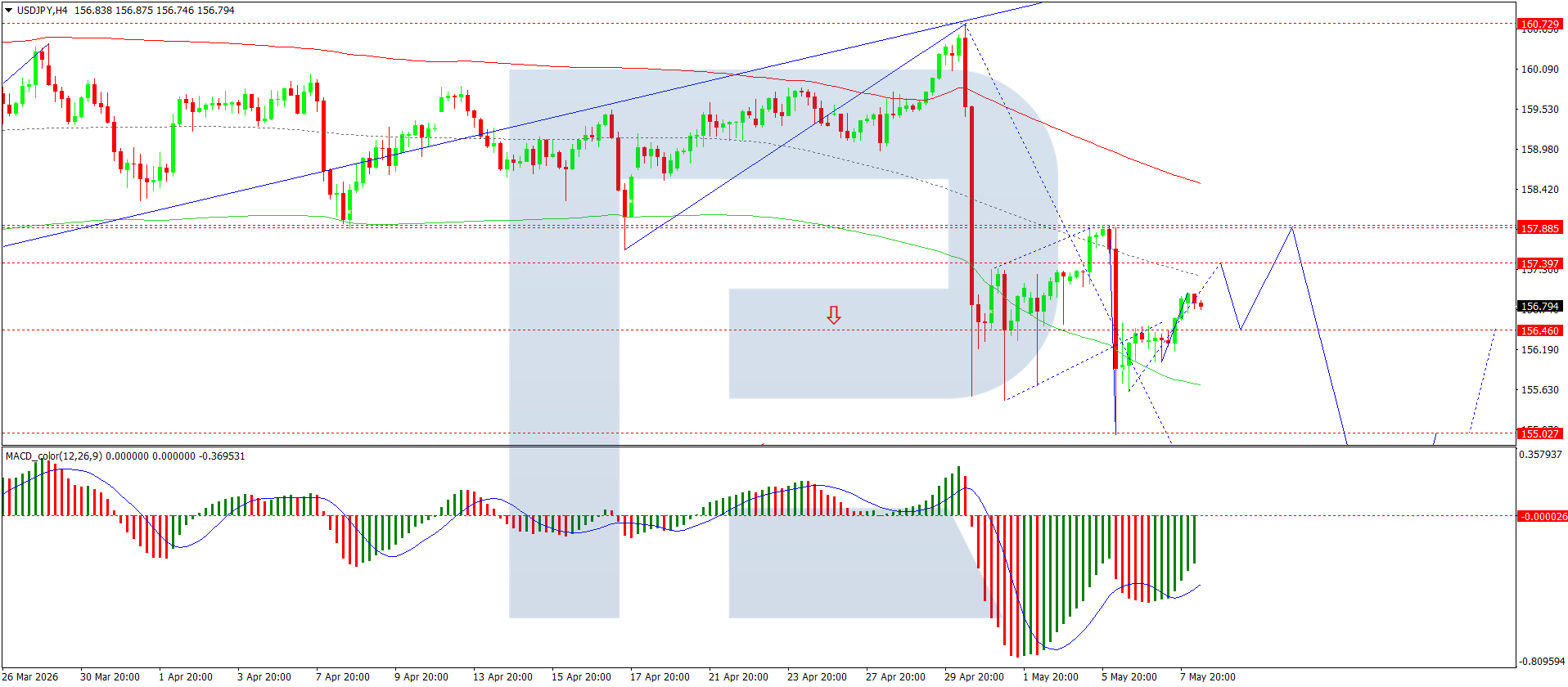
On the H4 chart, USD/JPY is trading within a consolidation range around 156.50 and is moving higher towards 157.39. A test of this level is likely, followed by a possible pullback to 156.50 before a further move higher towards 157.90. The MACD indicator supports this scenario, with its signal line below zero and pointing firmly upwards, indicating that bullish momentum is building.
USDJPY

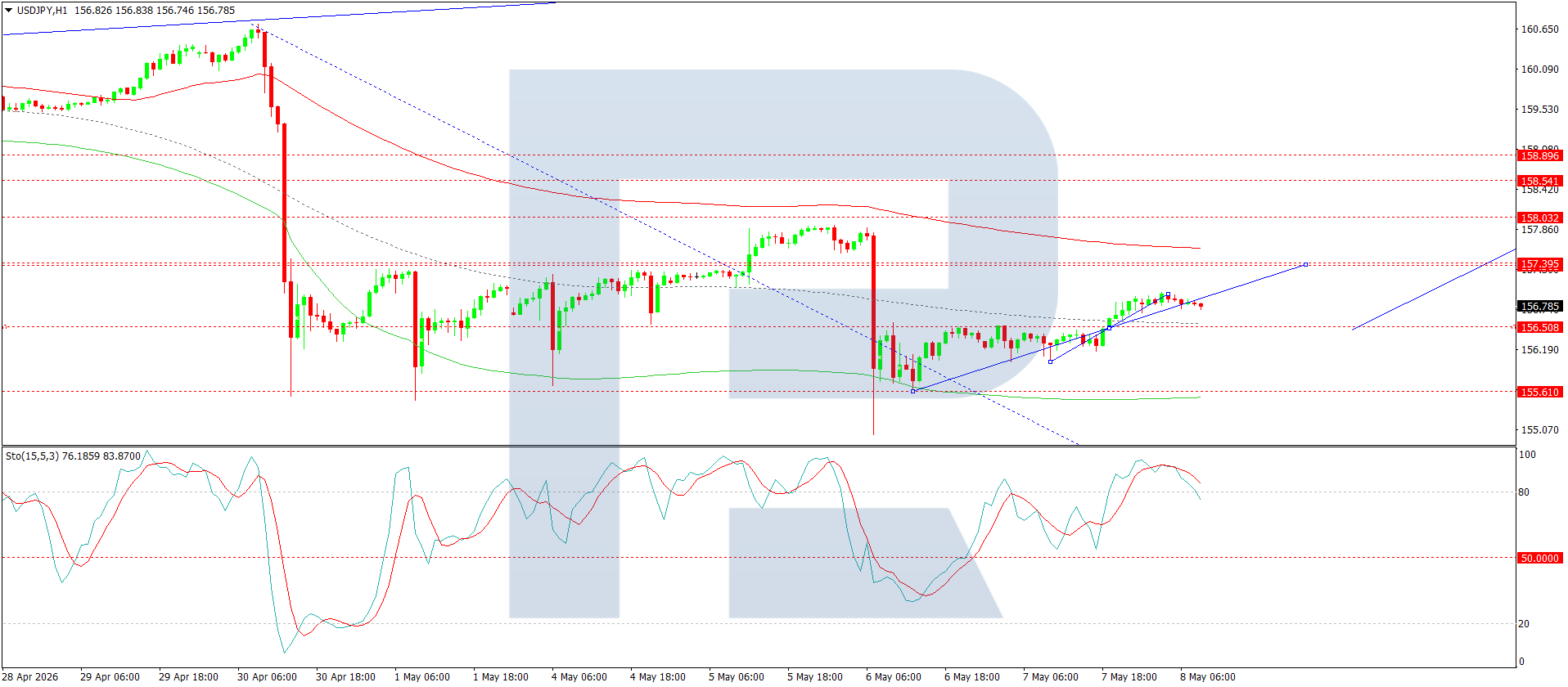
On the H1 chart, USD/JPY has reached 156.95 and is now pulling back towards 156.50. A rebound towards 157.00 may follow, with a possible extension to 157.39. The Stochastic oscillator confirms this view, with its signal line below 80 and pointing firmly downwards towards 20, indicating that short-term downside pressure remains.

Conclusion

The Yen has stabilised near 156.83 against the dollar, but intervention risks persist despite Tokyo's verbal warnings. Domestic wage growth supports BoJ tightening expectations, yet external factors such as a strong dollar and geopolitical tensions continue to weigh on the currency. Technically, a short-term rise to 157.39 may be followed by a pullback to 156.50 before any further upside develops.

Author

RoboForex Analysis Department

RoboForex Analysis Department provides timely market insights, expert technical analysis, and actionable forecasts across forex, commodities, indices, and equities.


More from RoboForex Analysis Department
Share:

Editor's Picks

GBP/USD holds gains above 1.3150, US PCE inflation data looms

The GBP/USD pair recovers some lost ground to near 1.3175 during the Asian trading hours on Thursday. However, the potential upside for the major pair might be limited amid UK political instability and rising expectations of US interest rate hikes this year. Traders await the US May Personal Consumption Expenditures inflation data on Thursday for fresh impetus. 

EUR/USD softens to near 1.1350 as Fed hike bets rise ahead of PCE inflation data

The EUR/USD pair declines to around 1.1355 during the early Asian trading hours on Thursday. The Euro weakens to its lowest level since June 2025 against the US Dollar as traders increase their bets on US interest rate hikes later this year. The US May Personal Consumption Expenditures inflation data will be the highlight on Thursday. 

Gold: Impending Death Cross hints at more downside

Gold is heading back toward seven-month lows near $3,950 early Thursday. The US Dollar enters bullish consolidation amid Fed rate hike bets, conflicting US-Iran messages. Gold could see further declines as RSI flirts with oversold territory, eyes on impending Death Cross.

Bitcoin tests $60,000 as whales sell off – Aave and Jupiter show resilience

The broader cryptocurrency market remains under intense selling pressure, with Bitcoin back at $60,000 for the third time this year. On-chain data shows selling pressure from large-wallet investors, commonly referred to as whales, while total liquidations hit nearly $1 billion in 24 hours.

5.90% to 5.45%: Why the Pound ignored the bond market’s relief rally
Keir Starmer resigned on Monday, and the Pound barely moved. That near-silence is the tell. Sterling's real driver these past four months has not been the prime minister, nor the left-leaning frontrunner lining up to replace him, but the long end of the gilt curve, which answers to a force no British politician controls.
Regime change: Inside Kevin Warsh's first move to make the Fed unreadable on purpose

The rate did not move. That was the least interesting thing about Kevin Warsh's first meeting in charge of the Fed. The FOMC held its benchmark at 3.50%-3.75% for the fourth straight meeting, exactly as priced, and then the new chair used his first press conference to dismantle the machinery the market has leaned on for a decade.