HBAR, QNT rally as AI safety and tokenized deposits fuel institutional momentum
- Hedera and Quant led crypto gains as institutional demand for AI infrastructure and tokenized banking drove prices higher.
- HBAR surged 30% to $0.123 after Hedera Council joined Nvidia’s Open Agent Safety Platform, pushing weekly gains above 40%.
- QNT jumped 20% to $250, extending weekly gains above 270% and briefly reclaiming the $300 mark for the first time since October 2021.

Hedera (HBAR) and Quant (QNT) are among the crypto market’s strongest performers on Monday, as fresh developments around artificial intelligence (AI) and tokenized banking drive renewed institutional attention.
HBAR jumps as Hedera Council joins Nvidia AI safety initiative
HBAR briefly surged above $0.130 before settling around $0.123, gaining 30% over the past 24 hours.
The latest move follows Nvidia's launch of its Open Agent Safety Platform on Monday, an initiative designed to establish security and governance controls for AI agents.
Nvidia CEO Jensen Huang announced the platform with more than 100 industry partners, bringing together OpenShell and Sentry.
Hedera highlighted the involvement of its governing council after the announcement, stating that the representation underscores the importance of trust and safety as the AI economy develops.
The recent gains also follow Hedera's Cross-Ledger Protocol (CLPR) contribution to the Linux Foundation Decentralized Trust (LFDT).
Developed by Hashgraph, CLPR lets independent ledgers verify each other’s states directly using state proofs. The approach is intended to enable the movement of tokens, data and messages between networks without relying on traditional bridges.
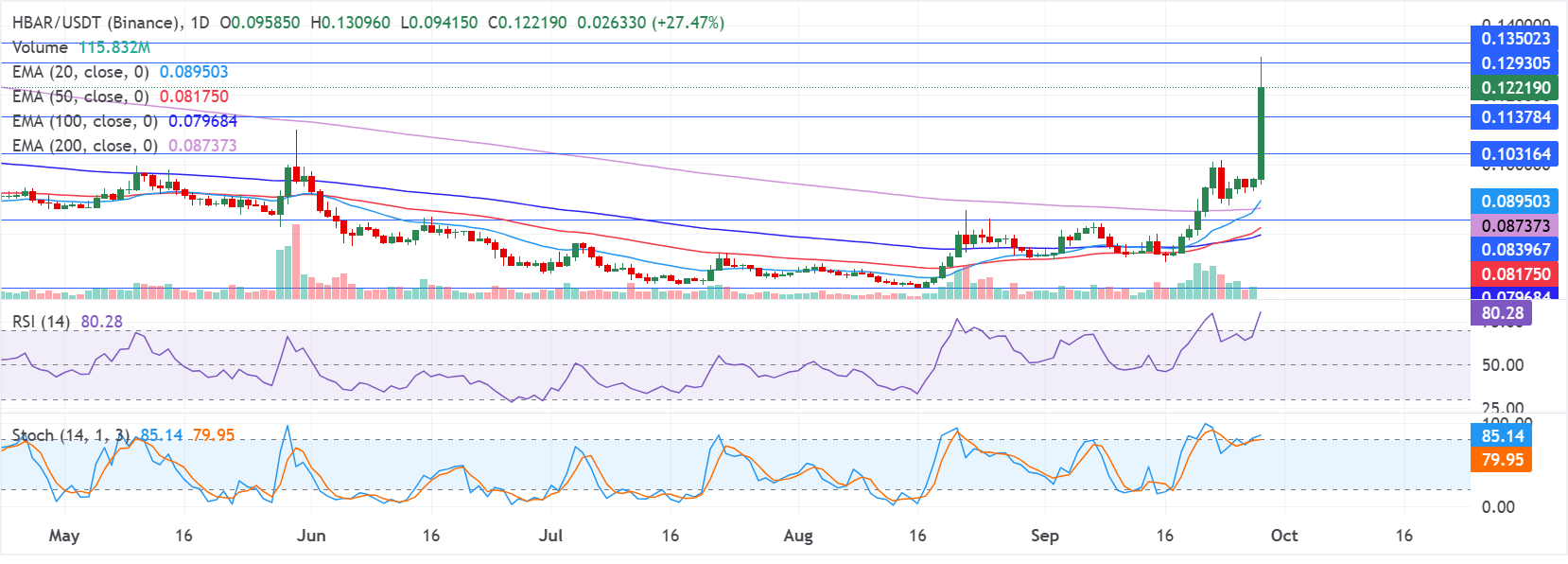
HBAR has to clear the $0.135 resistance to continue the advance toward $0.0153. On the downside, it could find support around $0.113 and $0.103 if the prior level fails to hold.
QNT extends rally as banks accelerate tokenized deposit adoption
While HBAR’s latest catalyst came on Monday, QNT’s rally has been building over the past week following a pair of institutional developments.
The Clearing House selected Quant on Thursday to power its On-Chain Money Initiative, a new payments network designed to allow financial institutions to clear and settle tokenized deposit transactions.
Quant will provide the network’s interoperability, orchestration and transaction-management layer while connecting the system to existing US payment infrastructure, including The Clearing House’s RTP and CHIPS networks. The initiative is expected to become available to participating financial institutions in the first half of 2027.
The development arrived alongside a separate milestone in the UK, where major banks completed the first live customer transactions using tokenized sterling deposits through the Great British Tokenized Deposit initiative.
Barclays, HSBC UK, Lloyds Banking Group, Monzo, Nationwide, NatWest and Santander participated in the initiative, which UK Finance convened. The transactions included two remortgage completions and a consumer marketplace payment, with tokenized deposits automatically locked and released when predetermined conditions were met.
Quant developed the GBTD platform as shared infrastructure for tokenized commercial bank money. UK Finance said the transactions demonstrated how tokenized deposits can provide programmability and conditional settlement while retaining the protections associated with conventional commercial bank deposits.
QNT surged briefly above $340 before easing toward $250, up nearly 20% in the past 24 hours, with 7-day gains shooting over 270%.
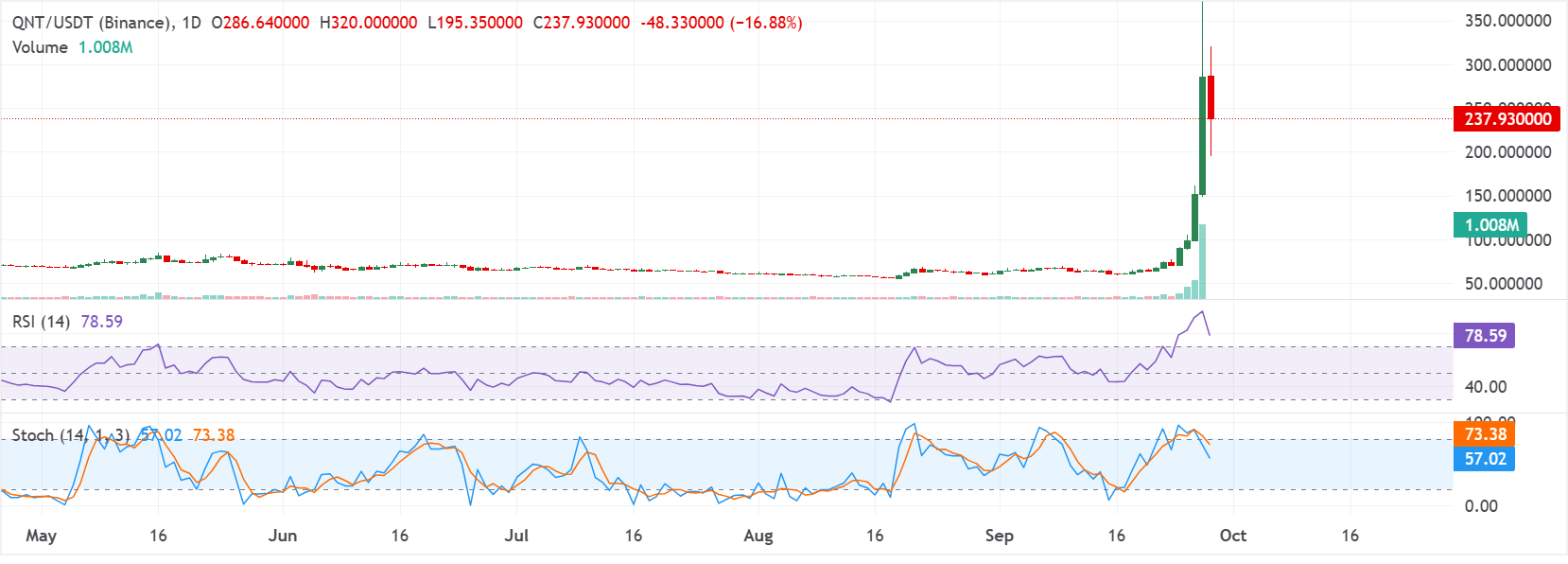
The token has largely traded in the $64 to $74 range throughout 2026, before the announcements, highlighting their significance. The surge also marks QNT’s first rise above $300 since October 2021.
Author

Michael Ebiekutan
FXStreet
With a deep passion for web3 technology, he's collaborated with industry-leading brands like Mara, ITAK, and FXStreet in delivering groundbreaking reports on web3's transformative potential across diverse sectors. In addition to