With the 10-year yield near quarter-century highs, is it time to ditch US stocks?

When the 10‑year Treasury yield sits near quarter‑century highs, the question of whether it is time to ditch US stocks becomes unavoidable. Yields at these levels force investors to confront the fundamental trade-off between risk and return, between the certainty of guaranteed income and the volatility of the stock market.
This bearish narrative – that it’s time for stock investors to consider an exit – has grown all the more as the 10-Year Treasury yield reached a 24-year high last week, rising above 5.3%.
The instinct to flee stocks when yields surge is understandable. Higher yields raise the cost of capital, pressure valuations, and offer investors an attractive alternative in the form of predictable income. Yet the relationship between yields and stock market performance is more complicated than the simple narrative that higher rates mean curtains for a stock market rally.
The historical frame
History shows that markets can and often do adapt to elevated yields, and that the decision to abandon equities depends far more on the underlying economic environment than on the yield level alone.
Over the past 70-odd years, the 10-year Treasury yield has averaged about 5.5%, higher than the current rate. But if you look at the data over this period, there is no clear correlation between stock market returns and average 10-year yields. In the 1990s, when the average yield was in the upper 6% region, stocks gained 18% annually. In the 1960s, when the average yield was below 5%, stocks averaged less than 8% annual gains.
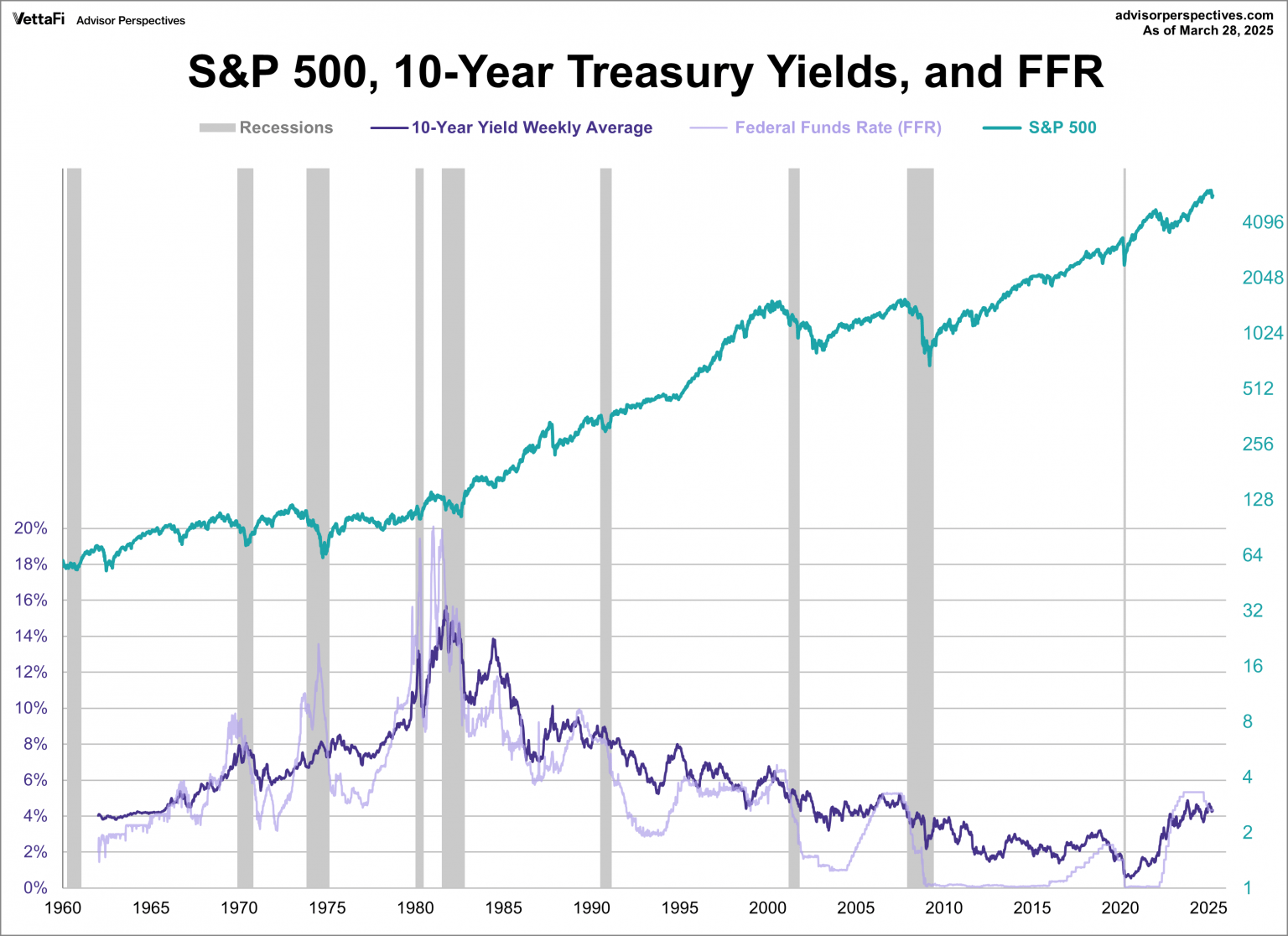
When yields rise because inflation is accelerating or because the Federal Reserve (Fed) is tightening aggressively, stocks tend to struggle. But when yields rise because growth is strong and productivity is improving, equity upside can coexist with elevated rates.
The yield itself does not determine the fate of the stock market. Rather, the reason behind its rise does.
Things to consider before selling your stocks
Higher yields mathematically compress equity valuations because they raise the discount rate applied to future earnings. This effect is most pronounced in long-duration assets, particularly high-growth tech stocks whose value depends heavily on profits far in the future. When the 10‑year yield climbs, these stocks feel the pressure first.
But valuation compression is not the same as a structural decline. A period of elevated yields often forces companies to become more efficient, more profitable, and more disciplined. Investors who abandon stocks during these transitions often miss the recovery that follows.
Another factor is the equity-risk premium, the extra return investors demand for owning stocks instead of bonds. When yields rise, the equity risk premium can shrink, making stocks look less attractive, particularly to institutional investors.
But the premium does not disappear. Investors still require compensation for taking on uncertainty. Historically, even when yields have been high, equities have offered a meaningful premium over bonds. The question is whether that premium is sufficient given the current economic backdrop.
If corporate earnings are growing and margins are stable, then the equity-risk premium remains compelling. If earnings are deteriorating and recession risks are rising, the premium may not be enough.
Sector dynamics
Not all stocks respond to high yields in the same way. Financials often benefit from higher rates because they earn more on loans and deposits. Energy stocks can thrive if yields reflect strong economic demand. Defensive sectors like healthcare and consumer staples can hold up because their earnings are less sensitive to economic cycles.
The sectors most vulnerable to high yields are those with long-duration cash flows, heavy leverage, or valuations built on aggressive growth assumptions. Investors who “ditch stocks” often end up ditching the wrong ones. The more rational approach is to rebalance toward sectors that historically outperform in high-yield environments.
No need to be anxious
US yields do not exist in isolation. When the 10‑year Treasury rises, it influences global capital flows, currency valuations and foreign investment. A strong US yield can attract capital from abroad, strengthening the US Dollar and pressuring multinational earnings.
Investors tend to react emotionally to yield spikes, interpreting them as warnings of impending market declines. Yet history shows that some of the strongest equity returns have occurred during periods of elevated yields. The 1990s, one of the best periods for index gains, saw yields routinely above 5.5% and often much higher.
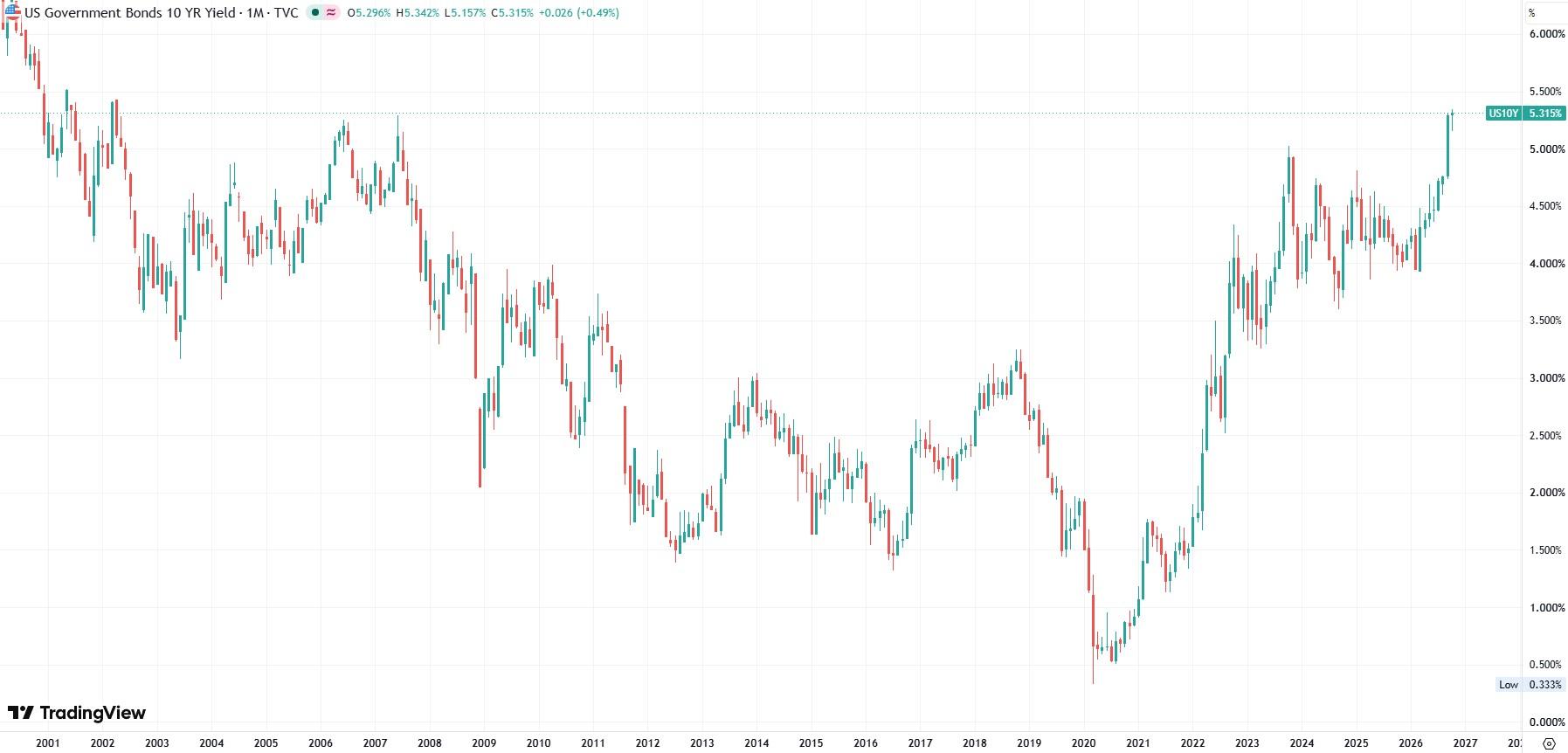
The fear of high yields often exceeds the actual risk they pose.
Even when yields are high, equities provide exposure to growing corporate profitability that bonds cannot match. Bonds offer stability and income, but they do not participate in the expansion of the economy. A portfolio without stocks is a portfolio without growth. The question is not whether to ditch stocks entirely, but whether to rebalance toward sectors and companies that can thrive in a high-yield environment.
Is it time to switch to bonds?
So, is it time to ditch US stocks? The answer is no. Elevated yields demand respect, discipline and thoughtful allocation, but they do not justify abandoning equities.
Investors should reassess valuations, rotate toward sectors that benefit from higher rates, and ensure that their portfolios reflect the realities of the current economic environment. But stocks remain essential, and history shows that markets can and do adapt to high yields. The more rational approach is not to flee but to adjust.
Author

Clay Webster
FXStreet
Clay Webster grew up in the US outside Buffalo, New York and Lancaster, Pennsylvania. He began investing after college following the 2008 financial crisis.
















