Will Burnham's arrival at No. 10 spell the end of the Pound's four-year recovery?
- Andy Burnham becomes the UK’s 10th prime minister in 10 years.
- Will his UK regeneration plan work or do his policies just mean more spending?
- Any trouble in gilt markets would put the brakes on pound’s long-term recovery.

Starmer’s rise and fall
It was hoped that when the UK Labour Party won a super-majority of 411 seats at the June 2024 general election, the days of post-Brexit political instability would be over. However, things haven’t panned out that way, with Keir Starmer coming under fire just a few months into the job.
Although the controversies surrounding his leadership were not as scandalous as those for his Tory predecessors Liz Truss and Boris Johnson, Starmer lacked the political instinct to recover from the several mini-crises, until ultimately, the Peter Mandelson saga earlier this year proved one too many errors of judgement for his party to forgive.
Overwhelming support for Burnham
But perhaps what’s been the most fascinating to watch during Starmer’s downfall is how the parliamentary Labour party unified instantly behind Andy Burnham – until recently, the mayor of Manchester – to anoint him as the rightful heir to the Labour throne. Burnham has had his eye on Number 10 for some time and judging by the speed at which he appointed his Cabinet and set out some of his policies, it can be argued that he was better prepared for government than Starmer was when he won the election two years ago.
Starmer’s unpreparedness for power likely explains the lack of comprehensive plans to achieve his manifesto pledges, inevitably leading to multiple embarrassing U-turns, leaving him unable to regain control over his party.
Debt jitters persist
Can Burnham suffer the same fate? Although he has certainly been busy asserting his authority by purging Starmer’s allies in the cabinet and immediately announcing a 5% reduction in VAT on electricity bills, markets are nervous about what else is to come as Burnham has made helping households with the cost-of-living crisis one of his central policy pillars.
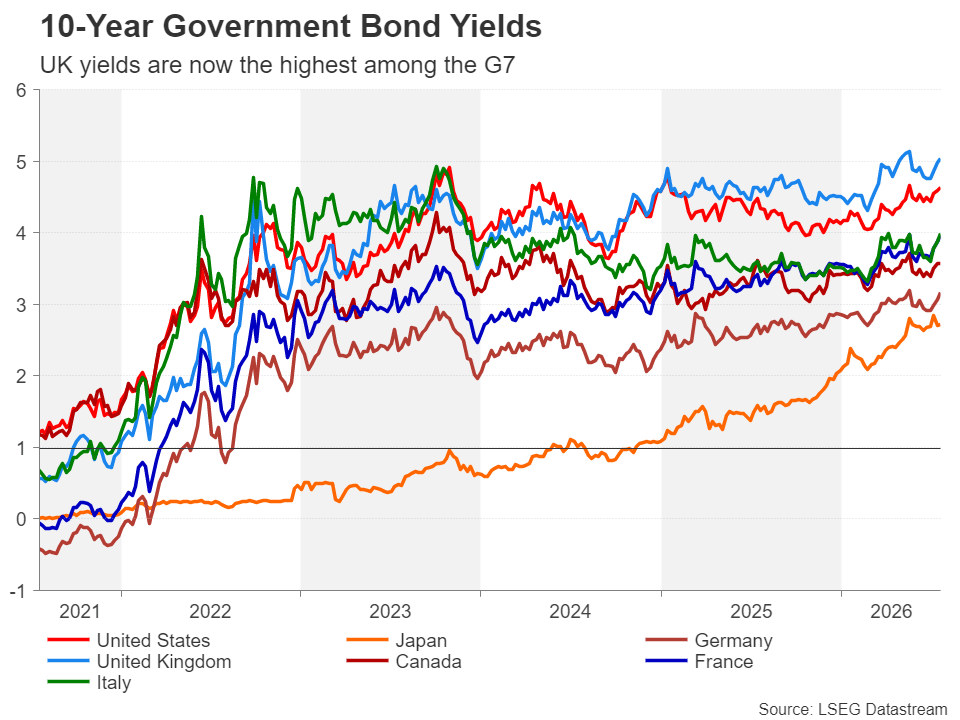
Investors have already given the thumbs down to the suggestion by Burnham that whilst he is promising to abide by the existing fiscal rules set out by Starmer and ousted chancellor, Rachel Reeves, he will seek to use “any flexibility within them”. This is being seen as a sign that the fiscal rules are open to interpretation, and UK bond markets are not impressed. Gilt yields have spiked to May highs at the peak of the energy crisis, with the 10-year yield now back above 5.0%. The UK now has the highest yield within the G7, putting the country at greater risk from any panic-driven government debt selloff.
The temptation to spend
On the positive side, there is some relief from Burnham’s pick of finance minister – former Defence Secretary John Healey – who replaces Reeves. Healey is seen as a relatively safe pair of hands at the Treasury, having worked within the department during the Blair/Brown years. However, he may use his role to push for higher defence spending, as his disagreement with Starmer’s modest funding increase was the reason he quit the post.
On the other hand, Burnham has yet to confirm his commitment to the new NATO spending target of 3.5% of GDP on defence, although it’s possible he may incorporate some of that spending within other budgets as part of plans for a broader boost to domestic industry.
A new drive for re-industrialisation
Reindustrialization is one of Burnham’s big priorities, but history has proven this is far easier said than done, and he has yet to outline a detailed plan on how he will achieve this. More importantly, there is very little wiggle room in the budget to increase investment spending substantially.
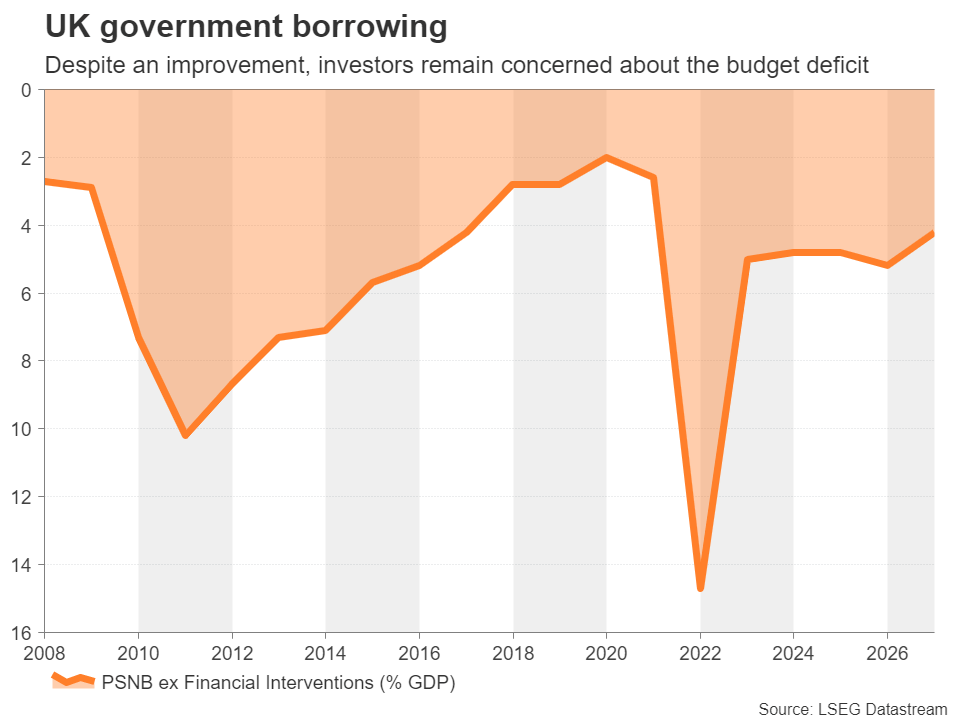
The budget constraints also raise question marks about how Burnham will deliver his pledge to build more council homes. But there is no doubt this will take centre stage after he re-appointed Angela Rayner, who has strong influence in her party, to the post of Housing Secretary.
Much of the success of these policies depends not only on how much funding they receive but also on how effective the government’s devolution strategy is. Coming from his role as Mayor of Manchester, Buhrman is a strong advocate of devolving more power to the regions, handing control over some taxation as well as services such as transport and utilities to local authorities.
The nationalization debate is back
This then brings us to Burnham’s more worrying policy ambition – renationalization. Firstly, it’s worth pointing out that this is not exactly a new trend. A number of rail companies have gone back into public ownership in recent years, as well as some grid operators. One of the more high-profile cases – Thames Water – is also at risk of being nationalized, while as recently as last week, the government announced it is taking over British Steel.
For investors, it’s still a bit of an unknown what Burnham’s real intentions are regarding nationalization. Certainly, renationalizing some sectors such as energy must be compelling for him, as it would allow the government to bring down prices. But all the indications are that Burnham is being pragmatic and focusing on giving decentralised authorities greater say in areas such as public procurement and franchising to improve services and keep prices down.
Will there be more tax hikes?
But does this mean that further tax hikes are unlikely under Andy Burnham? Most definitely not. Although Burnham is displaying some fiscal constraint by deciding against raising the income tax threshold, he is sure to come up with other giveaways. Some reports suggest he is considering a wealth tax of 2% on people earning more than £100 million.
The good news is that the packages announced already are being financed by re-diverted funds. The temporary VAT cut on electricity will be paid for by scrapping Starmer’s digital ID scheme and another measure – the £2 cap on single bus fares – will mostly be backed by money set aside for international climate projects, which will switch from grants to loans.
Nevertheless, all this careful reallocation of funds hasn’t eased investor concerns about unsustainable government borrowing. The pound has slid sharply against both the US dollar and euro this week, although the losses can partly be explained by a technical correction following strong gains over the prior three weeks.
Pound bulls hit stumbling block
For cable, Burnham’s arrival coincides with a weakening of the longer-term bullish outlook. In the weekly chart, the pound has been trading sideways since April 2025 after an impressive rebound from the depths of the September 2022 low of $1.0382. But it is fast approaching two ascending trendlines, with a high risk of breaching both over the coming weeks, compromising the bullish structure.
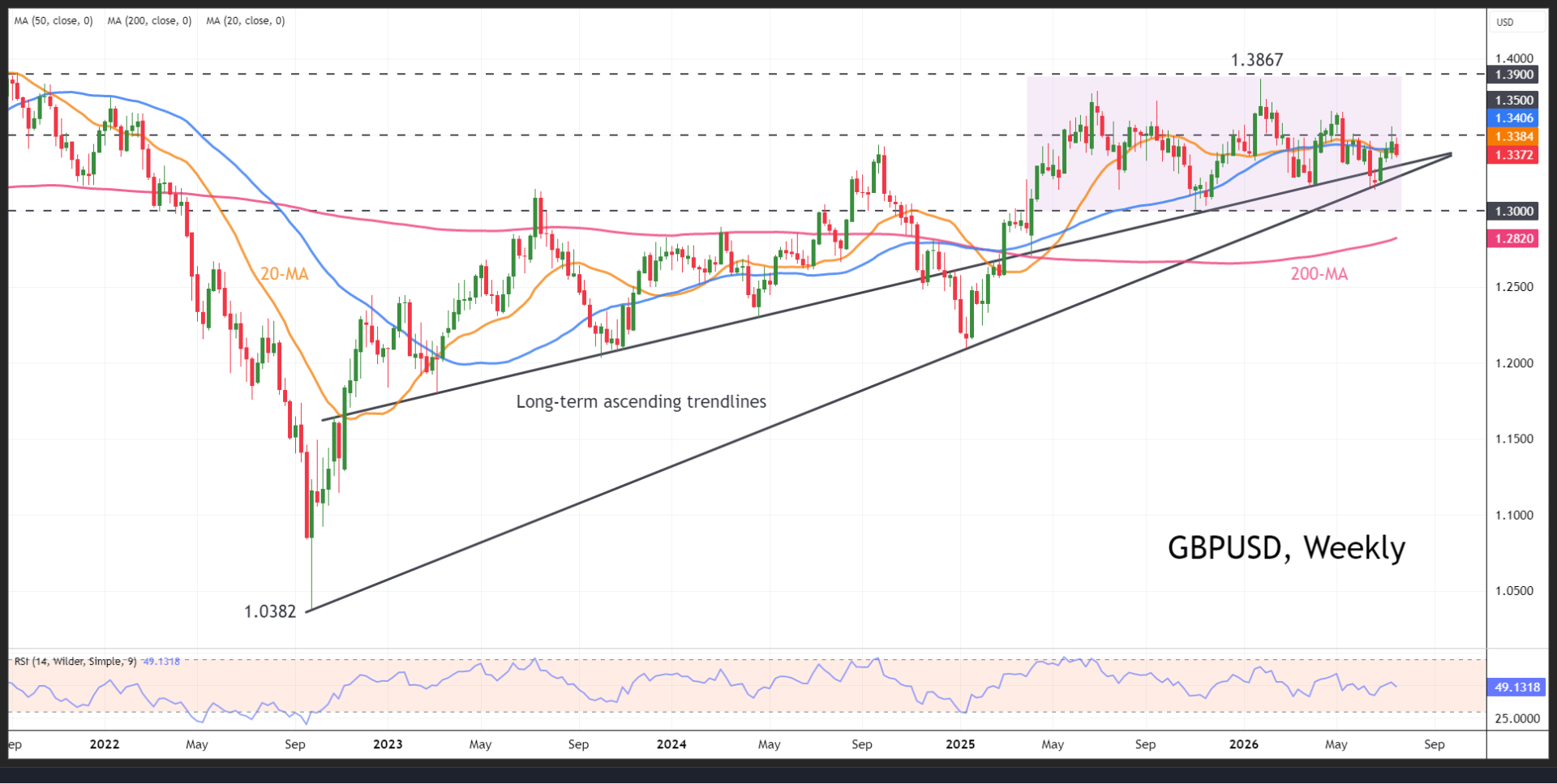
Having managed to stay above $1.3000 during the consolidation period, any panic that sends cable below this crucial level would symbolise a significant loss of investor confidence in the British currency. Burnham would be lucky to maintain the current neutral medium-term picture given the risk premium attached for the UK’s debt position.
Markets yet to give their verdict to Burnham
The US-Iran conflict hasn’t done these worries any favours. With the energy price shock fuelling inflation again, and in turn, lifting the Bank of England’s expected rate path, gilt yields have soared, pushing up borrowing costs for the government. If Burnham doesn’t do more to calm investor fears, yields could soon surpass the post-Iran war peak, risking triggering an accelerated selloff in gilts.
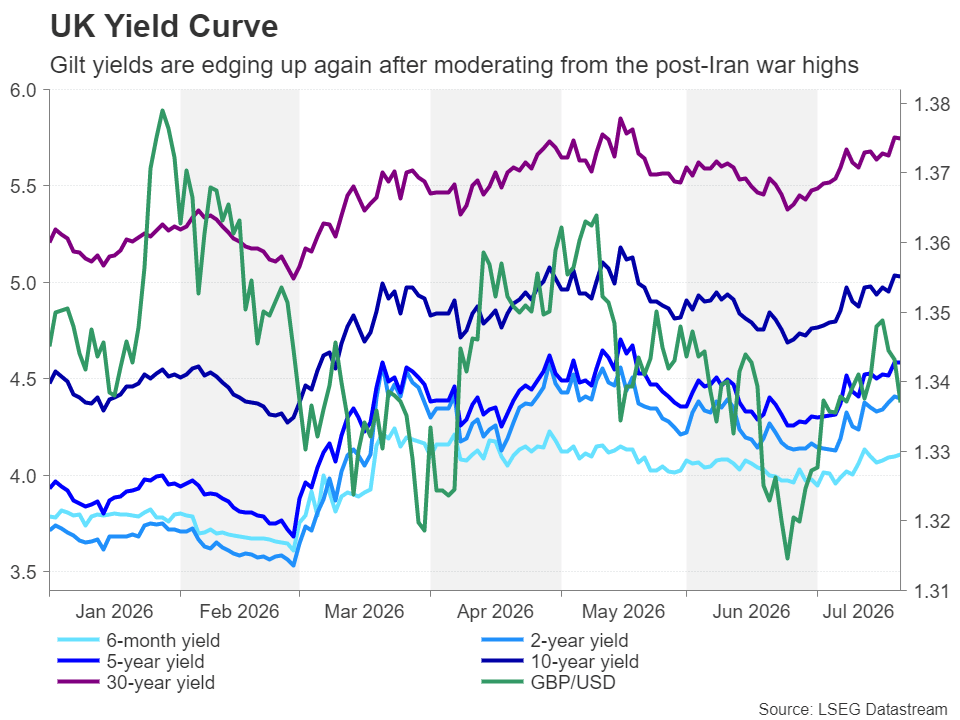
As demonstrated during the Liz Truss mini budget crisis in September 2022, a sharp slide in gilt prices tends to be devastating for the pound. A return to the $1.2000 handle or lower cannot be ruled out during a rout. For now, though, investors are cautiously giving Burnham the benefit of the doubt.
The big test for the new government of course will be the August budget statement. If Healey demonstrates a satisfactory degree of fiscal discipline and there are no announcements of unfunded spending or tax breaks until then, sterling could be well positioned to revisit its January high of $1.3867 and resume its longer-term uptrend.
Author

Mr Boyadjian graduated from the London School of Economics in 1999 with a BSc in Business Mathematics and Statistics.