Why speculators slashed Yen longs by the most since August — and what that signals about risk

For much of the past month, the Japanese Yen (JPY) had become one of the market's preferred defensive trades.
Hedge funds accumulated more than 170K net long contracts over four weeks as investors positioned for tighter Bank of Japan (BoJ) policy, persistent geopolitical uncertainty and a more cautious outlook for global growth.
The latest CFTC data suggest that trade has begun to unwind.
Indeed, speculative players cut their net long Yen position by nearly 48.4K contracts in the week ended September 22, according to the latest data from the Commodity Futures Trading Commission (CFTC), marking the sharpest weekly reduction since August. Yet the move should not be interpreted as a sudden loss of confidence in the Japanese currency. Instead, it appears to reflect investors locking in profits as several of the factors that had fuelled demand for safe-haven assets became less acute.
A crowded trade begins to unwind
The reduction followed one of the strongest buildups in bullish Yen positioning seen this year.
Net speculative longs fell to almost 72K contracts, down from over 120.3K contracts the previous week, while speculative exposure eased from 22.2% to 19.0%. Even so, positioning remains historically elevated, as the Net Position Percentile stands at 88.1, while the Speculative Exposure Percentile is 85.0, indicating that speculative investors continue to hold substantially larger bullish positions than during most of the past five years.
The broader trend also remains positive. Despite the decline observed during the period, net positioning has increased by more than 135K contracts over the past month, suggesting the latest move represents a moderation rather than a reversal of sentiment.
Shifting macro dynamics
Several developments during the reporting week may have encouraged investors to reduce exposure.
The Federal Reserve (Fed) and the BoJ both raised interest rates by 25 basis points, cementing expectations that policymakers are sticking to their guns on containing inflation. The BoJ’s action bolsters the longer-term case for the Yen but also eliminated some policy uncertainty that had drawn speculative inflows in recent weeks.
At the same time, US Treasury yields have paused their climb, Oil prices retreated on hopes of a diplomatic breakthrough in the Middle East, and US economic data continued to prop up the “exceptionalism” narrative. Together, those developments reduced the immediate demand for defensive positioning without fundamentally altering the broader macro outlook.
More than a currency trade
Movements in Yen positioning often reveal more than investor sentiment toward Japan.
The Yen remains a traditional safe haven and one of the world’s major funding currencies. As such, changes in speculative positioning tend to reflect changes in global portfolio allocation, central bank policy expectations and investors’ risk appetite.
The latest reduction in long positions therefore appears less like an outright bearish call on the Yen and more like a tactical adjustment after an exceptionally strong rally in bullish positioning.
What comes next?
Whether that week's pullback proves to be the beginning of a broader unwind or merely a pause in the Yen's recovery will depend on the next phase of the macro cycle. Markets will be watching whether the BoJ continues tightening policy, whether the Fed maintains a restrictive stance, and whether geopolitical tensions or global growth concerns revive demand for safe-haven assets.
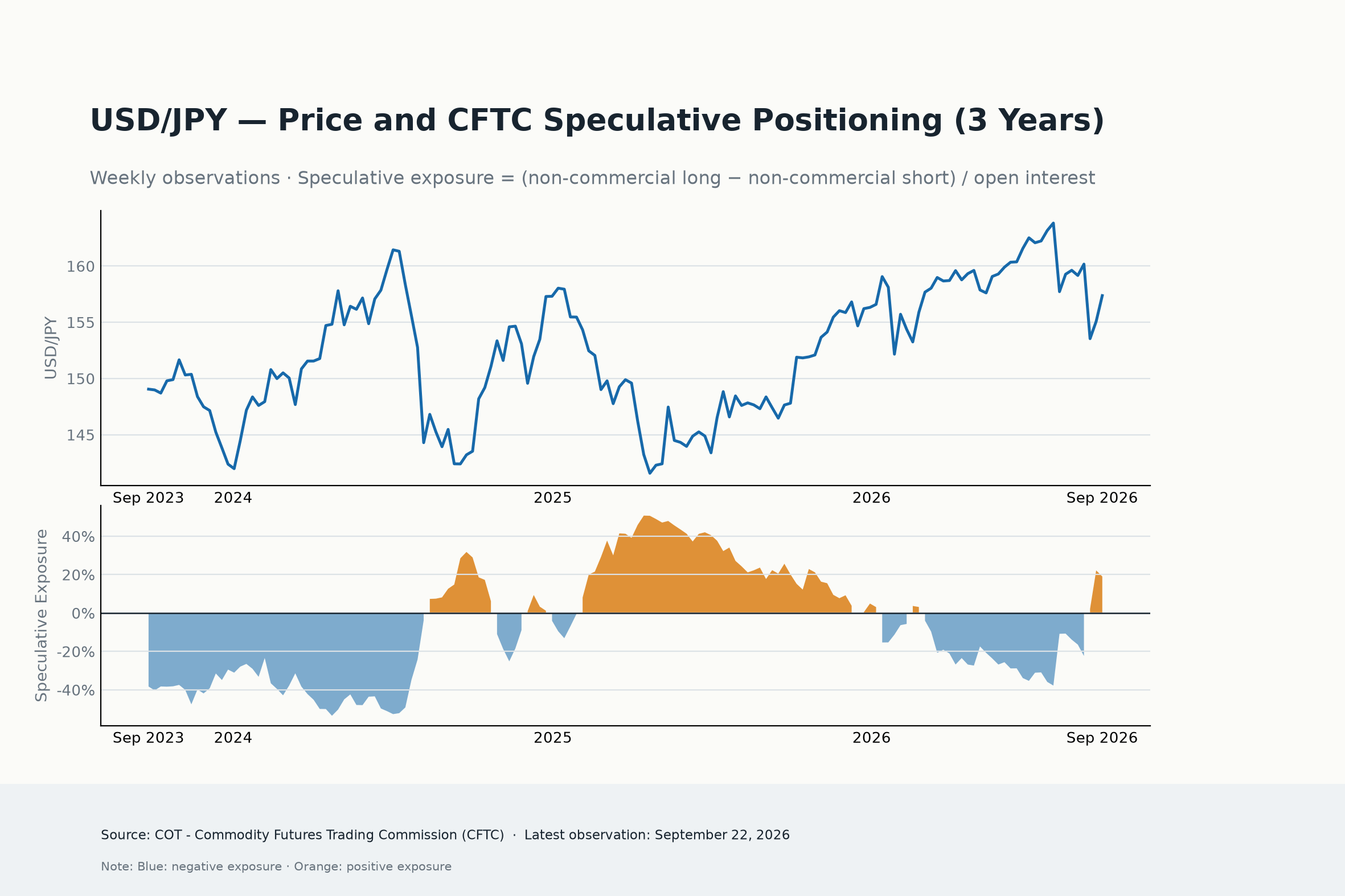
For now, the CFTC data point to a market that has become less aggressively defensive, not one that has abandoned the Yen altogether. The largest reduction in speculative longs since August reflects profit-taking in a crowded trade rather than a decisive shift away from the currency.
Author

Pablo Piovano
FXStreet
Born and bred in Argentina, Pablo has been carrying on with his passion for FX markets and trading since his first college years.