Markets are pricing a Fed pause. The jobs data says the hike is still coming
The market has rapidly changed its mind about the Federal Reserve (Fed). Only a week ago, investors saw an October interest-rate hike as the most likely outcome. However, softer inflation and cautious comments from policymakers have since turned a pause into the dominant scenario.
Yet beneath that dramatic repricing, the US economy is sending a considerably less dovish message. Employment remains resilient, consumers continue to spend and economic growth is stronger than previously estimated. Inflation has surprised to the downside, but it remains well above the central bank’s target. Taken together, the data may justify waiting in October without necessarily providing a reason to end the tightening cycle.
That distinction is crucial for financial markets. The question is increasingly not whether the Fed pauses in October, but whether that pause simply delays another interest-rate increase until December.
Markets have dramatically repriced October
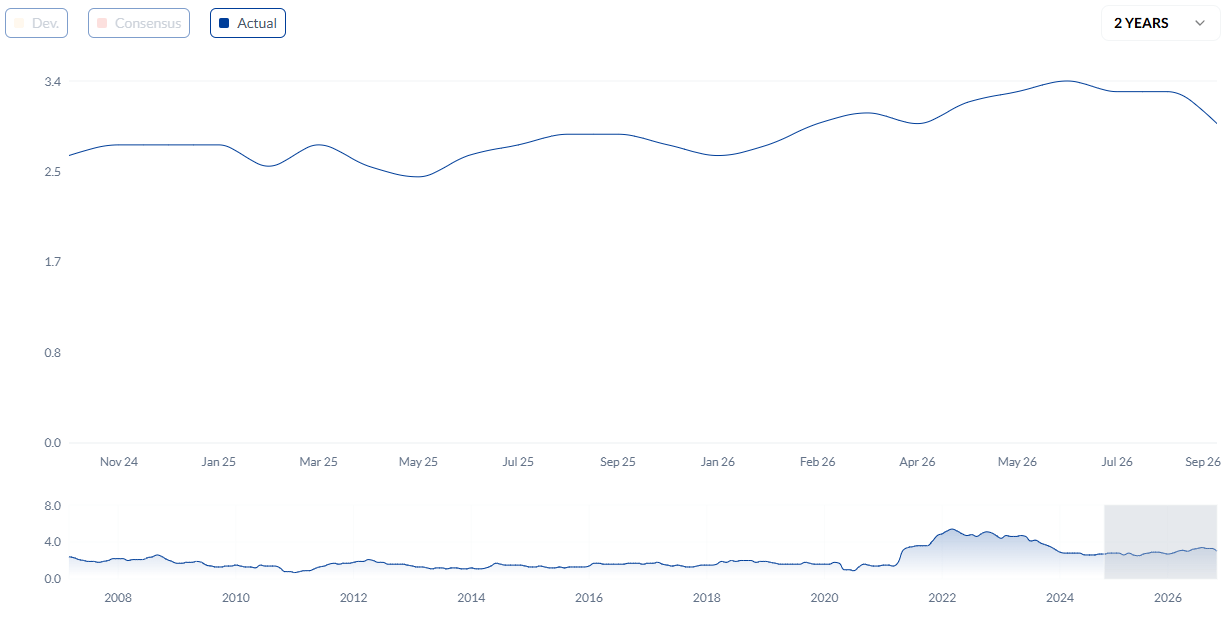
Inflation is the catalyst for the shift in expectations. The Personal Consumption Expenditures (PCE) Price Index increased 0.3% MoM in August, while annual inflation remained at 3.4%, below the 3.7% expected by markets. Core PCE inflation, which excludes volatile food and energy components and is the Fed’s preferred measure of inflation, stood at 3% YoY, also below expectations. Previous readings were revised lower as well, improving the inflation picture enough to reduce the immediate pressure on policymakers.
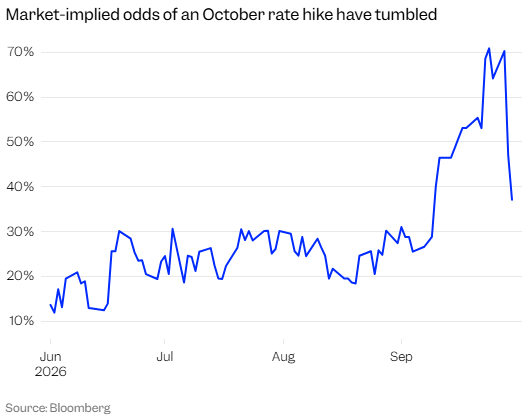
Markets responded quickly as the chance of a Fed rate increase in October has fallen to around 37%, from more than 70% a week earlier, according to the CME Group FedWatch Tool. In other words, investors have moved from treating another hike in October as the baseline scenario to seeing a pause as substantially more likely.
New York Fed President John Williams helped accelerate that shift by saying policymakers have time to assess incoming information after September’s rate increase.
Deutsche Bank sees essentially the same distinction between delaying and abandoning another hike. The bank’s economists argue that the inflation report reduces the urgency for the Fed to act in October. Still, they continue to expect another increase in December because inflation remains too high.
That is an important nuance. Markets are pricing patience. They are not yet pricing victory over inflation.
The jobs data complicates the pause narrative
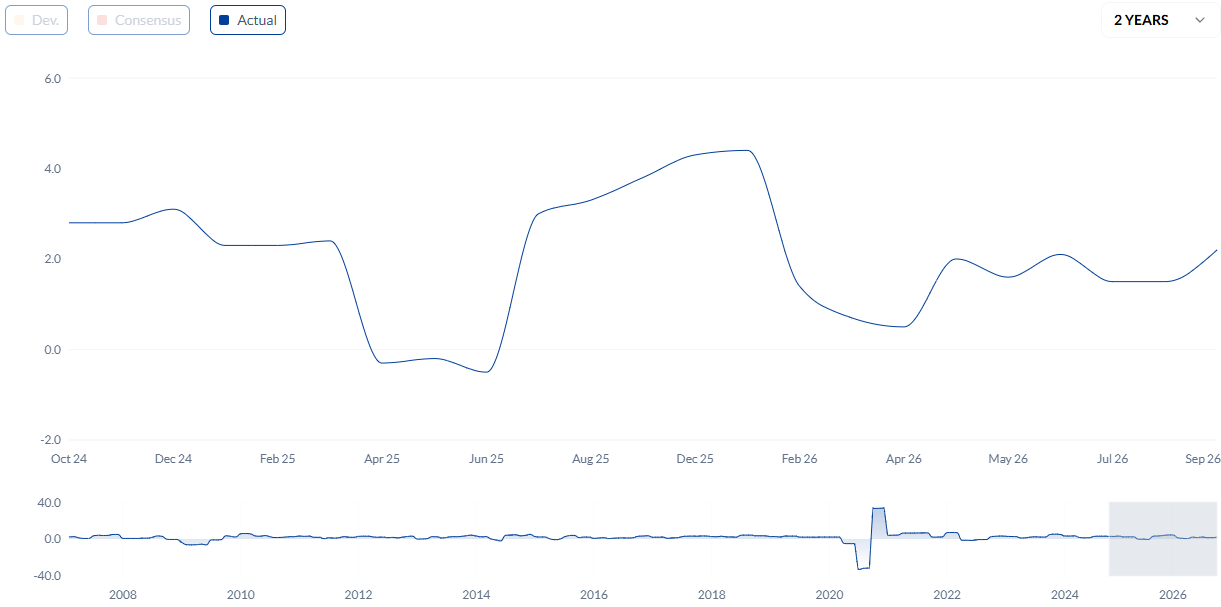
The problem for a more durable dovish Fed scenario is that the rest of the economy refuses to cooperate. Automatic Data Processing (ADP) reported that US private employers added 90K jobs in September, beating expectations of around 70K and accelerating sharply from the revised 36K increase recorded in August.
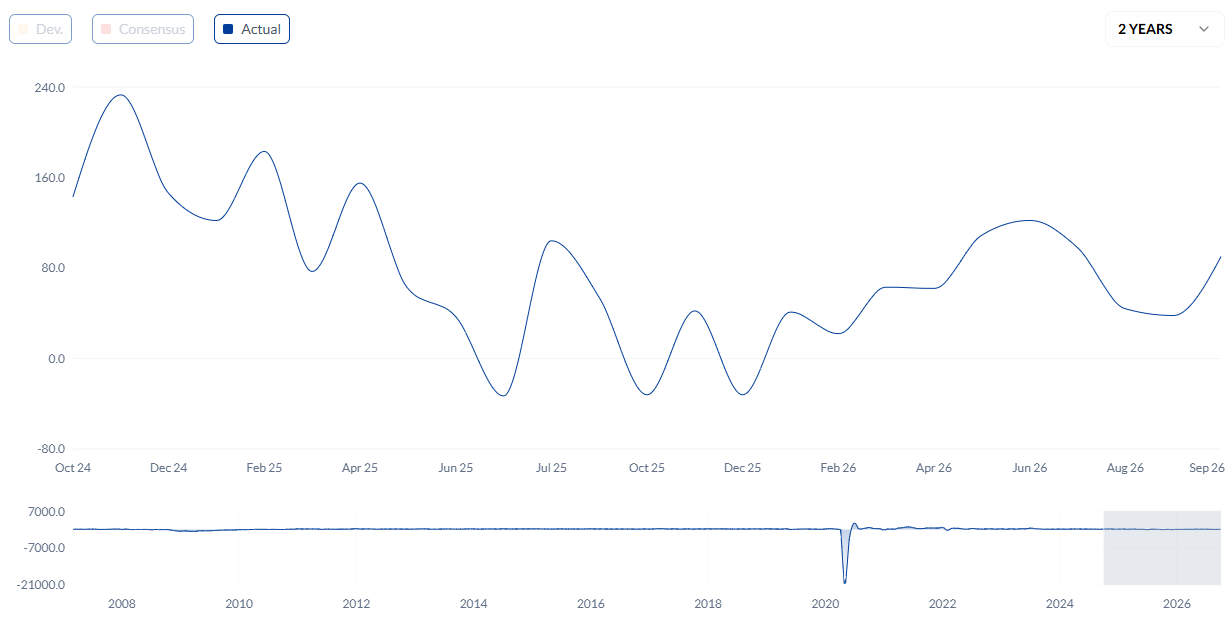
The ADP report is not a reliable one-for-one predictor of official Nonfarm Payrolls (NFP), but it challenges the idea that labor demand is deteriorating rapidly. August's official employment report already delivered 162K new jobs, considerably more than economists expected, while the Unemployment Rate remained at 4.1%. The September jobs report, due on Friday, could either reinforce or weaken that view, with the consensus expecting the US economy to add 90K jobs while the Unemployment Rate is forecast to remain unchanged at 4.1%.
This resilience matters because a strong labor market gives the Fed considerably more freedom to keep fighting inflation. Minneapolis Fed President Neel Kashkari made the connection explicit this week. Kashkari said the labor market appears strong and shows no signs of weakening, while also noting that the longer the economy remains robust, the more he questions how restrictive monetary policy actually is. He continues to expect one more rate increase this year.
ING strategist Chris Turner also points to the activity side of the economy as a reason why the Fed tightening story remains alive. Turner highlights resilient consumer spending and signs that payroll growth may be accelerating again, arguing that these developments reinforce the case for taking monetary policy further into restrictive territory.
The US consumer is not behaving like an economy under serious pressure
Employment is only one part of the story. US Personal Spending jumped 0.9% MoM in August, while Real Spending increased 0.6%. At the same time, second-quarter Gross Domestic Product (GDP) growth was revised upward to an annualized 2.2%, compared with the previous estimate of 1.5%. Those figures significantly weaken the argument that another rate hike would be arriving in an economy already close to stalling.
TD Securities economists Oscar Munoz and Eli Nir describe the latest data as a mixture of dovish revisions to inflation and hawkish revisions to growth. For the bank, the underlying story remains one of robust economic activity combined with persistent inflation. The bank still expects another Fed hike, although it acknowledges that policymakers could adopt a more gradual approach.
Societe Generale reaches a similar conclusion from a different angle. Strategist Jan Groen notes that softer core goods inflation helped the August PCE report, but core services and so-called super-core inflation showed renewed pressure. More importantly, Groen argues that revisions to consumption, wages and GDP indicate that the economy entered the second half of the year with more momentum than previously thought.
Comments from Minneapolis Fed President Neel Kashkari reinforce the picture of a resilient US economy. Speaking to Bloomberg TV on Thursday, Kashkari said the economy continues to surprise him with its resilience, while describing consumer spending as strong and the labor market as broadly healthy.
Those comments matter for the Fed debate because they suggest that high interest rates have yet to generate the broad deterioration in demand and employment that would make further tightening much harder to justify.
This is why one softer inflation release does not necessarily settle the Fed debate.
Inflation is softer, not low
The distinction between lower-than-expected inflation and genuinely low inflation is another source of risk for the pause narrative. Core PCE inflation at 3% remains a full percentage point above the Fed's 2% target. Headline PCE inflation at 3.4% is even further away. The details of the latest CPE inflation report also make the picture less straightforward than the headline surprise suggests.
Fed Governor Lisa Cook reinforced that message this week, saying inflation has remained too high for too long and reiterating her commitment to returning price growth to the central bank's 2% objective.
The question facing policymakers is therefore not whether inflation has improved. It clearly has relative to expectations. The question is whether it has improved enough to justify ending a tightening cycle while domestic demand and employment remain resilient.
So far, the evidence for that second conclusion is much weaker.
A pause in October is not the same thing as the end of tightening
This is where market pricing can be misleading. The collapse in October hike expectations looks dramatic, but much of the adjustment represents a change in timing rather than a fundamental rejection of further tightening.
Markets assign roughly a 37% chance to an October increase. However, according to the CME FedWatch Tool, the chance of another rate hike by December stands at 58.7%, up sharply from around 39% a week earlier, suggesting investors are increasingly postponing rather than abandoning expectations for further Federal Reserve tightening.
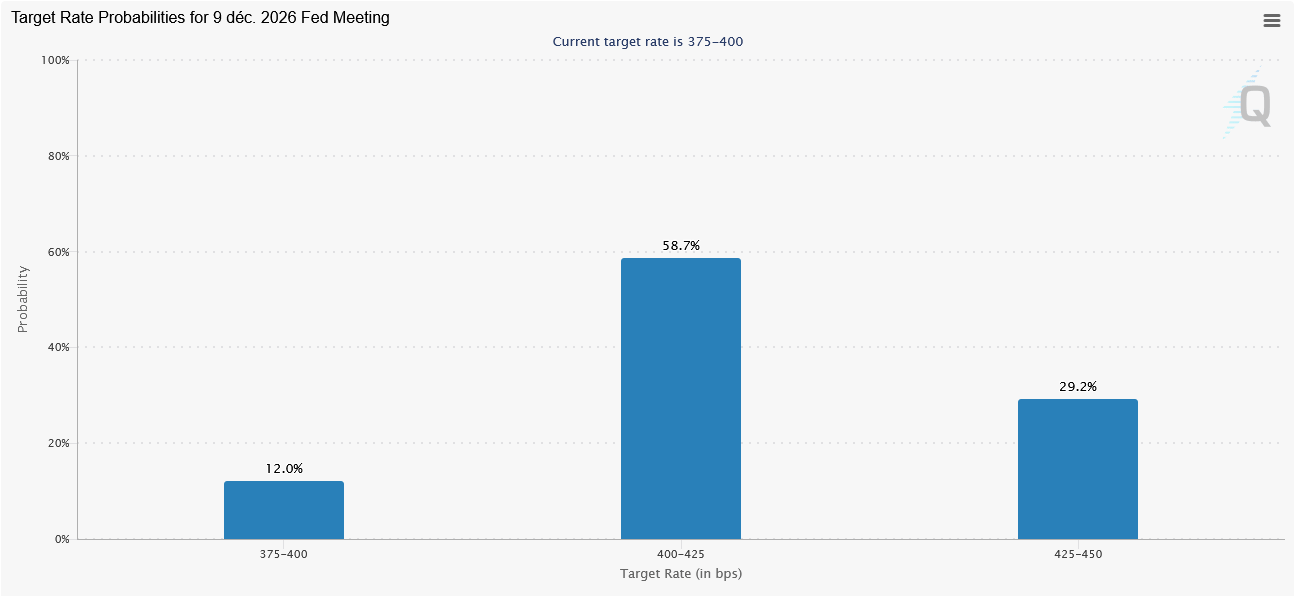
Several major banks have converged around this distinction. Deutsche Bank sees less urgency for October but retains a December hike in its baseline. JPMorgan also expects another increase in December, while Goldman Sachs has reportedly moved its forecast from October to December following the softer PCE report. TD Securities remains more hawkish, continuing to see an October hike while acknowledging the possibility of a slower approach.
Even within the Fed, the latest projections point in the same direction. Most policymakers indicated in September that at least one additional increase would be appropriate before the end of the year.
The October-versus-December debate may consequently be distracting from the more important question: what would actually convince the Fed that another hike is unnecessary?
Friday's jobs report could challenge the market's new consensus
The September NFP report is the next major test. Economists expect payroll growth to slow to around 90K from 162K in August, with the Unemployment Rate remaining near 4.1%. A number close to those expectations would probably fit comfortably with an October pause. It would show that hiring is cooling without indicating serious deterioration in employment.
Economic Indicator
Nonfarm Payrolls
The Nonfarm Payrolls release presents the number of new jobs created in the US during the previous month in all non-agricultural businesses; it is released by the US Bureau of Labor Statistics (BLS). The monthly changes in payrolls can be extremely volatile. The number is also subject to strong reviews, which can also trigger volatility in the Forex board. Generally speaking, a high reading is seen as bullish for the US Dollar (USD), while a low reading is seen as bearish, although previous months' reviews and the Unemployment Rate are as relevant as the headline figure. The market's reaction, therefore, depends on how the market assesses all the data contained in the BLS report as a whole.
Read more.Next release: Fri Oct 02, 2026 12:30
Frequency: Monthly
Consensus: 90K
Previous: 162K
Source: US Bureau of Labor Statistics
America’s monthly jobs report is considered the most important economic indicator for forex traders. Released on the first Friday following the reported month, the change in the number of positions is closely correlated with the overall performance of the economy and is monitored by policymakers. Full employment is one of the Federal Reserve’s mandates and it considers developments in the labor market when setting its policies, thus impacting currencies. Despite several leading indicators shaping estimates, Nonfarm Payrolls tend to surprise markets and trigger substantial volatility. Actual figures beating the consensus tend to be USD bullish.
But the composition of the report could matter more than the headline. Strong payroll growth accompanied by stable or falling unemployment and firm wage growth would challenge the idea that restrictive monetary policy is meaningfully cooling demand. Upward revisions to previous months would strengthen that message further.
Such an outcome would not automatically force the Fed to hike in October. The central bank could still decide that September's increase deserves more time to work through the economy. It would, however, make the argument for a December hike considerably harder for markets to dismiss.
Conversely, a weak payroll number combined with higher unemployment and softer wage growth would reinforce the message from the latest PCE report. The Fed would then have evidence of easing inflation and weakening employment simultaneously.
That is the combination capable of transforming a temporary pause into a broader reassessment of the tightening cycle.
The bond market is already delivering tightening of its own
There is one further complication: the Fed is no longer the only source of tighter financial conditions. Long-term US Treasury yields have surged despite the decline in October hike expectations. The 10-year yield reached its highest level in roughly two decades this week, while the 30-year yield also climbed to fresh multi-decade highs.
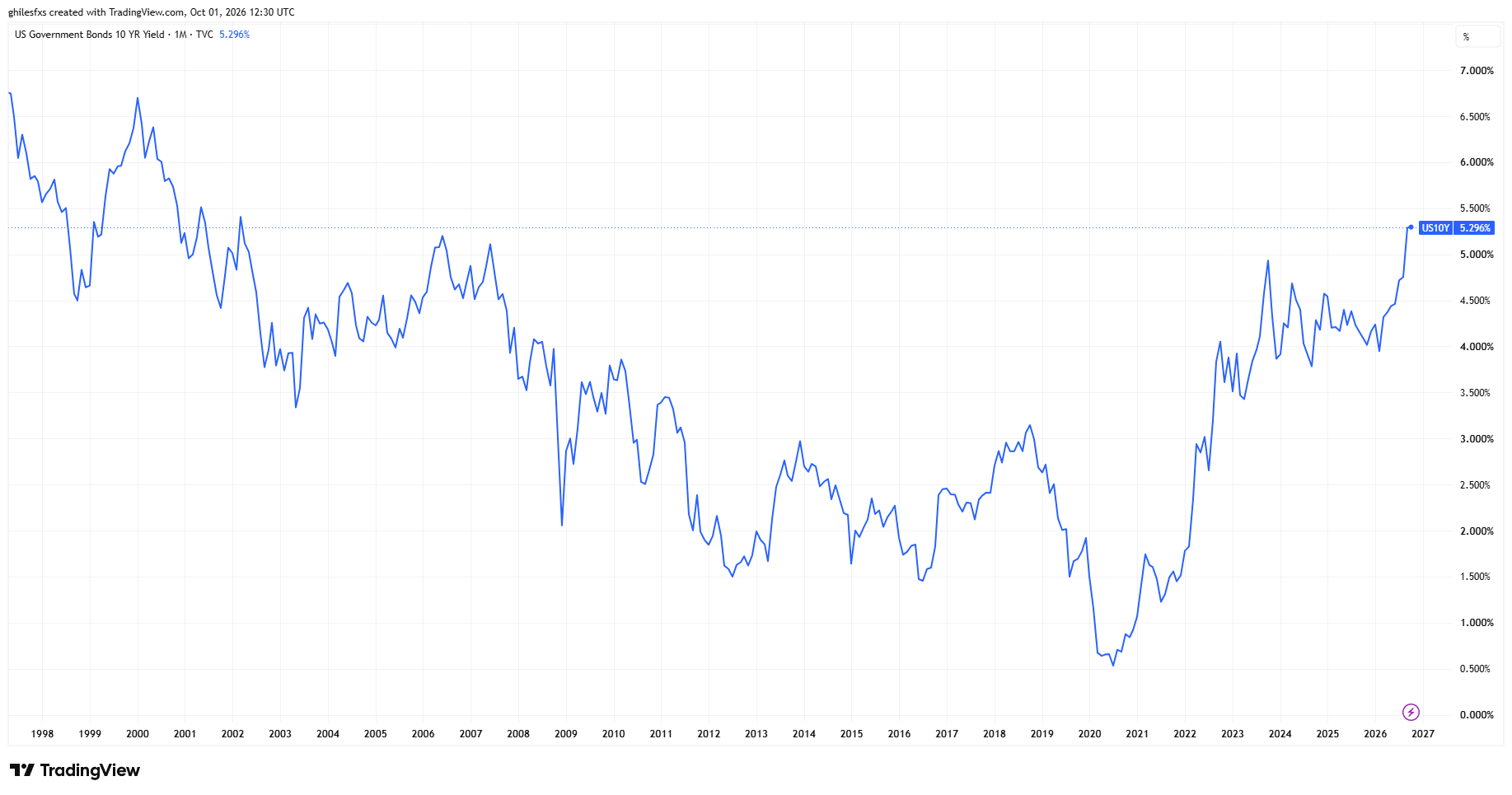
This creates an unusual divergence. Short-term monetary-policy expectations increasingly point toward patience, but longer-term borrowing costs continue to tighten. Fiscal concerns, persistent inflation risks, elevated energy prices and heavy capital expenditure linked to artificial intelligence infrastructure are among the factors putting upward pressure on longer-dated yields.
For the Fed, that could strengthen the case for waiting. If markets are already raising mortgage rates, corporate financing costs and other borrowing costs, policymakers may have less need to deliver another immediate increase themselves.
But it does not necessarily remove the need for another hike later. If growth remains robust despite higher bond yields, that resilience would again raise the question Kashkari has already posed: just how restrictive are current financial conditions?
The biggest risk is that markets confuse patience with a pivot
The softer PCE report has clearly changed the October calculation. It has not yet changed the underlying macroeconomic contradiction confronting the Fed. Inflation is cooling but remains too high. Employment growth is slowing but remains positive. Consumer demand is resilient. GDP estimates have been revised higher. Financial conditions are tightening, but the economy continues to expand.
That combination makes patience easier to justify than surrender. An October pause would give policymakers another month of employment and inflation evidence before December. It would also allow them to observe how September's hike and the sharp increase in Treasury yields filter through the economy.
But waiting for more evidence is very different from concluding that no more tightening is required.
Friday's jobs report could begin to settle that question. A genuinely weak labor report would reinforce the case that September's hike may have been enough. Another resilient employment report, particularly if accompanied by firm wages and stable unemployment, would tell a different story: the Fed may have the luxury of skipping October, but the economy could still be strong enough to tolerate, and inflation high enough to require, another rate increase before the year is over.
Markets are increasingly pricing the pause. The US economy has not yet priced out the hike.
Fed FAQs
Monetary policy in the US is shaped by the Federal Reserve (Fed). The Fed has two mandates: to achieve price stability and foster full employment. Its primary tool to achieve these goals is by adjusting interest rates. When prices are rising too quickly and inflation is above the Fed’s 2% target, it raises interest rates, increasing borrowing costs throughout the economy. This results in a stronger US Dollar (USD) as it makes the US a more attractive place for international investors to park their money. When inflation falls below 2% or the Unemployment Rate is too high, the Fed may lower interest rates to encourage borrowing, which weighs on the Greenback.
The Federal Reserve (Fed) holds eight policy meetings a year, where the Federal Open Market Committee (FOMC) assesses economic conditions and makes monetary policy decisions. The FOMC is attended by twelve Fed officials – the seven members of the Board of Governors, the president of the Federal Reserve Bank of New York, and four of the remaining eleven regional Reserve Bank presidents, who serve one-year terms on a rotating basis.
In extreme situations, the Federal Reserve may resort to a policy named Quantitative Easing (QE). QE is the process by which the Fed substantially increases the flow of credit in a stuck financial system. It is a non-standard policy measure used during crises or when inflation is extremely low. It was the Fed’s weapon of choice during the Great Financial Crisis in 2008. It involves the Fed printing more Dollars and using them to buy high grade bonds from financial institutions. QE usually weakens the US Dollar.
Quantitative tightening (QT) is the reverse process of QE, whereby the Federal Reserve stops buying bonds from financial institutions and does not reinvest the principal from the bonds it holds maturing, to purchase new bonds. It is usually positive for the value of the US Dollar.
Author

Ghiles Guezout
FXStreet
Ghiles Guezout is a Market Analyst with a strong background in stock market investments, trading, and cryptocurrencies. He combines fundamental and technical analysis skills to identify market opportunities.















