Why the RBI is trapped — and why a rate hike could make the Indian Rupee weaker
The Indian Rupee (INR) is under renewed pressure as oil prices hover around $100 a barrel and US yields rise. The Rupee has logged a year-to-date (YTD) loss of over 7.0% against the US Dollar (USD), making it one of the weakest emerging market currencies in Asia. Currently trading above the key psychological level of 96.00, the USD/INR pair remains within striking distance of its record high ahead of the highly anticipated Reserve Bank of India (RBI) October 5-7 monetary policy review meeting.
India's economy demonstrates strong resilience
The central bank is widely expected to hike interest rates and shift towards a more restrictive stance this month as widening inflationary pressures stemming from higher crude oil prices create headwinds for the domestic economy.
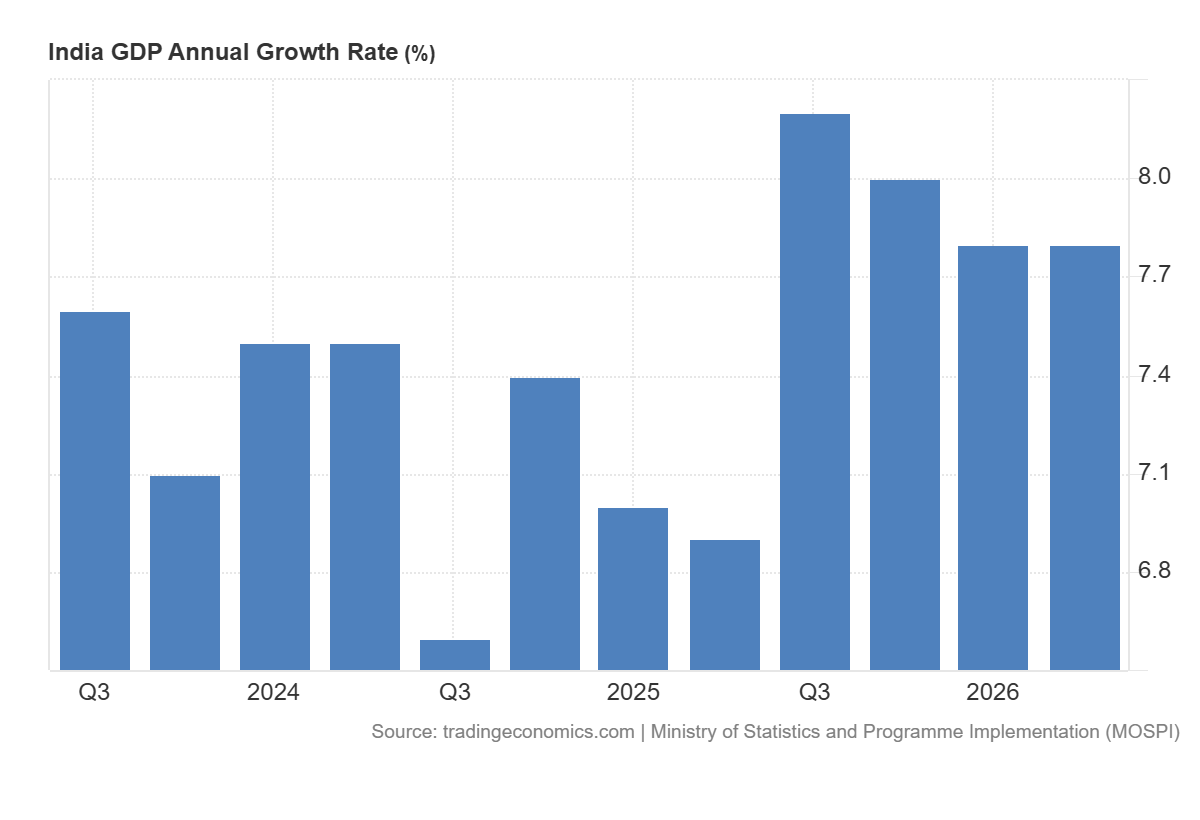
In fact, India's real Gross Domestic Product (GDP) grew 7.8% in the April-June quarter, surpassing the RBI's earlier projection of 7% and highlighting the resilience of domestic economic activity. The Finance Ministry, in its latest Monthly Economic Review in September, noted that India entered the second quarter of Financial Year (FY) 2026-27 on a strong footing, but cautioned that it cannot afford to take its growth for granted amid a challenging global environment.
External factors could slow economic momentum
The ministry now projects a GDP growth rate of 7.3% in the July-September quarter, far higher than the RBI’s 6.4% forecast. It, however, cautioned that the uncertainty surrounding crude oil prices and the state of the trade relationship with the US pose near-term risks to the economy.
Geopolitical tensions and the growing weaponization of supply chains are keeping energy prices volatile, which is particularly important for India as the country imports roughly 90% of its crude oil requirement. With Brent crude oil prices averaging above $100/barrel, a weakening currency could further intensify imported inflation through direct transport expenses and manufacturing input costs.
Inflationary concerns demand RBI rate hikes
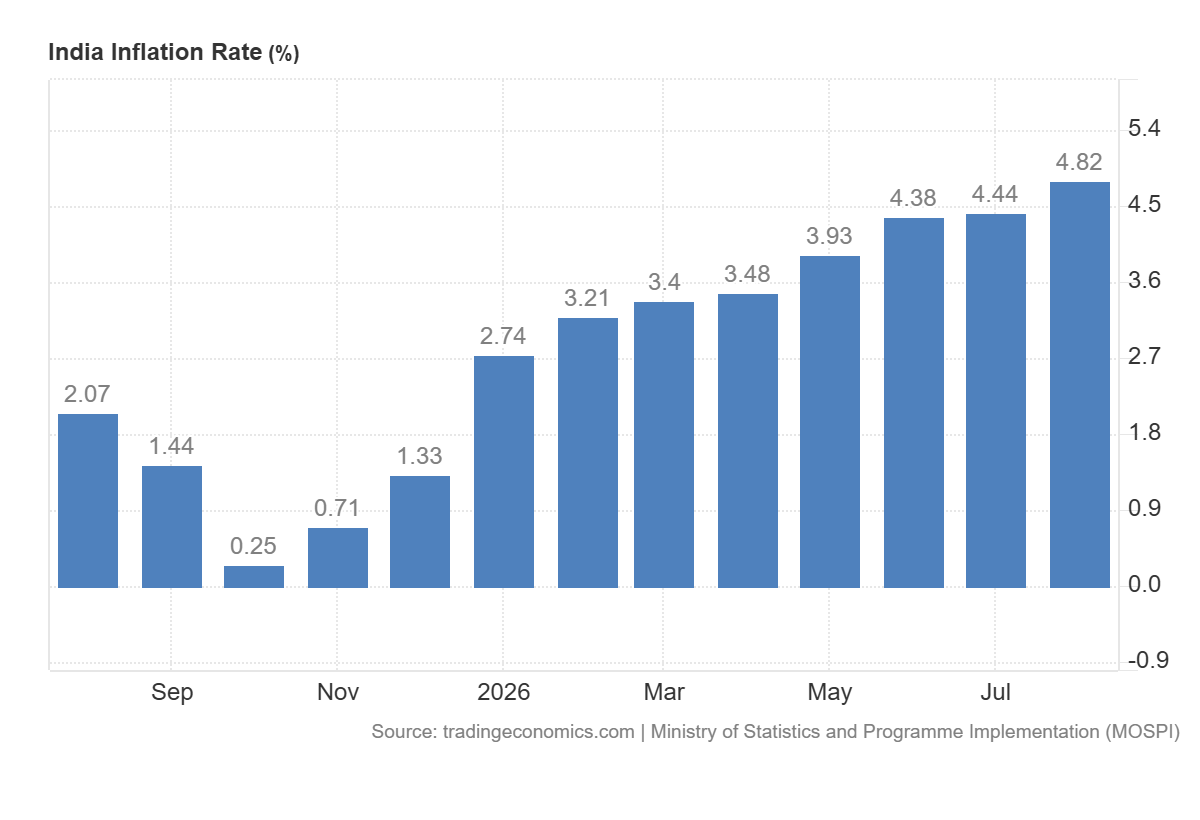
According to the official data, the headline Consumer Price Index (CPI) in India rose from 4.45% to 4.82% YoY in August, while the Wholesale Price Index (WPI) accelerated to 9.92% YoY. This leaves little room for the RBI to keep rates unchanged.
Market participants expect the central bank to deliver a 25-basis point (bps) interest rate hike on October 7 and follow up with another 25-bps increase in December, aligning with the global tightening cycle. The move, however, might do little to provide meaningful respite to the Indian Rupee as higher interest rates risk choking overall economic growth and increasing the government's fiscal deficit by raising debt-servicing costs.
RBI could use massive FX reserves to stabilize the rupee
India’s fiscal deficit reached nearly 42% of the full-year target during the April-August period. Front-loaded spending on capital assets and rising expenditure could stretch the government's 4.3% FY 2026-27 fiscal deficit goal if tax revenues do not keep pace amid rising borrowing costs. This, in turn, feeds back into renewed currency weakness, making RBI rate hikes self-defeating.
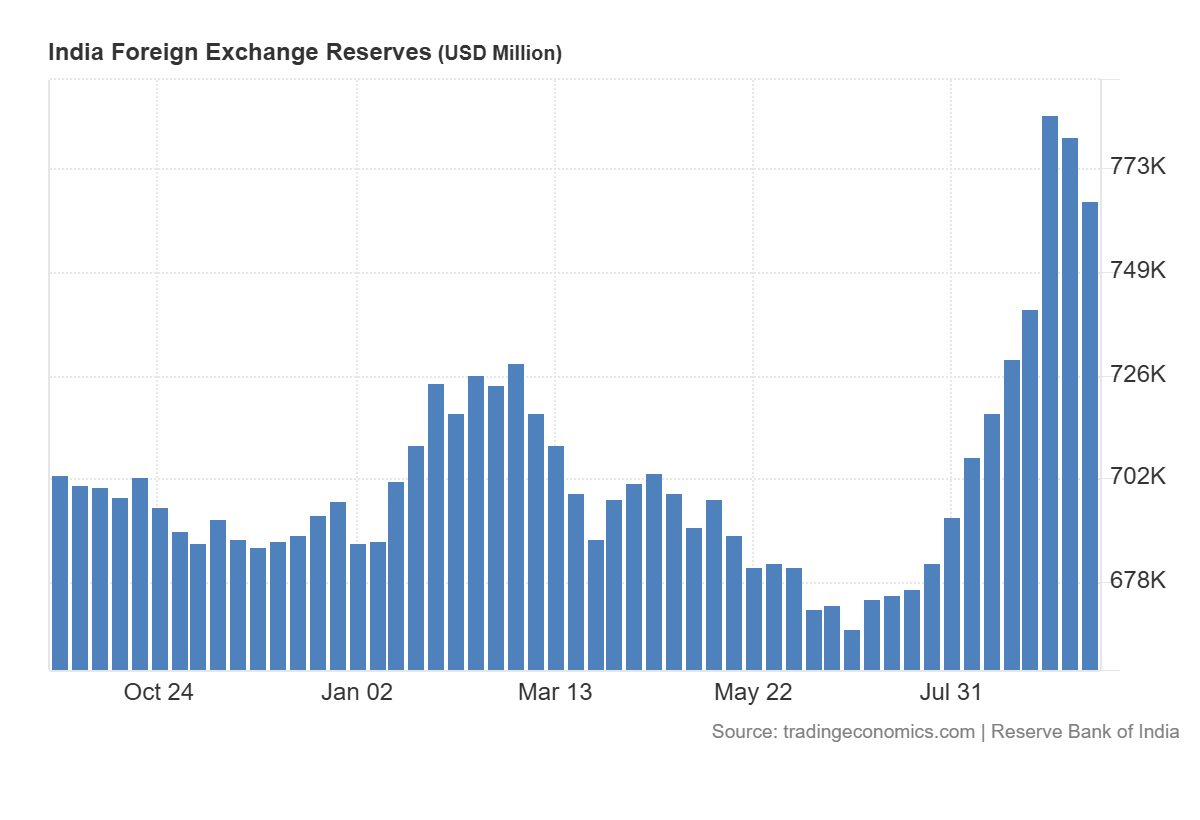
Meanwhile, India's FX reserves hit a record $785.7 billion in September, giving the RBI substantial capacity to stop the currency market volatility spiralling out of control. This, in turn, suggests that the intense depreciation pressure on the Indian Rupee is more likely to ease going forward.
USD/INR Technical Analysis: Bulls await trading range breakout above 96.60-96.65
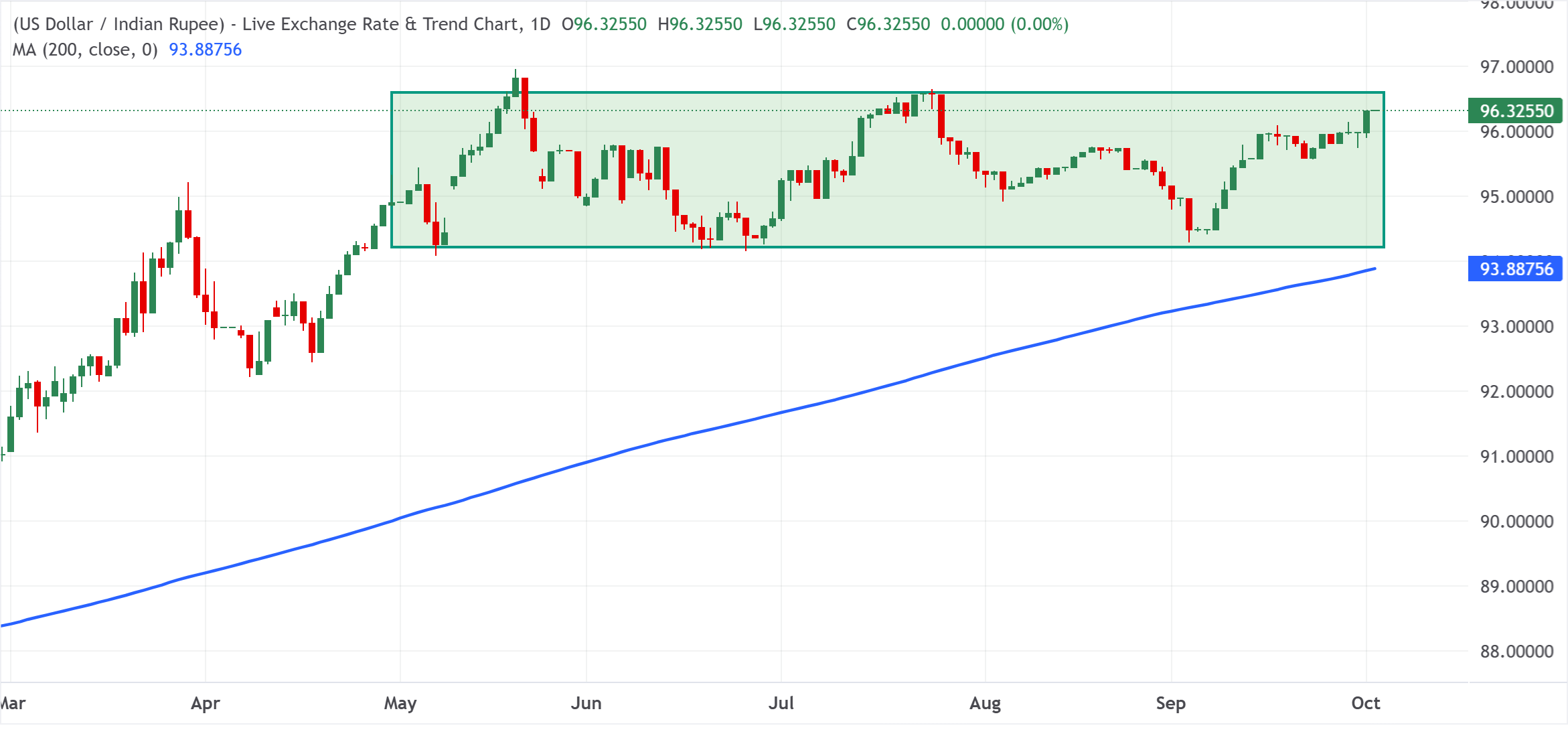
The two-way price swings since late April constitute the formation of a rectangle on the daily chart. This might still be categorized as a bullish consolidation phase against the backdrop of a strong rally from the May 2025 swing low. Bulls, however, need to wait for a sustained breakout above the trading range hurdle, around the 96.60-96.65 region, before aiming towards the all-time high, near the 97.00 neighborhood, which, if cleared, could pave the way for an extension of the well-established uptrend.
On the downside, immediate support emerges near the 95.75-95.70 horizontal zone ahead of the 95.00 psychological mark and the 94.25 area, or the lower end of the trading range. The latter is followed by the technically significant 200-day Simple Moving Average (SMA), around the 93.80 region, and a convincing break below this dynamic support is needed to hint at a more meaningful bearish shift.
RBI FAQs
The role of the Reserve Bank of India (RBI), in its own words, is "..to maintain price stability while keeping in mind the objective of growth.” This involves maintaining the inflation rate at a stable 4% level primarily using the tool of interest rates. The RBI also maintains the exchange rate at a level that will not cause excess volatility and problems for exporters and importers, since India’s economy is heavily reliant on foreign trade, especially Oil.
The RBI formally meets at six bi-monthly meetings a year to discuss its monetary policy and, if necessary, adjust interest rates. When inflation is too high (above its 4% target), the RBI will normally raise interest rates to deter borrowing and spending, which can support the Rupee (INR). If inflation falls too far below target, the RBI might cut rates to encourage more lending, which can be negative for INR.
Due to the importance of trade to the economy, the Reserve Bank of India (RBI) actively intervenes in FX markets to maintain the exchange rate within a limited range. It does this to ensure Indian importers and exporters are not exposed to unnecessary currency risk during periods of FX volatility. The RBI buys and sells Rupees in the spot market at key levels, and uses derivatives to hedge its positions.
Author

Haresh Menghani
FXStreet
Haresh Menghani is a detail-oriented professional with 10+ years of extensive experience in analysing the global financial markets.