Week ahead – Fed minutes in the spotlight amid bond market rout
- Energy crisis and soaring bond yields to stay in driver’s seat in quiet week.
- Fed minutes eyed after drop in October rate hike bets.
- ISM services PMI and Treasury auctions to be watched too.
- Canadian employment, Japanese wages and ECB minutes also on tap.

Iran is dominant market theme
The first full week of October and the final quarter of the year get underway with little fanfare in terms of the economic agenda. But far from being short on excitement, the coming week will test market nerves, as government bond yields continue to soar on growing worries that the energy crisis will only get worse, fuelling inflation.
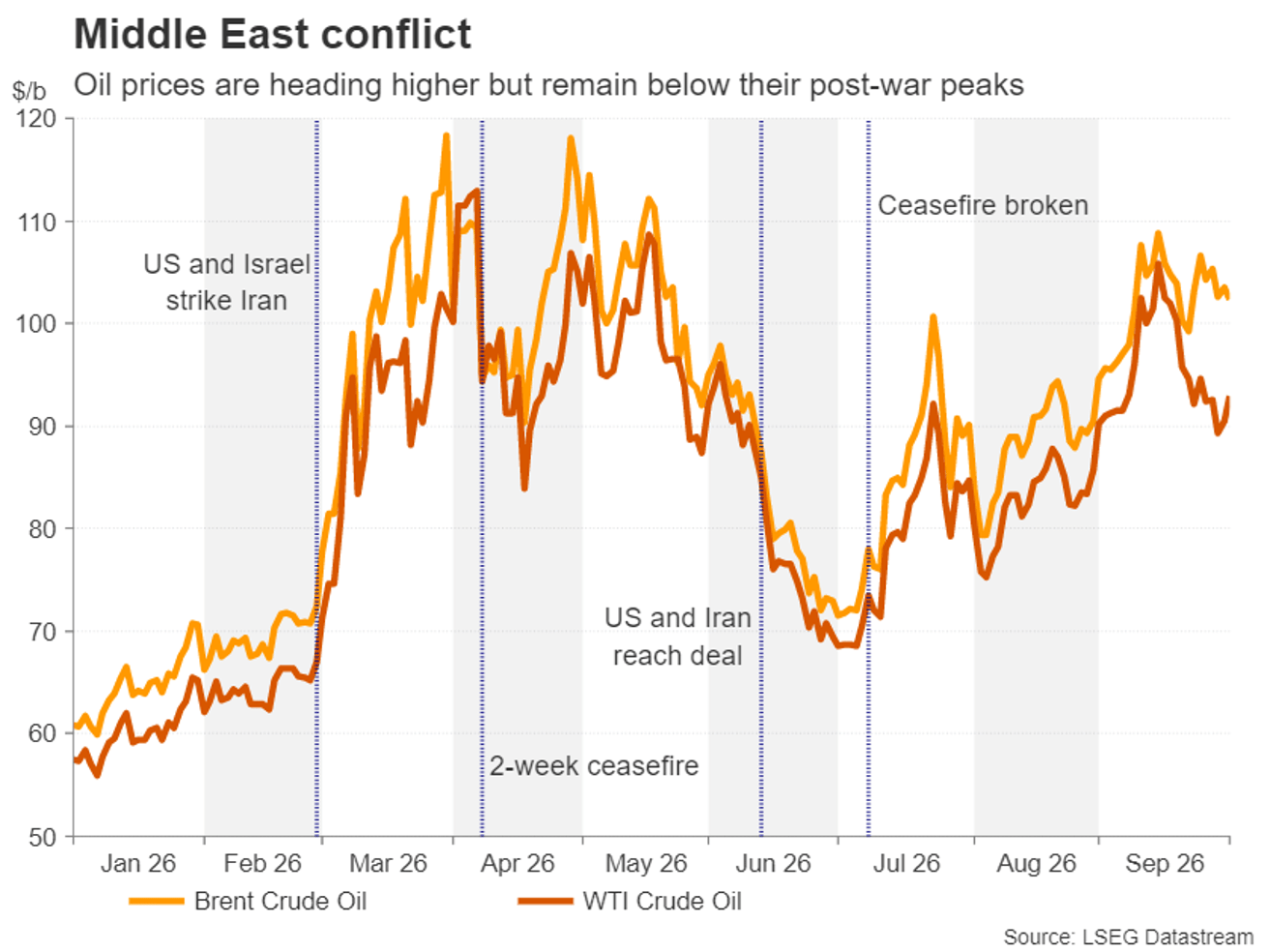
Ever since the collapse of the US-Iran ceasefire agreement on July 8, oil prices have been trending higher. Yes, it’s a relief that the move has been more gradual this time than the initial surge at the onset of the war, and that neither WTI nor Brent crude futures have surpassed their previous peaks, but the lack of any progress to end the war is making investors nervous.
Despite ongoing diplomatic efforts by regional mediators, Washington and Tehran are no closer to bridging their differences, and with neither side appearing willing to compromise, hopes for a near-term resolution to the conflict are dimming. For investors, navigating the headlines has gotten even trickier lately amid all the conflicting signals.
The US has reportedly made a counter proposal to Iran’s seven-day ceasefire plan it rejected, while kicking out the Iranian delegation visiting New York for the UN General Assembly out of the country. In the meantime, President Trump is making fresh threats, warning that “the time is coming” to make a deal or “blow up” Iran.
Oil prices elevated but no runaway rally
Amidst all this, oil prices have been relatively tamed, but the broader trend is clearly up. More importantly, further increases from the current elevated levels will put even more strain on households and businesses across major economies.
The only real positive development is that Gulf nations have gone through great lengths to ensure that their oil exports make their way out of the region safely, keeping the supply tabs open. But although the energy crisis is manageable for now, there is growing angst about the outlook, as inflation rears its ugly head again.
Bond market jitters worsen
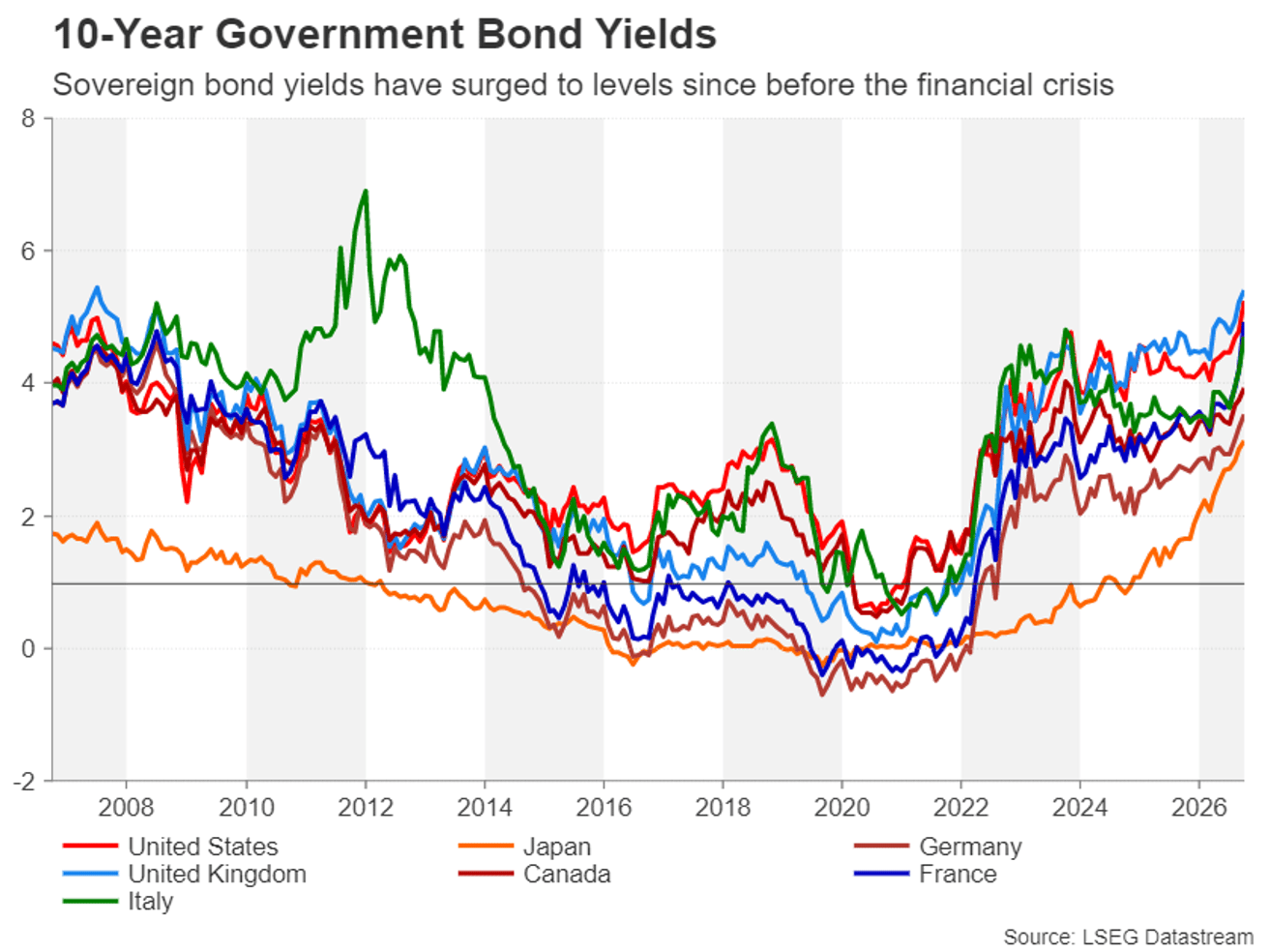
The anxiety about high inflation has sparked renewed selling in government bonds. The problem for bond markets is that the inflation threat couldn’t have come at a worst time. With many governments spending way beyond their means and doing little to tackle their deficits and in addition, tech giants issuing record debt to finance their AI investments, bond markets are being inundated with supply at a time when central banks are no longer active buyers.
The US 10-year Treasury yield, which was trading around 4.0% right before the war started, jumped more than 50 basis points in September, surpassing 5.3% to reach the highest since 2002. UK, French and other European yields have also surged. Japanese yields have been rising somewhat more steadily lately but nevertheless scaling multi-decade highs.
This makes bond markets highly vulnerable to a debt crisis, especially in a week when the US, UK and Japanese governments are scheduled to auction long-term debt. Hence, traders will be closely tracking all the developments in the Middle East, as any escalation could easily trigger panic in bond markets, while progress in ceasefire talks would revive peace hopes.
Dollar and Gold go opposite ways but stocks stay calm
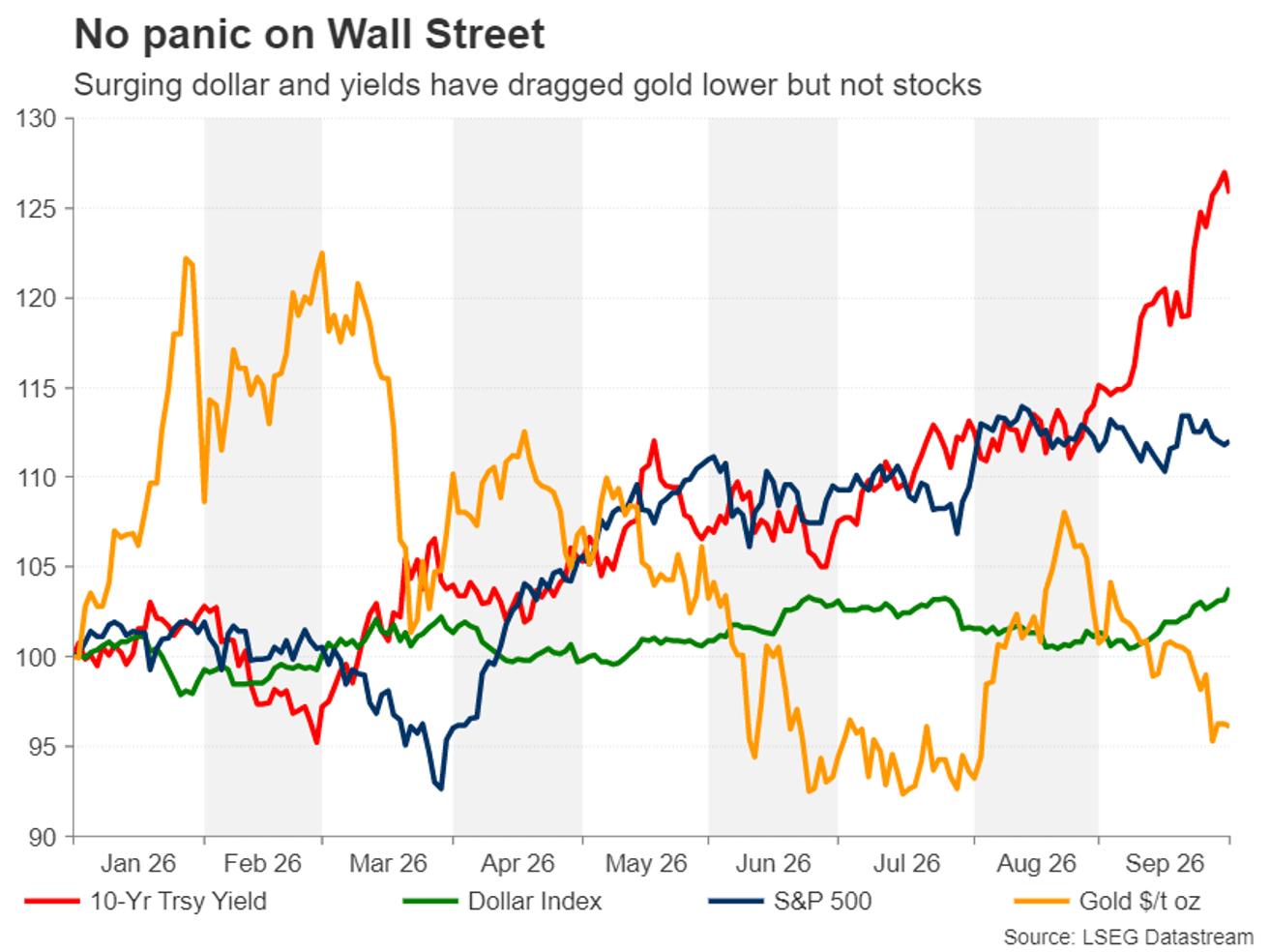
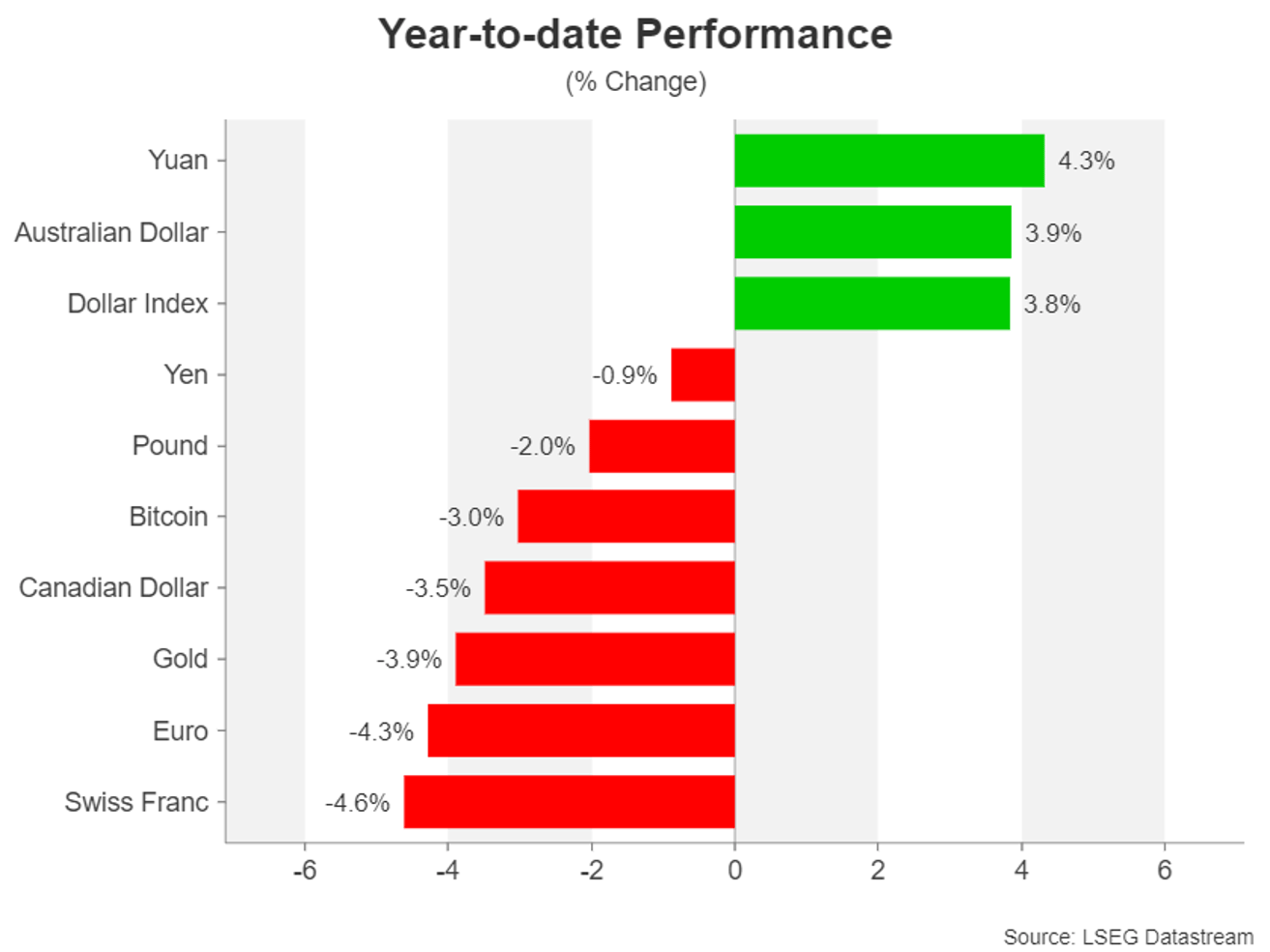
The US dollar has been the biggest beneficiary of the mounting expectations of higher interest rates around the globe, pummelling gold. However, Wall Street has been surprisingly resilient throughout all this. Skyrocketing earnings for AI-related companies, which for the time being remain immune to the energy crisis, are propping up the optimism. Crucially, as the start of the Q3 earnings season approaches, the AI outlook continues to strengthen.
However, whilst AI stocks have so far shrugged off the rise in borrowing costs, it’s hard to predict what the exact pain threshold is for the 10-year Treasury yield, to which they’re most sensitive. The much softer-than-expected PCE inflation readings for August brought about some relief, removing the urgency for the Fed to hike again as soon as this month.
Fed minutes may offer some direction
Most Fed officials see at least a further 25-bps hike by December according to the September dot plot, but the picture for 2027 is muddied. Although eight FOMC members predicted an additional hike next year, the rest either want to keep rates unchanged after the projected December increase or to cut them. The minutes of the September meeting due Wednesday might shed some light on whether the other 10 committee members could be convinced to join the hawkish camp if the inflation outlook doesn’t improve soon.
If the minutes strike a more hawkish tone than the post-meeting Fedspeak, the dollar is likely to extend its month-long winning streak, while stocks could face some selling pressure if yields surge again.
Monday’s ISM services PMI for September will also be watched, particularly the prices and employment components, while the University of Michigan’s preliminary consumer sentiment survey for October will be important too on Friday. A further uptick in one- and five-year inflation expectations would heighten inflation concerns.
Can hawkish ECB minutes lift the Euro?
The European Central Bank will also publish the minutes of its September meeting next week, due Thursday. The commentary since the September 10 decision has been quite hawkish. But expectations for action in October currently stand at a lowly 25%. The ECB got an early start with its tightening cycle and so it can afford to wait until December before deciding whether to raise interest rates for a third time.
However, with headline inflation in the euro area fast approaching 4.0% and core inflation also creeping higher, an October rate hike cannot be ruled out. The meeting accounts may reveal how much appetite there is within the Governing Council for a back-to-back hike.
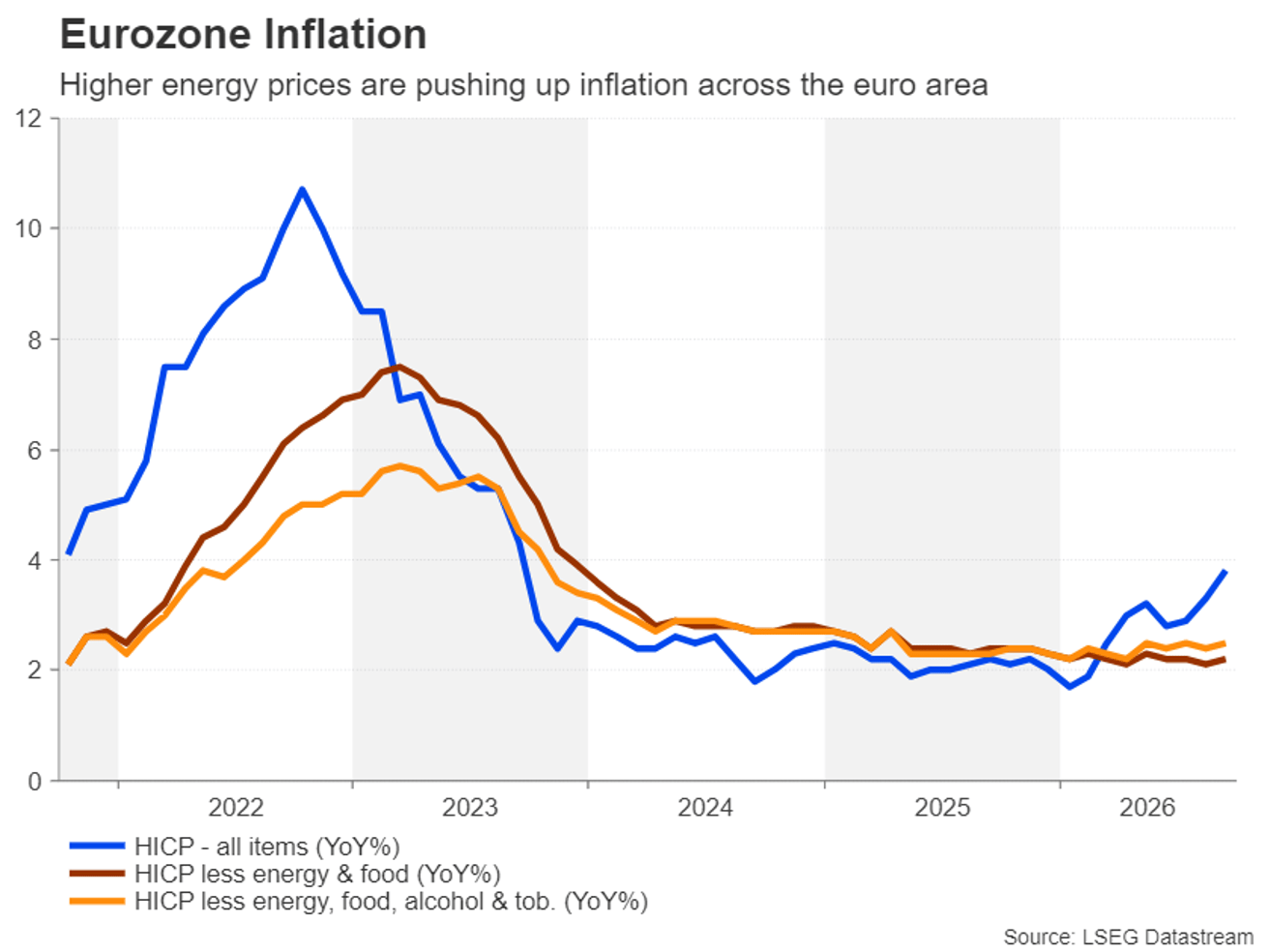
The euro, which has slumped to 16-month lows versus the dollar, could benefit from any hawkish surprises. But any gains are likely to be modest against the Eurozone’s stagflationary backdrop, political worries and the stronger greenback.
Yen on the backfoot again
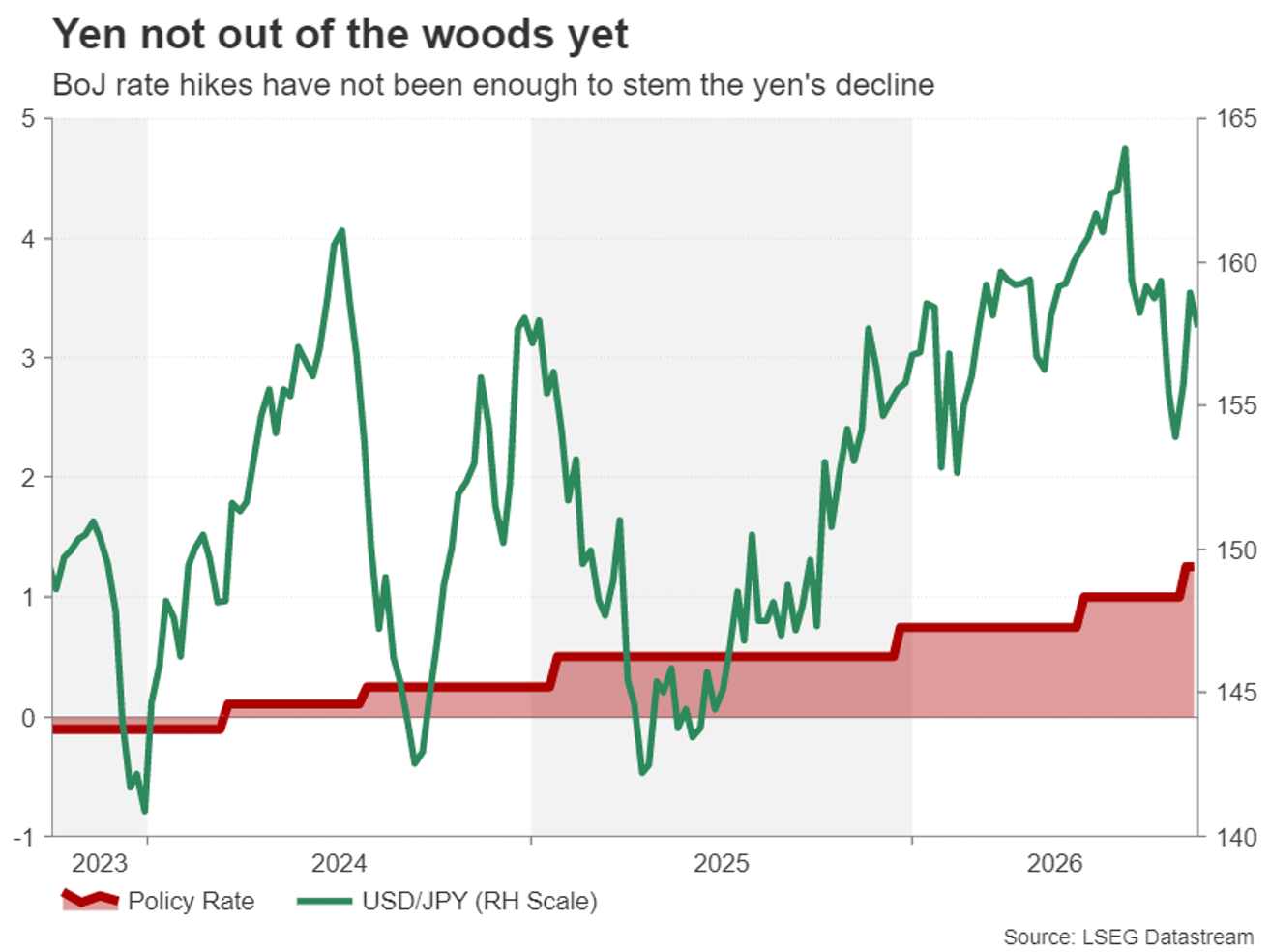
The Japanese yen has also come under pressure from the dollar’s broad rally. As Japanese and US officials scramble to defend the yen, the Bank of Japan has undermined the joint effort by remaining uncommitted to an accelerated pace of tightening. Some BoJ board members are questioning the strength of the Japanese economy and whether underlying inflation has sustainably reached 2%.
August wage growth figures out on Wednesday and household spending data on Friday could add to the yen’s bearish momentum if they disappoint, potentially driving the dollar back above 159 yen.
Loonie eyes labour market improvement
Lastly, Canadian employment numbers will come into focus on Friday amid the stalled trade negotiations with the US. Despite concerns about the trade war drag on the Canadian economy, rate hike bets for the Bank of Canada have been rising.
With inflation at 3.0% and energy prices unlikely to normalize anytime soon, investors think a 25-bps increase before year-end is baked in, while there’s an almost 50% probability of the BoC moving in October. Those odds could rise if employment rebounded sharply in September after August’s decline. Solid jobs data may pave the way for a hawkish BoC pivot, putting the Canadian dollar on firmer ground after sliding to one-and-a-half-year lows versus the greenback.
Author

Mr Boyadjian graduated from the London School of Economics in 1999 with a BSc in Business Mathematics and Statistics.