Which factors are likely to dominate the EUR/USD exchange rate during the next years?


Introduction
Which factors are likely to be important and dominate the EUR/USD exchange rate during the next few years? We are going to discuss fundamental and technical evidence for the most important currency pair worldwide. Our results suggest that the US Dollar is still within a secular bear trend versus the Euro.
Fundamentals
US American trade policy as well as geopolitical trends paint a bearish picture for the US Dollar. The Trump administration’s policies are implicitly and explicitly targeting a weak greenback. Moreover, bullish EUR/USD pressure is likely to build from Europe as a result of its geopolitical situation.
US Trade Policy
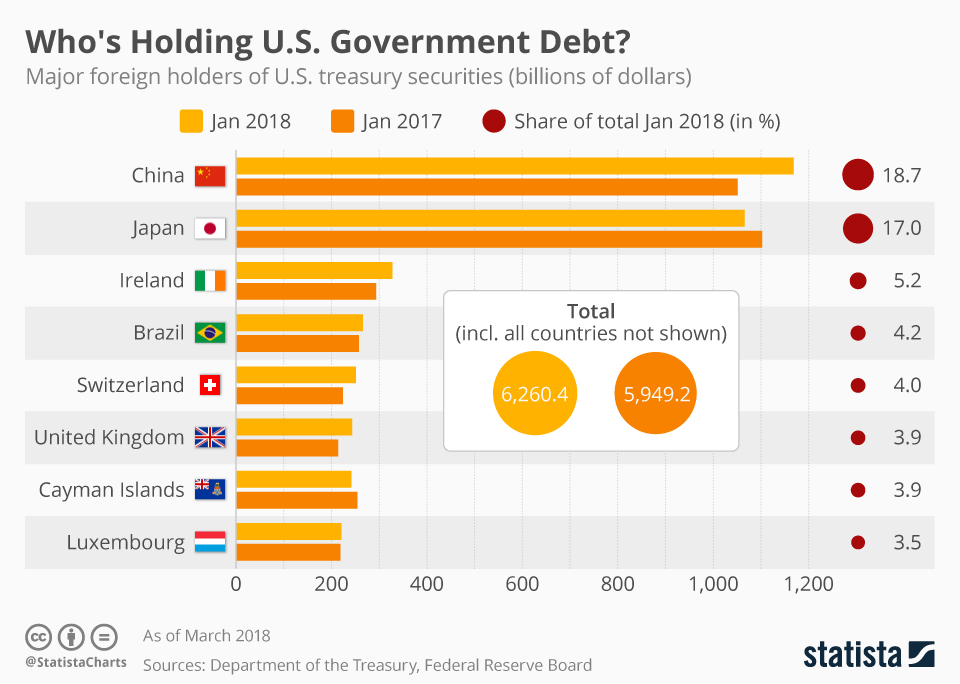
Trump’s “AmericaFirst” policy has two non-negligible effects on US Dollar demand.First of all,it obviously decreases demand for foreign products and increases demand for US products. Consequently, this causes negative pressure for the US dollar. Second, some of the parties that are severely affected by US trade policy are among the biggest holders of Dollar denominated debt. Theyhave a big interest to diversify their US dollar exposure into other currencies. This is an ongoing processalready. The Chinese crude oil future market is one example of that. The recent German call for an independent international payment system is another example. Meanwhile, the US President and Treasury Secretary are doing their part to set stage for a weaker dollar. Throughout recent history, US policymakers were at least verbally favouring a strong dollar. That’s not the case anymore. Trump and Mnuchin do not signal to have any interest in a strong US Dollar. All in all, political factors from the United States are bearish for the US dollar.
European Union
The geopolitical situation in Europe adds to the case of a weaker US Dollar versus the Euro. The Brexitwas the first major anti-European vote but may not be the final one. TheTimbro Authoritarian Populism Index shows the average share of votes for populist parties in Europe. The chart suggests that Europe is withina slow but clear trend of rising populism. Opposition of a European integration is one key element that unites European populist. Hence, there is a non-negligible probability that some of the EU members will be leaving the EU in favour of their own sovereignty during the next few years.
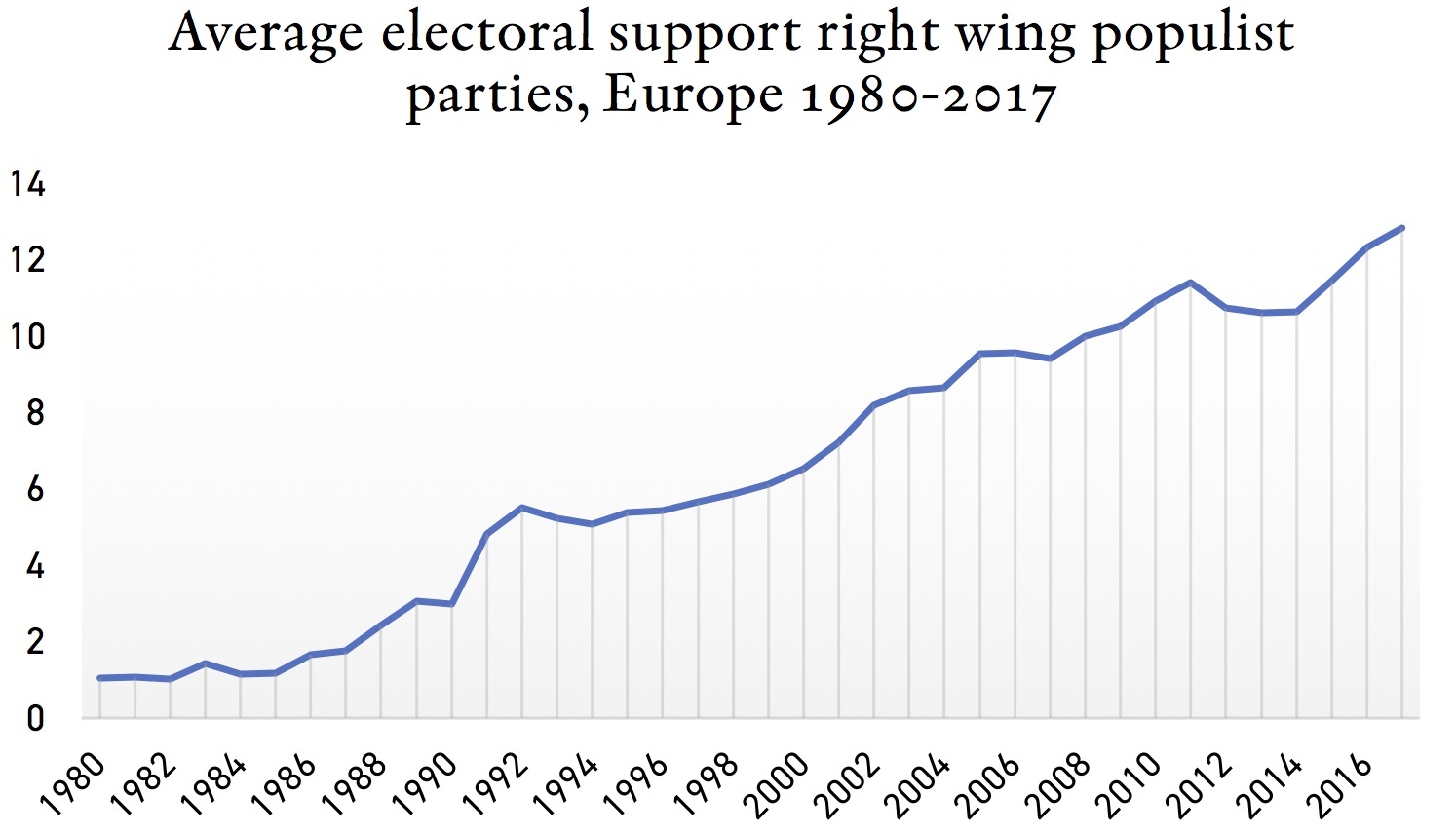
Why should that have bullish implications for the Euro? Regional data for 26 European countries suggest a positive correlation for unemployment and populist voting. Moreover, European fiscal and monetary policy as it happens today is probably inappropriatefor the weakest EU economies. Countries like Greece and Italy would most likely benefit from an expansive monetary and fiscal policy. Moreover, a drachma or lira would probably float far below the Euro value improving their competitiveness. There are simply more arguments for weaker European economies to leave the Euro then for stronger ones. After all, a German exit scenario probably results in a very strong German currency. Trade barriers and a20%-30% currency appreciation is not a favourable scenario for the export-oriented German economy. Instead, it Ismore likely that economically weaker Euro countries turn their back on theEU during the next few years. This in turn means upward pressure on theEuro. Hence, the populism trend is rather bullish for the Euro currency.
Technical Evidence
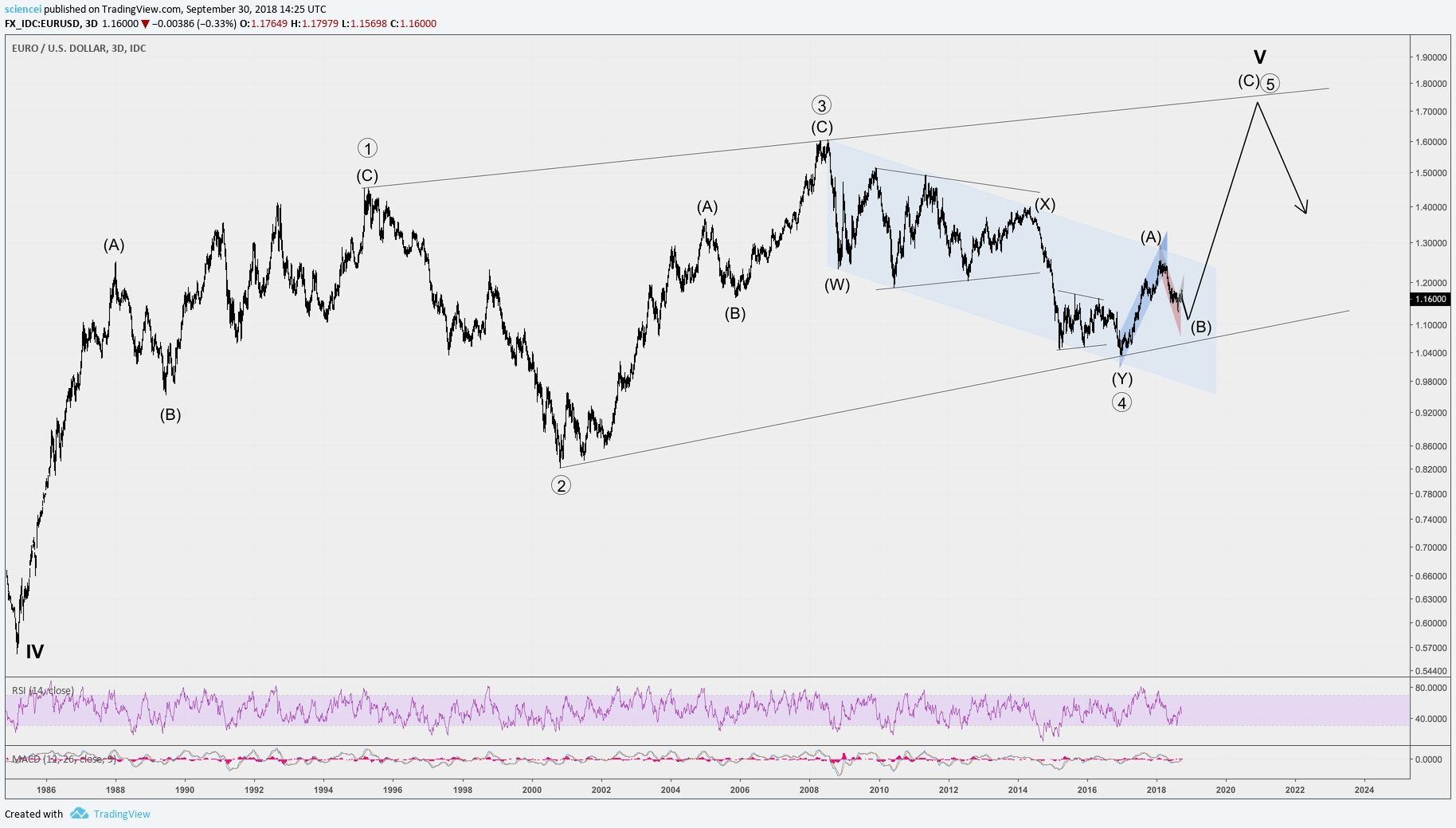
The US dollar has been appreciating versus the Euro basket for the past few decades. Moreover, we do not have sufficient evidence for a reversal of this secular trend. The graph shows higher highs and higher lows over the past 40 years. As simple as it is, this is an upside trend.
Moreover, we see a couple of 3-wavemoves into the past couple of higher highs. That’s not a valid termination of a trend in an Elliott wave framework. It is more likely some diagonal pattern, which still unfolds.We do not have to worry whether we are dealing with an ending or a leading diagonal at this stage. It still needs another leg to the upside before completion. Another leg implies an entire cycle of bullish Euro action. The upside leg is depicted in our Elliott wave chart. It paints a bullish EUR picture within an Elliott wave framework. All in all, the EUR/USD is likely to unfold an A-B-C wave sequence of intermediate degree to the upside in order to complete a paramount degree diagonal pattern.
The technical outlook does not suggest that the US Dollar is depreciating from tomorrow on. As a matter of fact, the recent Dollar strength is likely to persist for another few months. However, this is subject to a shorter time-frame analysis, which is not part of our long-term case here.
Conclusion
Fundamental and technical evidence suggest that the US Dollar is likely to depreciate versus the Euro during the next few years. Fundamentals are driven by policy and geopolitical trends on both sides of the Atlantic. The technical picture shows a secular bear market for the US Dollar. There is simply not enough evidence that this secular trend reversed within an Elliott wave framework.
All in all, the US Dollar is likely to continue weakening versus the Euro during the next few years. The most recent US Dollar strength is probably just another countertrend correction.
Interested in more of our ideas? Check out Scienceinvesting for more details!
Interested in more of our ideas? Check out Scienceinvesting for more details!
Author
Science Investing Team
Science Investing