What’s behind the positive correlation between S&P 500 & Gold?


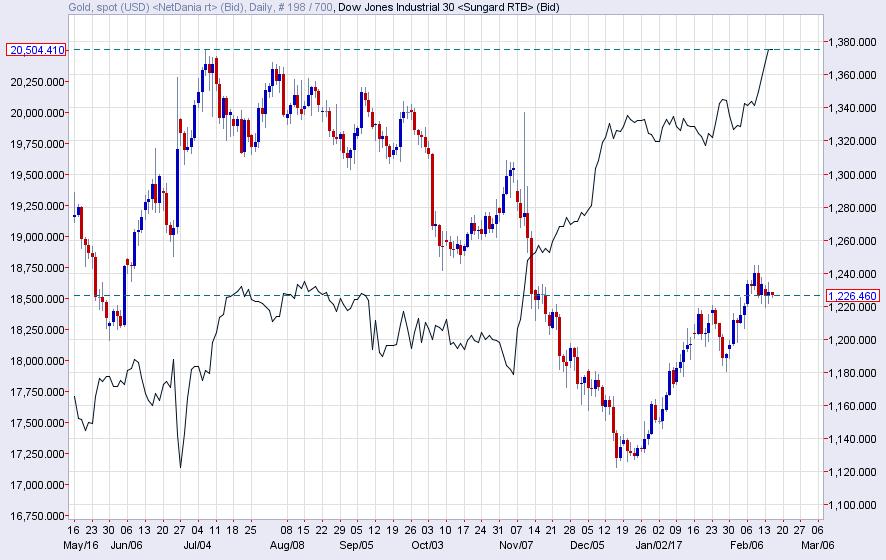
Gold and stock markets usually move in the opposite direction as investors flee from the risk assets (S&P 500) to safe havens (Gold) during times of uncertainty.
Gold topped out in July 2016 as the S&P 500 and other major indices across the globe quickly recovered from the Brexit dip. On similar lines, Trump victory was followed by an extension of the rally in the S&P 500 and drop in the yellow metal.
Gold dropped to a low of $1122 in December as the US stocks continued to march higher. However, the inverse correlation weakened in late December and the yellow metal started tracking the S&P 500 higher in the subsequent days.
Following could be the reason for the rally in gold despite record highs in S&P 500
Dollar Index: The DXY retreated from the high of 103.81 to 99.84 during the last few weeks. That could have aided the rally in gold. However, it worth noting that the treasury yields traded in a sideways channel, despite which the metal has rallied from $1122 to $1245 levels.
Rising inflation expectations: Gold has had a strong positive correlation with the 10-year breakeven inflation rate and the 5Y 5Y forward inflation expectations. However, the yellow metal had failed to rally despite the sharp rise in the inflation expectations since November. The metal appears to have done a ‘catch up job’ with the rising inflation expectations.
Trump uncertainty: President Trump delivered on all the hard promises made during the presidential campaign… criticism of German, Japanese and Chinese trade policies, talking down the US dollar, ordering wall on the Mexican border… all heightened odds of a global trade war. The rise in the uncertainty pushed up the safe haven demand for the yellow metal.
Fiscalism is inflationary: The switch from Monetarism to Fiscalism is inflationary. This is because, aggressive monetary easing helps nations steal (import) foreign demand, while aggressive fiscal policies (e.g. Infrastructure spending) boosts domestic demand. Moreover, the money enters the real economy rather than the financial markets.
Technical factors: Gold ended the three-year losing streak after ending 2016 higher at $1150.62 levels. Moreover, the positive close was despite heightened odds of a faster Fed policy tightening under Trump Presidency. Thus, the turnaround brought in technical buyers.
Road ahead
Gold could drop on massive tax cuts and fiscal spending program in the US, however, the dip could prove to be short lived as rising inflation expectations are likely to pull up the yellow metal in the long run. Furthermore, record rally in stock markets could also force investors to allocate a small portion of their money to gold (hedge demand).
Author
Omkar Godbole
FXStreet Contributor
Omkar Godbole, editor and analyst, joined FXStreet after four years as a research analyst at several Indian brokerage companies.