What the Greenland crisis says about the Euro

President Trump has held firm on his demands of Greenland for a month now, a long time for the master negotiator to not produce a compromise. Trump also seems to have totally rebuffed any attempts by European leaders to calm the situation, not boding well for those who hope for an off-ramp to cool the situation.
The Euro has emerged the biggest gainer in the short run, being the natural hedge against Dollar risk, although a more general safe haven move into Swiss Franc and Swedish Krona is also underway.

This may work in the short run, but traders should remember that this is all built on a decoupling of the underlying US economy and the Dollar. US growth remains multiples of European growth, whilst recent jobs data has curtailed the narrative surrounding the need for lower US rates.
Moreover, if this situation spirals out of control, leading to a permanent worsening in US-EU relations and in the worst case, US exit of NATO, the Europeans stand to lose much more. In such a scenario, the post-war consensus would fall apart and be replaced by something likely more akin to Great Power politics and scratchy pragmatism.
Most seem to think this would break in the Euro’s favour. I couldn’t agree less. In a time of such uncertainty, I believe there would be a race into USD and US assets as insurance against an expansionary Russia or political upheaval in Europe as larger defence budgets siphon funding away from already stressed public services.
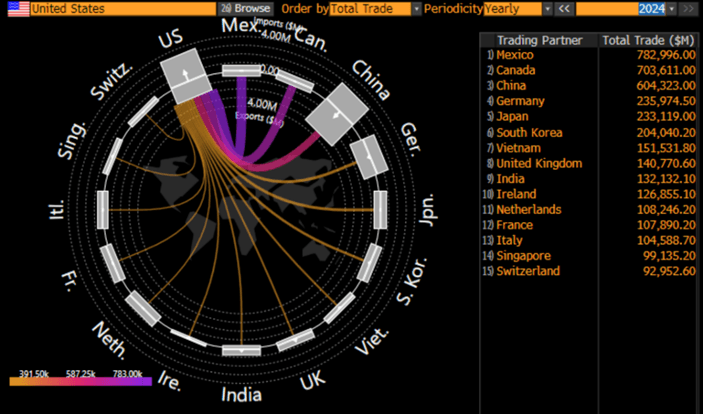
Naturally, Trump’s tariff threats offer another problem, with 10% tariffs allegedly kicking in forward of February 1st and 25% tariffs following forward of June 1st should the US not be allowed to purchase Greenland. Believing Trump’s tariff threats after the events of last year leaves one very exposed to looking ridiculous, but even a 10% additional tariff on the Eurozone would dampen already anaemic growth.
My base case is some sort of compromise being reached that sees Russian and Chinese economic interests evicted from the island in favour of American. In such a scenario, the market may return to normal quite quickly, but anything longer puts the Euro under real stress, possibly even existential if the US pushes ahead with tariffs.
Author
David Stritch
Caxton
Working as an FX Analyst at London-based payments provider Caxton since 2022, David has deftly guided clients through the immediate post-Liz Truss volatility, the 2020 and 2024 US elections and innumerable other crises and events.