|

What is happening to the EUR/CAD?

The novel coronavirus has brought upon a “series of unfortunate events”, causing most markets to plummet including the ailing oil industry. With the world now at a standstill, factory production has more than halved, travel has nearly halted, commuters are working from home, all of which means that demand for the black gold has suddenly evaporated. But what does all of this have to do with the EUR/CAD? 

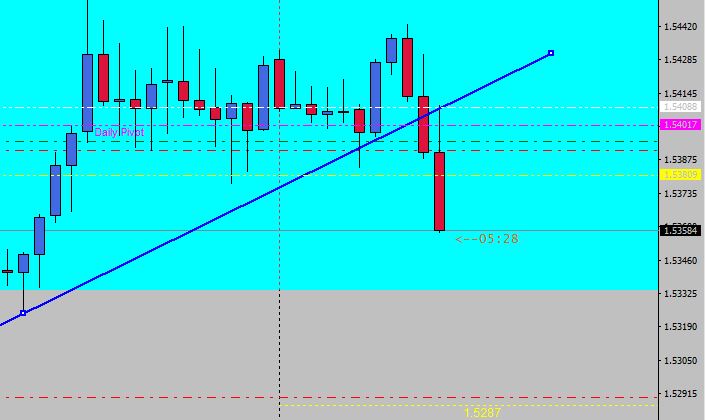
As Canada is a major oil exporter, CAD value is often impacted by changes in oil prices. With Monday’s historic crude futures oil plunge to near -$40 negative territory. We saw CAD pairs taking a hit. When the US later announced that it would support their oil industry with further stimulus we saw the CAD also responding to that with a short recovery, which is why in our morning webinar we chose to sell EUR/CAD at 1.5395 with SL initially at 1.5440 (now reduced to entry) and TP at 1.5290. Our trade was successful.
EURCAD

The market had climbed much higher during the first days of trading this week but is running into a major resistance area, which can be seen in the weekly chart. With the current volatility in the markets, we see demand in the Loonie which could weaken the EUR further. 

But what happens next? The EUR is also showing some steady recovery, as more and more EU countries are gradually lifting lockdown measures. These contradicting powers of support for both currencies will definitely keep the EUR/CAD volatile and we would be looking closely for more short-term trading opportunities. Join our free live BDSwiss webinars to get real-time insights on key price action, market analysis, interesting entry points and much more.

Author

Frank Walbaum

Frank Walbaum

FX Strategies.Asia

Frank has been working in the TV business for several years. Acquiring his skills in Germany’s biggest broadcasting station, he then chose to work and live in Asia, which was in 2007.


More from Frank Walbaum
Share:

Editor's Picks

GBP/USD holds recovery near 1.3400 as US-Iran tensions ease

GBP/USD finds some support near 1.3370 and holds onto its recovery near 1.3400 on Monday. The pair rebounds as the US Dollar loses its haven demand amid receding Mideast tensions after Iran confirms mediation efforts with the US. All eyes remain on Mideast updates and central bank talks.


EUR/USD rebounds toward 1.1450 on renewed USD weakness

EUR/USD bounces back toward 1.1450 in European trading on Monday. The pair finds fresh demand as the US Dollar slips amid US-Iran diplomacy hopes, following the weekend escalation. Hawkish ECB expectations also support the major's upside ahead of speeches from the Fed and ECB policymakers.

Gold pares losses; keeps the red below $4,100 on hawkish Fed bets

Gold trims a part of its intraday losses during the first half of the European session, though it retains the negative bias for the second straight day and remains below the $4,100 mark. The US Dollar (USD) attracts some intraday sellers and supports the bullion. Any meaningful upside, however, still seems elusive amid a bearish fundamental backdrop.

Bitcoin retreats as Middle East conflict overshadows ETF inflows

Bitcoin struggles to hold above $64,000 after a modest recovery the previous week. Risk sentiment dampens as tensions in the Middle East escalated after the US launched fresh strikes on Iran on Sunday, weighing on BTC. Meanwhile, improving institutional demand, with spot Bitcoin Exchange Traded Funds ending an eight-week streak of net outflows, has provided only limited support amid rising geopolitical uncertainty.

The US won't default on $39 trillion debt: Why financial repression is coming and Gold is the only hedge
As the US national debt surges past $39 trillion, policymakers face an unsustainable economic trajectory that threatens the global financial system. With a formal default out of the question and fiscal austerity politically unfeasible, the US government is increasingly likely to rely on financial repression, artificially keeping interest rates below inflation to erode the real value of its debt.
Five sessions, one round trip: Why the whipsaw is exactly what Warsh ordered

Markets opened July with a December hike as the base case and spent five trading sessions unlearning and relearning it. A 57K payrolls print bled the tightening bets out of the strip; a re-shut Strait of Hormuz is pushing them back in. Wednesday's minutes from the June FOMC meeting landed mid-round-trip, describing a world that had already stopped existing.