What happened to that “robust” job market?


For months, we’ve been hearing that the labor market is strong. As recently as July 30, the Federal Reserve claimed, “The unemployment rate remains low, and labor market conditions remain solid.”
Now, suddenly, there are all kinds of handwringing about jobs. A recent Scripps News report claimed, “Rising inflation and weakening job market raise fears of stagflation.”
What happened over the last few weeks to drastically change everybody’s outlook?
Nothing.
The fact is, the employment market has been weakening for months. It was merely obscured by bad data and overoptimistic analytic spin rooted in wishful thinking.
We can see the softening in the labor market when we look at the BLS data (suspect as it may be) over time.
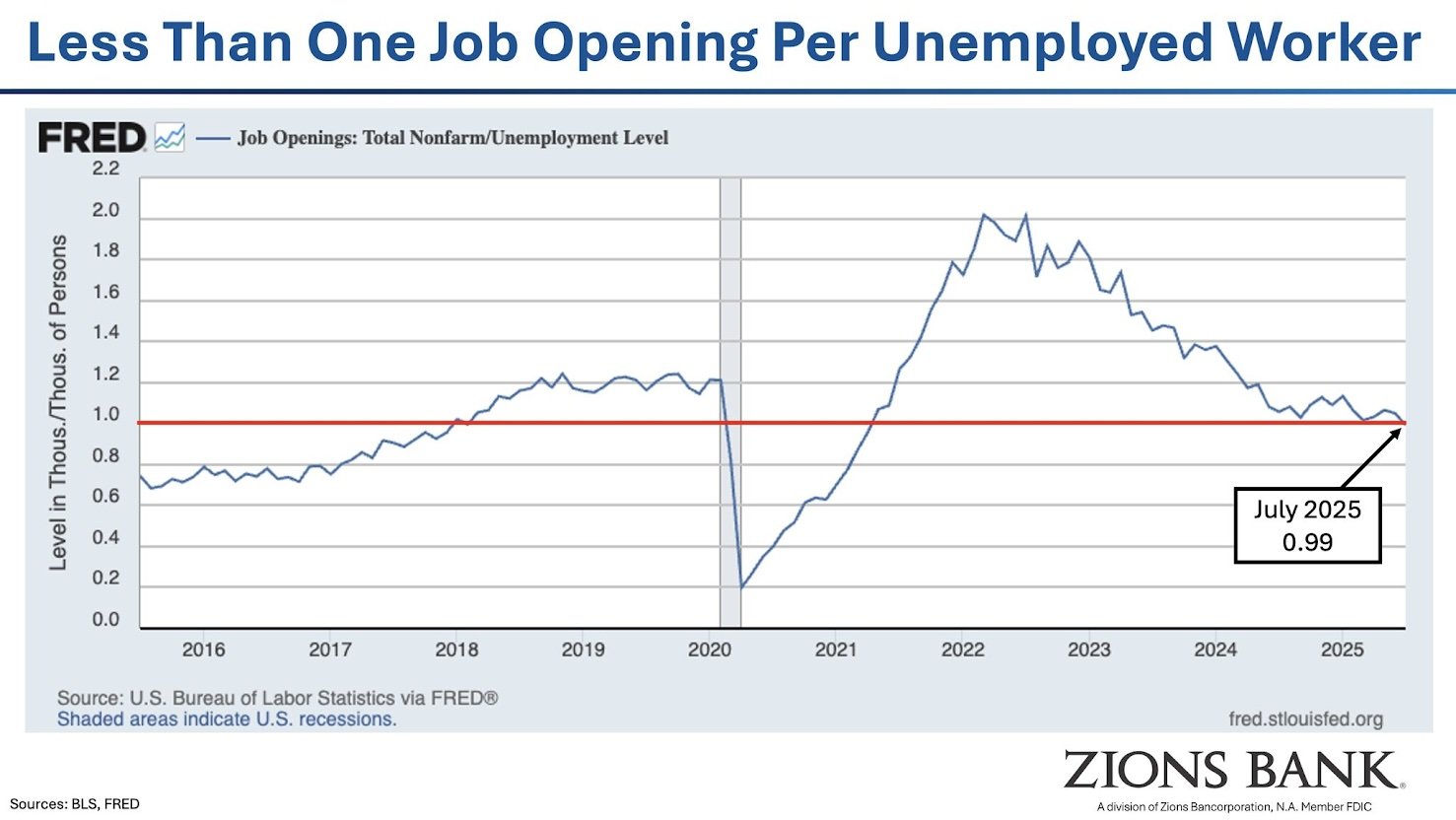
Note that job openings fell below pre-pandemic levels in early 2024.
Math kills jobs
Meanwhile, the BLS job creation data has been subject to substantial downward revisions.
The BLS has erased nearly 1 million (911,000) jobs that it initially claimed were created since March 2024.
The problem is that revisions generally aren’t widely reported.
The June data provides a great example of this phenomenon. The BLS initially reported 147,000 new jobs that month. When the agency released the July data in August, it revised that number all the way down to 14,000. Then, in the latest release, they revised the June number down again. As it stands, the economy shed 13,000 jobs in June.
These revisions are nothing new. +The BLS has a long history of reporting rosy job numbers only to quietly come back and revise them downward down the road.
In 2023, job numbers were revised down in 10 of the 12 months.
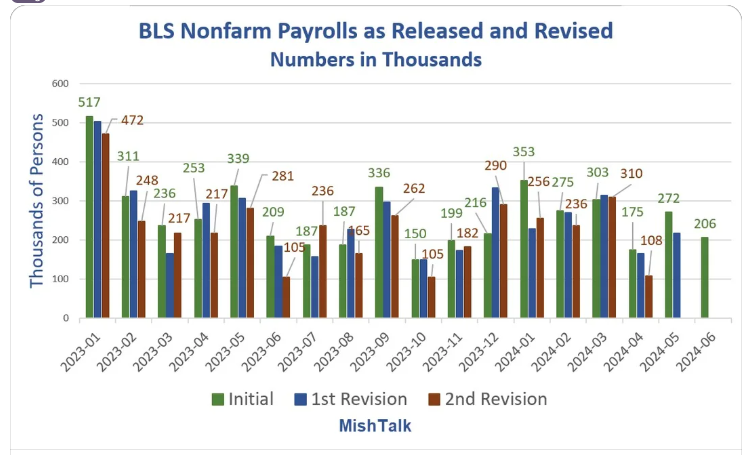
Looking back over time, it’s clear that revisions have always been part of the process. The thing that’s striking is that the revisions are almost always down. Since 2003, the final BLS numbers were lower than the initial report 14 times compared to seven upward revisions.
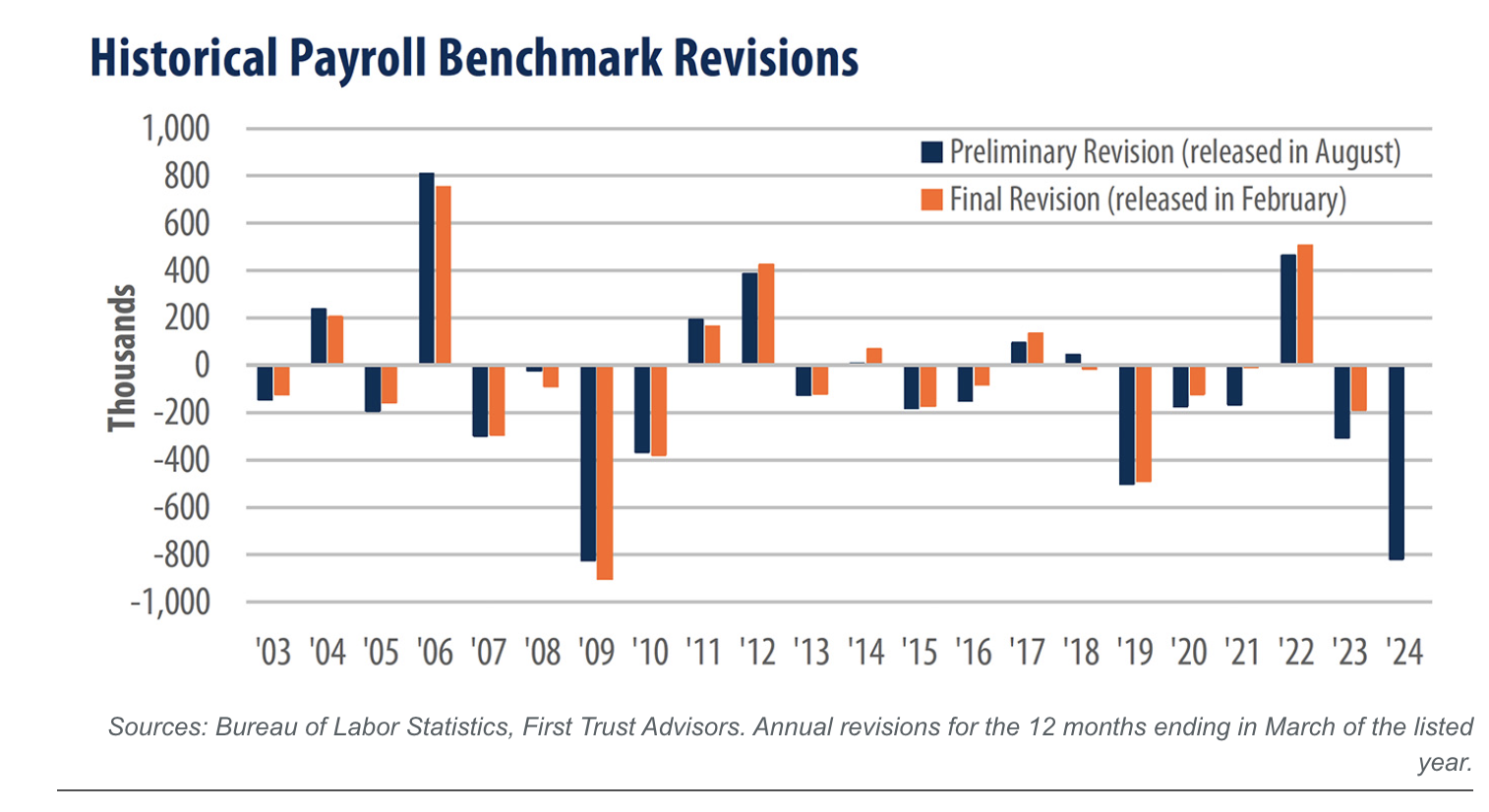
You would think there would be as many upward revisions as downward.
One could argue that calculating job data is a difficult process, and revisions are to be expected. I accept that argument, but when the error almost always occurs in the government’s favor, one has to wonder… It’s almost as if the agency is trying to make the government look good.
If that’s the strategy – it works.
Given that revisions basically happen in a dark alley when nobody is watching (the recent months being an exception because they were too big to ignore), people get the illusion that the labor market is much stronger than it is.
This month, the government reports good news. Everybody celebrates. Markets move. The following month, the government quietly revises everything downward and reports that the good news was really bad news.
And nobody pays attention.
A Forbes article pointed this pattern out.
“Some experts say it’s [the 1 million job revision] a wake-up call for workers who thought the job market was hotter than it really was.”
Worker’s rights attorney Eric Kingsley told Forbes that he was struck by “the amplitude of this year’s revision.”
“It indicates the labor market is colder than many people realized.”
Indeed, it is.
Kingsly offered some words of wisdom.
“The revision serves as a cautionary reminder not to overstate the job market’s resiliency.”
And it might be a good idea to pay attention – to the revisions too. And this is true no matter who is running the BLS.
The bottom line is that the economy has been shaky for months. It is laboring under a mountain of debt, and we still haven't cleaned up all of the malinvestments incentivized for nearly two decades of easy money during the Great Recession and then the pandemic. They just hid it from you with faulty data and rosy assumptions.
To receive free commentary and analysis on the gold and silver markets, click here to be added to the Money Metals news service.
To receive free commentary and analysis on the gold and silver markets, click here to be added to the Money Metals news service.
Author
Mike Maharrey
Money Metals Exchange
Mike Maharrey is a journalist and market analyst for MoneyMetals.com with over a decade of experience in precious metals. He holds a BS in accounting from the University of Kentucky and a BA in journalism from the University of South Florida.

















