|

What are President Xi’s options with China’s COVID-19 protests?

The latest protests in China have been widespread and show a population tired of COVID Zero lockdowns.

In China’s authoritarian state such protests against Party policy are rare and carry strict penalties. So, these protests are a big challenge to President Xi. What will he do next? How will that impact markets?

President Xi has to accelerate Covid Zero

Some of the reasons for the recent COVID Zero protests have been blamed on the World Cup coverage. Images of supporters without masks, mingling freely are a stark contrast to the strict lockdowns across China. According to BBC’s Nick Robinson, there is evidence that China’s State Television, CCTV, is avoiding crowd close-ups in their coverage.

So, what can President XI do? The 3 possible options could be:

  1. Accelerate the withdrawal of the Zero Covid policy,

  2. Crack down hard on the protesters,

  3. Crack down on the ring leaders and speed up Zero Covid withdrawal.

All of these options will eventually lead to the end of the Covid Zero policy. Even if President Xi launches a strong resistance to the protests eventually COVID will fade. There seems little point in making a stand here for Xi which is perhaps why the protests have been allowed as citizens express their frustration. So, President Xi has to realistically take option 1 or 3 and most likely he will take option 3. That way the government keeps face, avoids a full-scale confrontation with its citizens and can try to bring the country back to normal. With China’s stocks so heavily sold off now is this a great time for long-term China longs?
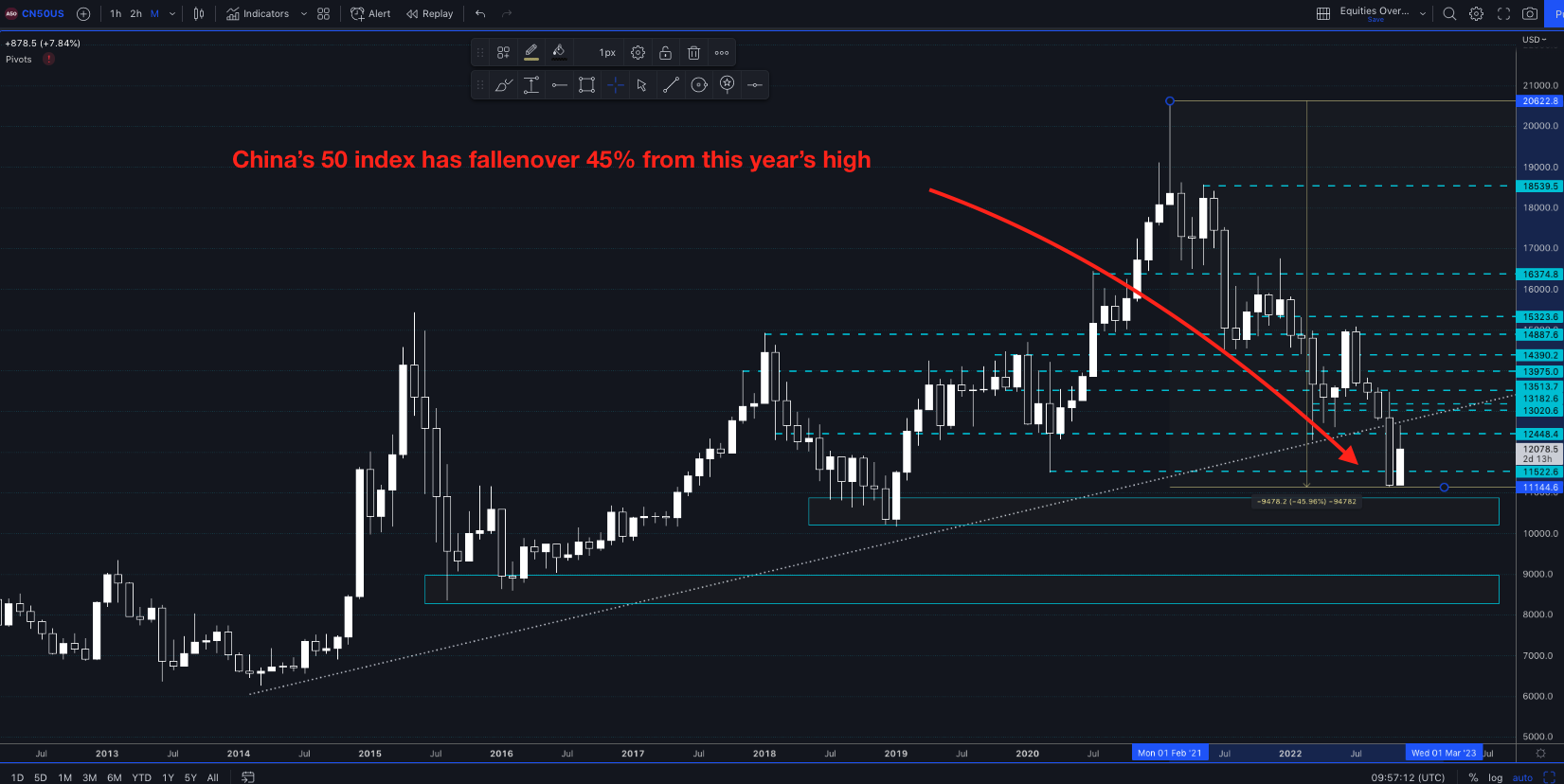
Chart

Learn more about HYCM


Author

Giles Coghlan LLB, Lth, MA

Giles is the chief market analyst for Financial Source. His goal is to help you find simple, high-conviction fundamental trade opportunities. He has regular media presentations being featured in National and International Press.


More from Giles Coghlan LLB, Lth, MA
Share:

Markets move fast. We move first.

Orange Juice Newsletter brings you expert driven insights - not headlines. Every day on your inbox.

By subscribing you agree to our Terms and conditions.

Editor's Picks

EUR/USD rebounds after falling toward 1.1700

EUR/USD gains traction and trades above 1.1730 in the American session, looking to end the week virtually unchanged. The bullish opening in Wall Street makes it difficult for the US Dollar to preserve its recovery momentum and helps the pair rebound heading into the weekend.

GBP/USD steadies below 1.3400 as traders assess BoE policy outlook

Following Thursday's volatile session, GBP/USD moves sideways below 1.3400 on Friday. Investors reassess the Bank of England's policy oıtlook after the MPC decided to cut the interest rate by 25 bps by a slim margin. Meanwhile, the improving risk mood helps the pair hold its ground.

Gold stays below $4,350, looks to post small weekly gains

Gold struggles to gather recovery momentum and stays below $4,350 in the second half of the day on Friday, as the benchmark 10-year US Treasury bond yield edges higher. Nevertheless, the precious metal remains on track to end the week with modest gains as markets gear up for the holiday season.

Crypto Today: Bitcoin, Ethereum, XRP rebound amid bearish market conditions

Bitcoin (BTC) is edging higher, trading above $88,000 at the time of writing on Monday. Altcoins, including Ethereum (ETH) and Ripple (XRP), are following in BTC’s footsteps, experiencing relief rebounds following a volatile week.

How much can one month of soft inflation change the Fed’s mind?

One month of softer inflation data is rarely enough to shift Federal Reserve policy on its own, but in a market highly sensitive to every data point, even a single reading can reshape expectations. November’s inflation report offered a welcome sign of cooling price pressures. 

XRP rebounds amid ETF inflows and declining retail demand demand

XRP rebounds as bulls target a short-term breakout above $2.00 on Friday. XRP ETFs record the highest inflow since December 8, signaling growing institutional appetite.













