Week Ahead on Wall Street: Employment report to fails to calm equities as bears still in control
- S&P 500 finishes the week moderately lower despite wild swings. SPY -0.34% for the week.
- Nasdaq finishes lower as high growth tech still not favored. QQQ -1.44%.
- S&P closes off intra-day lows as some position squaring evident.
A lot to get through this week. The equity market had looked to put the worst behind it by midweek when a dovish Powell looked after his equity friends by taking a 75bps hike off the table. This set equities on a charge. It was actually up to the plain-speaking Bank of England to set things straight when they talked in strongly bearish terms about the possibility of a recession. Yields had already begun spiking in the US and the resultant collapse in the pound sterling sent the dollar charging and yields again spiked up. Equities went into full panic mode and have not yet fully recovered. This is despite Friday's employment report coming more or less as good as can be for equities. Earnings (wages) were below forecast while the jobs number showed the still healthy employment market in the US. But at the time of writing the major US indices are down again. Sentiment is terrible, it will take a bit more than an average to good employment report to wash this out. But after it all the S&P 500 and Dow were actually little changed on the week. The Dow only lost 0.19% for the week so things may not be as bad as they seem. Energy remains the sector in demand as it was up a whopping 10% for the week, utilities were also positive for the week that was. Real estate and consumer discretionary were some of the worst-performing sectors with both down over 3%. Real estate was hit as pandemic darling Zillow (Z) was bearish in its outlook for the housing market. Higher rates are seeing a noted slowdown here.
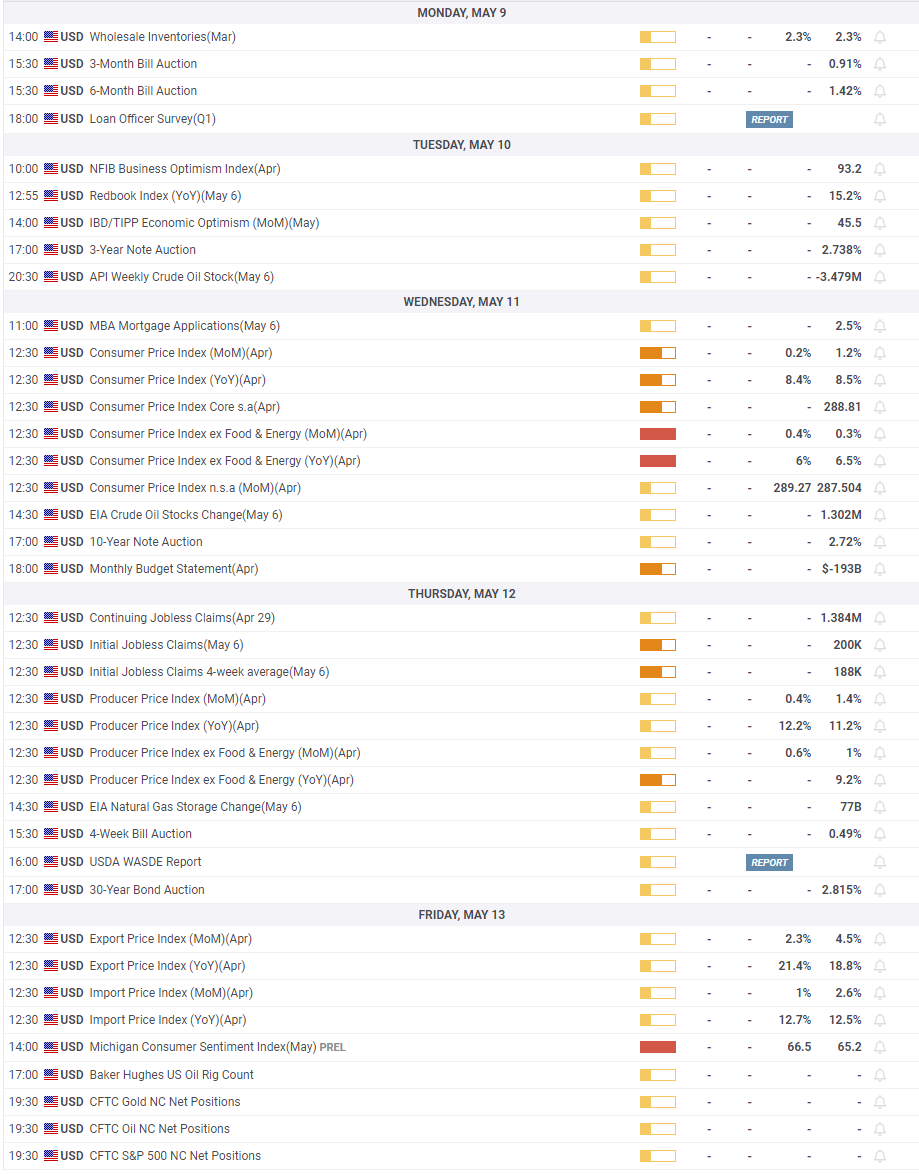
Things get more interesting next week with US CPI up on Wednesday. Unlikely to show much decline there but by then the market may have priced in as much bad news as it can take.
Investors remain highly nervous and pessimistic with sentiment readings from CNN Fear and Greed and AAII both showing extreme bearish readings.
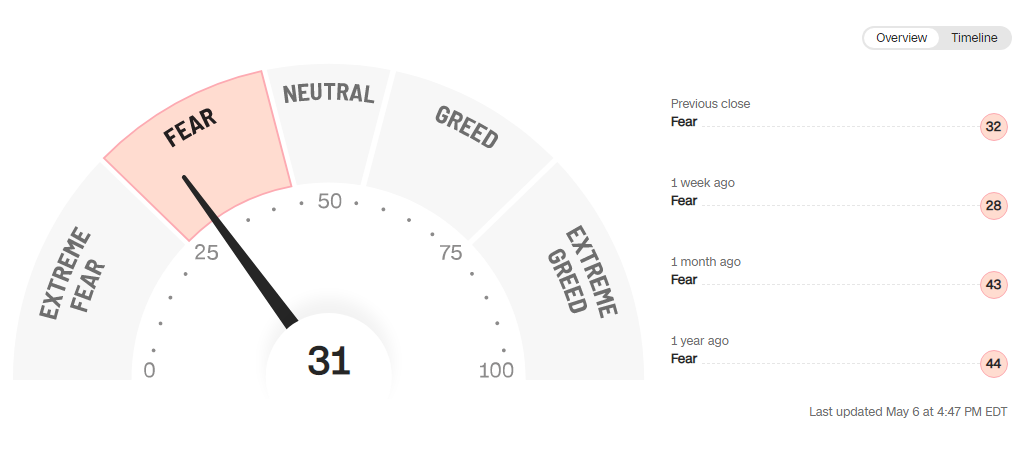
Source: CNN.com
Equity Fund flow
The latest Refinitive Lipper Alpha data shows inflows for equity ETF's up to Wednesday. Interesting to see how Thursday may have impacted that. But $2.3 billion was drawn into equity ETF's, the first net inflow in four weeks. Equity income, growth, and utility funds performed well. Banking and technology sectors continued to see outflows.
S&P 500 (SPY) forecast
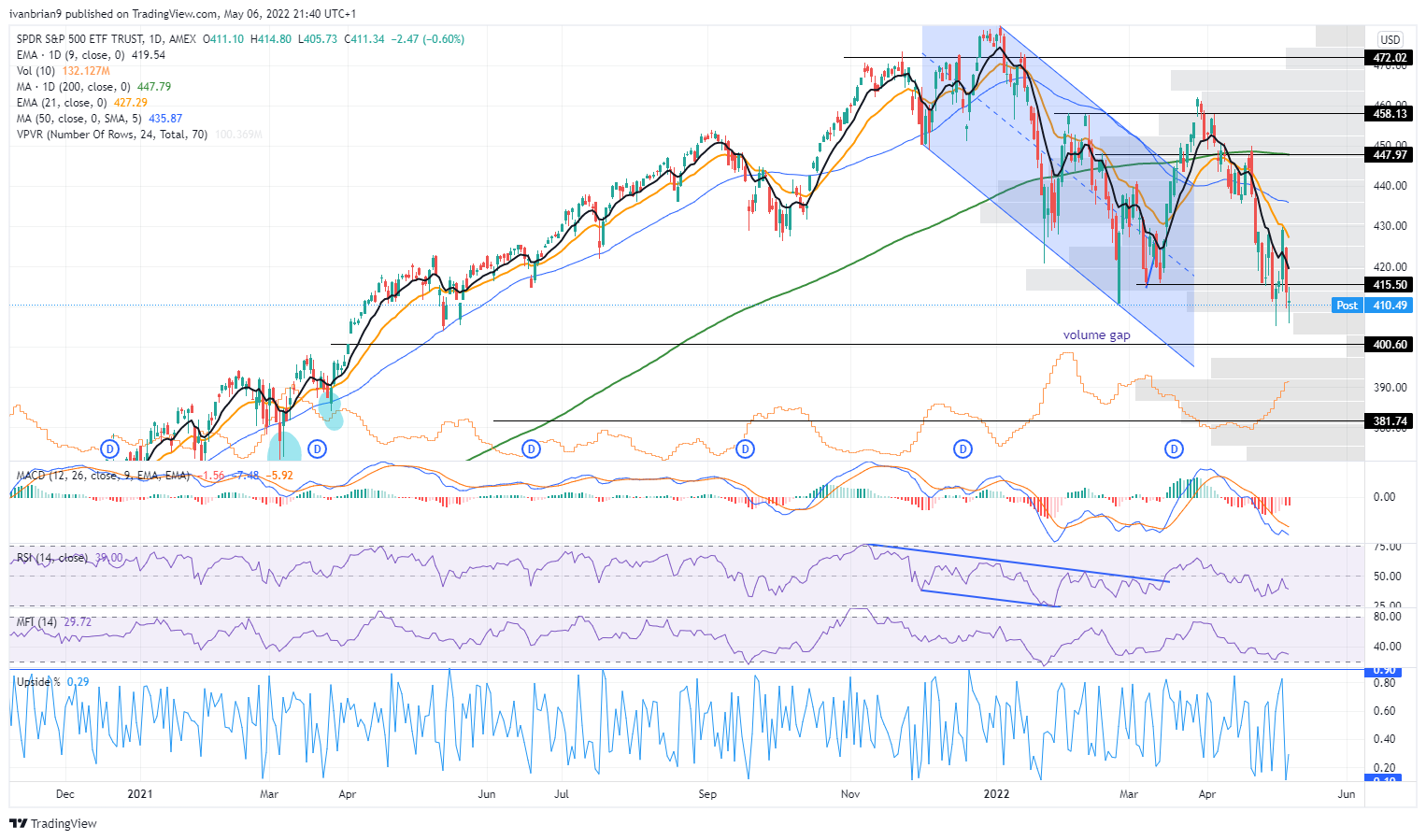
We remain with our sub $400 forecast. As mentioned CNN fear and greed index, AAII sentiment and Goldman Sachs sentiment are at peak fear or oversold levels. However to prevent everyone front running these metrics we called for a waiting game until the SPY really flushed everyone out. That is below $400 in our view and we are more or less there now. Then time for a hard and fast bear market rally. We do have a potential double bottom to watch at $405 but for now we stick with a bit more selling to really flush things out.
Nasdaq (QQQ) forecast
$297.45 is the low from March 2021 so nearly a year of hyper gains later and we are back where we started. Let's see if that can stop the rot. The Nasdaq is naturally more bearish than the S&P 500 but the S&P 500 will be the leader here when it finally rallies (sub $400 anyone!) then it will drag the Nasdaq kicking and screaming higher.
Earnings week ahead
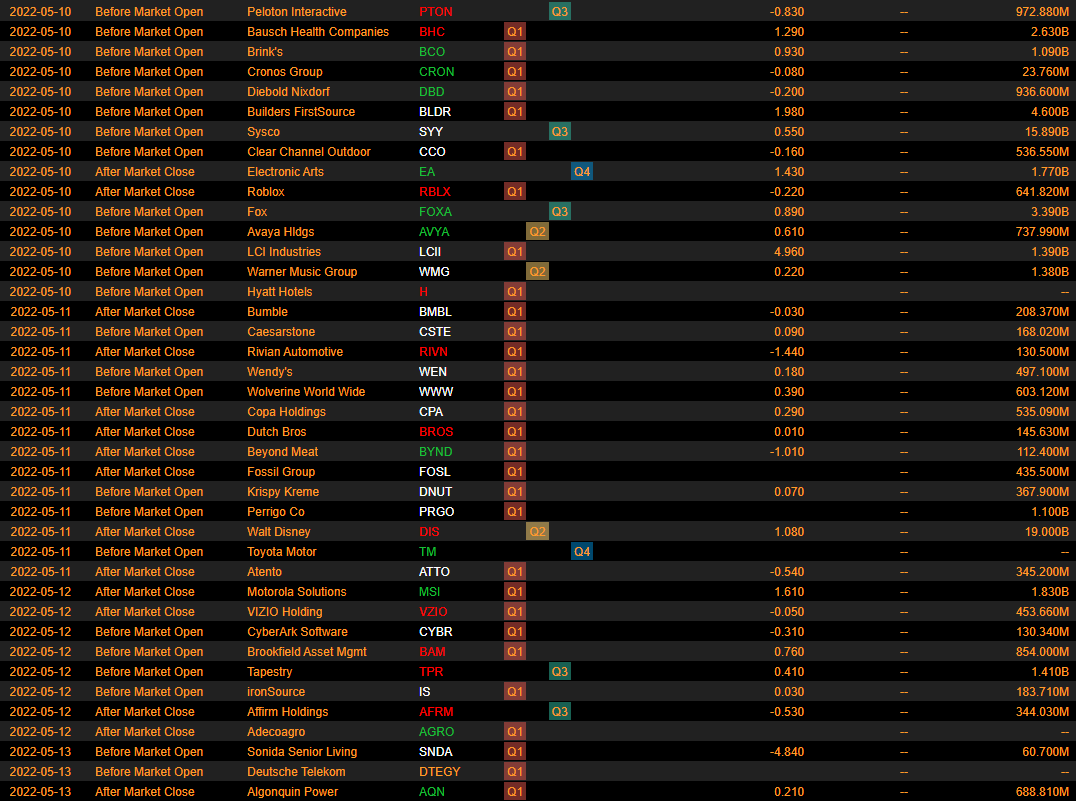
The main grouping of S&P 500 companies has reported, but next week still sees a lot of names with strong interest. So far 413 companies from the S&P 500 have reported and 79.9% of them have beaten estimates according to Refinitive Lipper Alpha. Retail favorites such as AMC, Rivian (RIVN), Lordstown Motors (LORD)and Buffet favorite Occidental (OXY) are up next week.
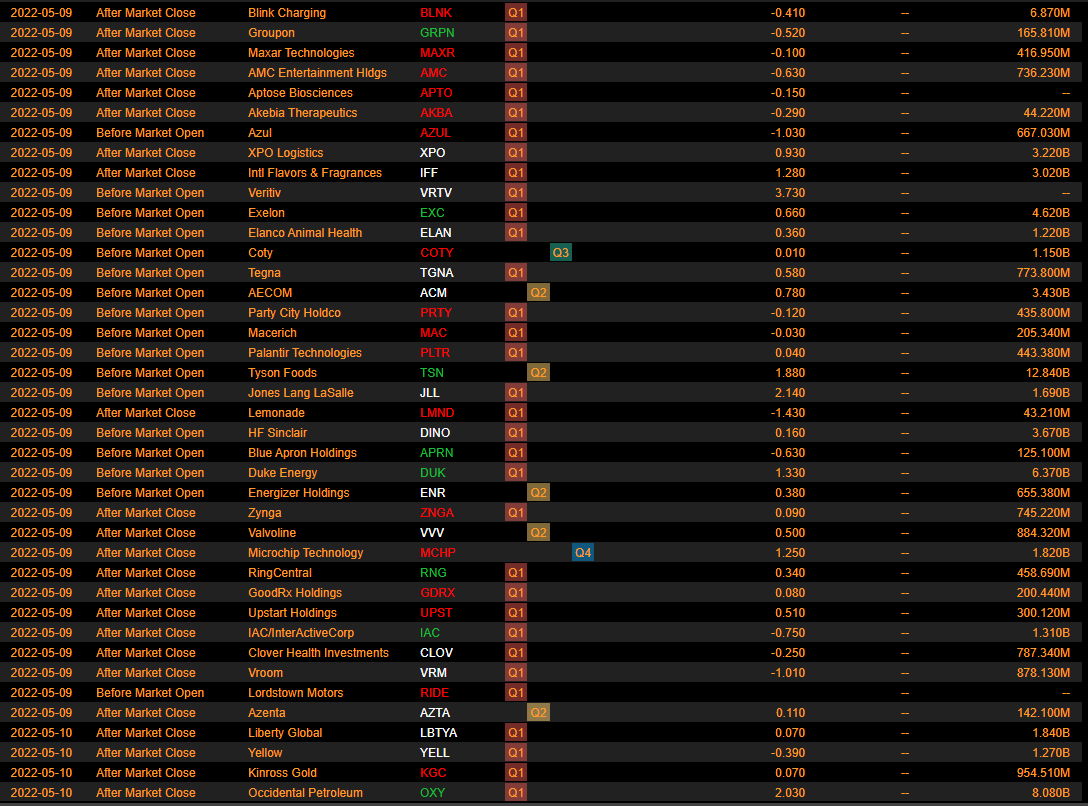
Source: Benzinga Pro
Economic releases
After the relative relief of Friday's employment report next week turns back to inflation concerns with Wednesday's CPI number the highlight. All eyes will be on bond yields to guide equity investment.
Author

Ivan Brian
FXStreet
Ivan Brian started his career with AIB Bank in corporate finance and then worked for seven years at Baxter. He started as a macro analyst before becoming Head of Research and then CFO.
















