|premium|

USD/JPY Price Forecast: A move to 110.00 is not ruled out

  • USD/JPY corrects lower following monthly peaks.
  • Price action in the pair keeps looking to US yields.
  • Focus of attention will once again be on the US docket.

USD/JPY embarks into a gradual correction lower after hitting monthly highs near 109.80 in past hours.

The unexpected pick-up in US inflation figures during April put further upside pressure to US yields, lifting the 10-year benchmark to the 1.70% neighbourhood. The dollar followed suit as well as the selling bias in the Japanese safe haven, all collaborating with the upside in spot eventually.

In the meantime, the performance of the US economy continues to be in the centre of the debate among investors. Indeed, upcoming data is expected to shed extra details on the US recovery, with yields and price action in the dollar closely following.

In the US docket, US Retail Sales will be in the limelight seconded by Industrial Production figures and the flash prints of the U-Mich index.
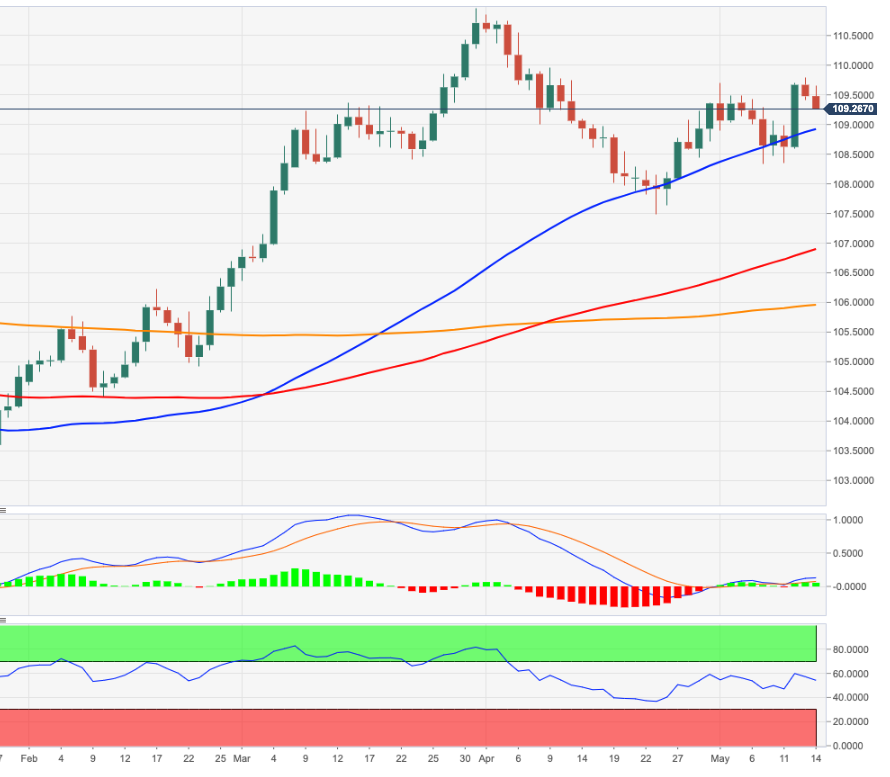
Short-term Outlook

The continuation of the downtrend is seen meeting interim contention at the 50-day SMA just above 109.00. This area of contention is also reinforced by the Fibo level (of the 2021 rally) around 109.00. Further south comes in the monthly lows around 108.30 (May 7/11). On the upside, the surpass of monthly tops around 109.80 should open in the door to the key level at 110.00 the figure ahead of the YTD highs in levels just shy of 111.00 (March 31).

Premium

You have reached your limit of 3 free articles for this month.

Start your subscription and get access to all our original articles.

Subscribe to PremiumSign In

Author

Pablo Piovano

Born and bred in Argentina, Pablo has been carrying on with his passion for FX markets and trading since his first college years.


More from Pablo Piovano
Share:

Editor's Picks

USD/JPY consolidates near 160.50 intervention zone ahead of FOMC decision

USD/JPY remains close to the 160.50 intervention zone during the Asian session on Wednesday. Despite the BoJ's rate hike to its highest level since 1995, Japan's borrowing costs remain significantly lower than those of peer nations such as the US. Moreover, the BoJ's more cautious stance on bonds undermines the Japanese Yen and supports the currency pair. Meanwhile, the US Dollar remains on the back foot amid the optimism over the US-Iran peace deal and ahead of the Fed policy decision, capping spot prices.

AUD/USD holds steady above 0.7050; looks to Fed decision for fresh impetus

AUD/USD is seen consolidating above mid-0.7000s during the Asian session as traders await the outcome of a two-day FOMC meeting later this Wednesday. In the meantime, the optimism over an interim peace deal between the US and Iran keeps the US Dollar bulls on the defensive. This, along with the RBA's hawkish pause on Tuesday, acts as a tailwind for the currency pair.

Gold remains below 200-SMA as traders await FOMC rate decision

Gold preserves weekly gains registered over the past two days, though it remains below a technically significant 200-day SMA through the Asian session on Wednesday. Traders now seem hesitant and are keenly awaiting the highly anticipated Fed rate decision before placing fresh directional bets. In the meantime, the US-Iran interim peace agreement keeps the US Dollar bulls on the defensive, which might continue to act as a tailwind for the bullion.

Ethereum: Whales buy the dip, but institutional and US demand remain absent

Ethereum large holders have leveraged the price dip from the past two weeks to expand their holdings. Wallets with a balance of 10K-100K ETH have added roughly 510K ETH to their collective balance since June 5, when the top altcoin approached the $1,500 level. This dip-buying pressure has partly helped push ETH toward $1,800.

1% rate, 160 Yen: Why Japan’s historic hike changed little
The Bank of Japan (BoJ) pushed its short-term policy rate to 1% on Tuesday, the highest setting since 1995 and a 31-year milestone in a normalization cycle barely two years old. It is the kind of number that should mark a turning point for the Yen, and it did almost nothing.
Why a hawkish RBA is no longer enough to lift the Australian Dollar

The Reserve Bank of Australia delivered more than what markets expected: a hawkish hold that should have supported the Aussie. But markets widely ignored it, focusing instead on slowing economic growth and proving that central bank messaging alone isn’t always enough to drive currencies.