USD/COP: Colombian Peso at multi-year highs: The carry trade behind the political story

There has been an exotic currency beating markets and expectations since late 2024, even as the political landscape changes: the Colombian Peso.
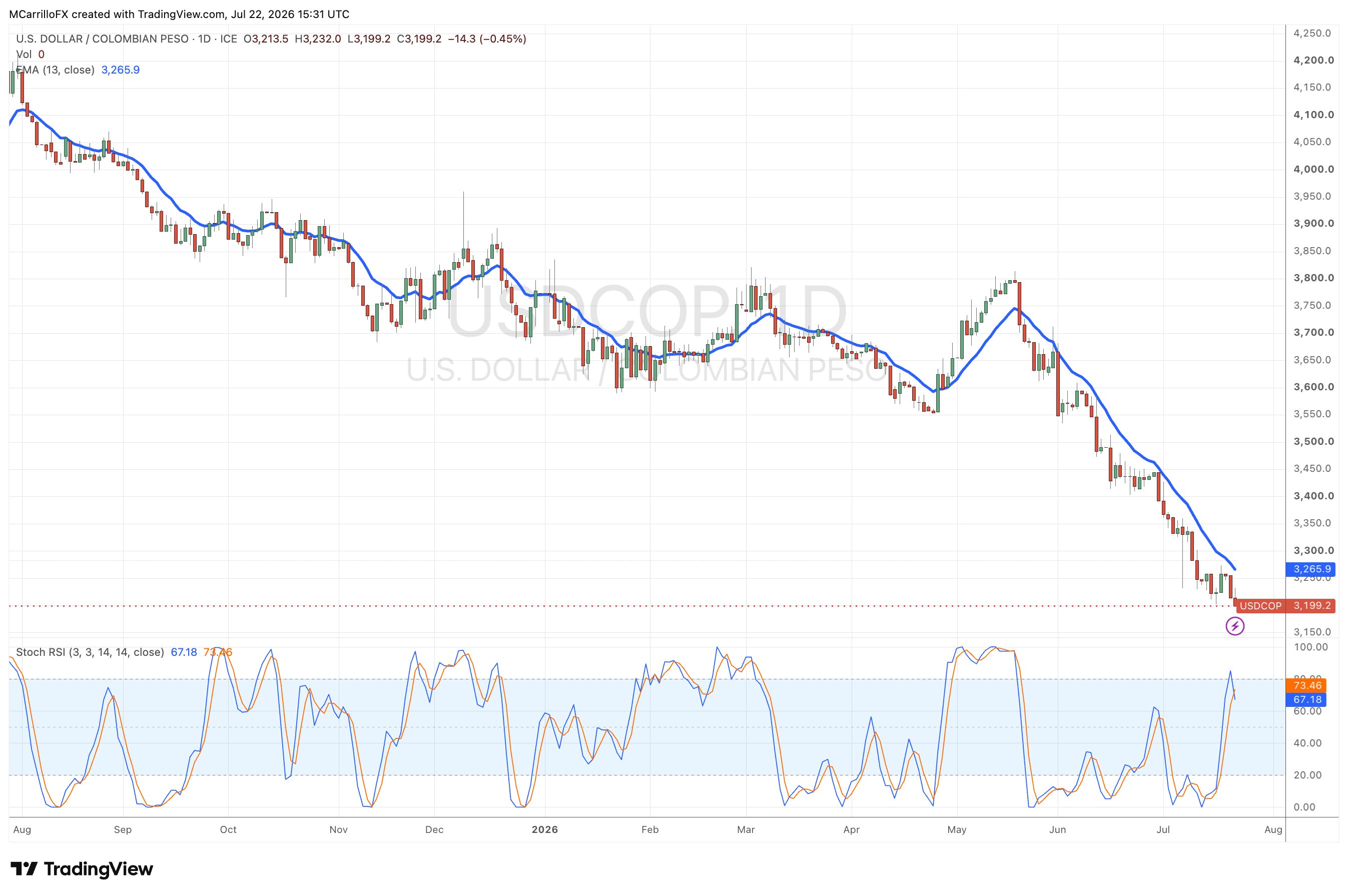
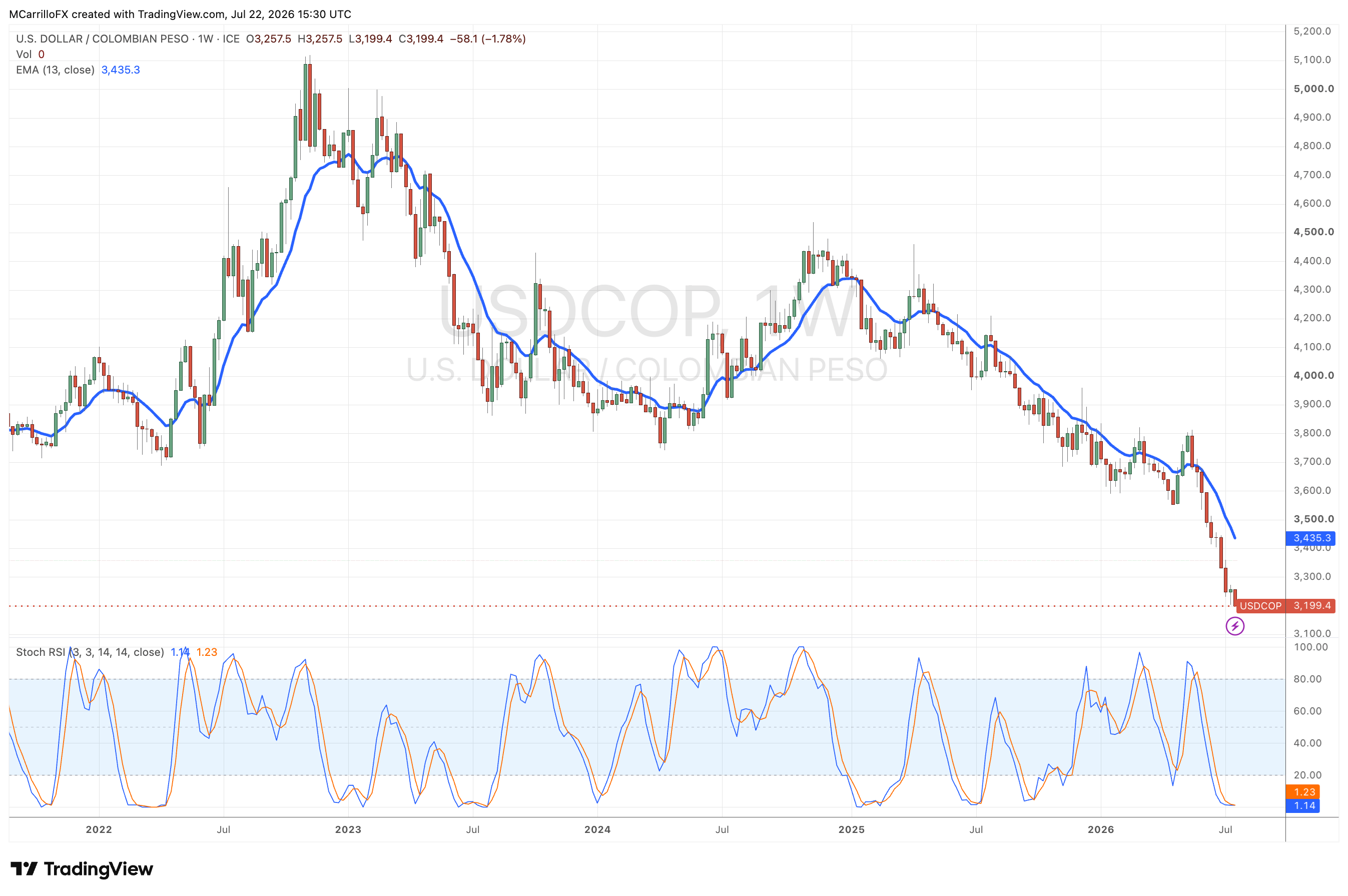
USD/COP trades near 3,220, down almost 37% from its 5,118 peak in late 2022 and roughly 5% lower in July alone. The peso is one of the best-performing currencies in the world this year, and the explanation most commonly offered for it is incomplete.
The timeline doesn't fit the political narrative
Colombia held elections this year, and a market-friendly candidate surprised the field in the first round. The obvious read is that investors are pricing the end of the Petro administration.
The problem is timing. The peso's latest rally began around December 2024, more than a year before the vote, when polls still pointed toward a continuation of the left. Whatever drove the move, it wasn't investors pricing in a government they didn't yet expect.
Yield did the work
Banco de la República held rates extraordinarily high and moved slowly on cuts, leaving one of the richest carry returns in the emerging world just as the dollar softened on Fed-easing expectations.
Colombia became one of the most attractive carry trades available, and that trade ran for over a year before the election mattered. The political result accelerated a move already underway.
What the currency was and wasn't tracking
Several social indicators improved through the period. Poverty fell from 36.6% in 2022 to 28.0% in 2025, the lowest reading in DANE's series and well below its pre-pandemic level, with roughly 1.8 million people leaving poverty in the final year alone.
Unemployment reached multi-year monthly lows near 8% in late 2024, the best since 2017 (DANE). Inflation peaked above 13% in early 2023 before falling to roughly 5% by 2025, though it has since stalled near 5.7%, above the 3% target (DANE, IMF).
Markets were watching a different scoreboard. The central government deficit widened to 6.7% of GDP in 2024 (Fitch). Net public debt reached 59.3% of GDP, above the 55% fiscal-rule anchor, with the rule suspended through 2027 (IMF). Moody's and S&P moved Colombia below investment grade.
Household welfare improved. The currency was pricing something else entirely, and the two can diverge for years.
USD/COP Outlook
On the monthly chart, USD/COP momentum is approaching deeply oversold territory, a reading that rarely persists.
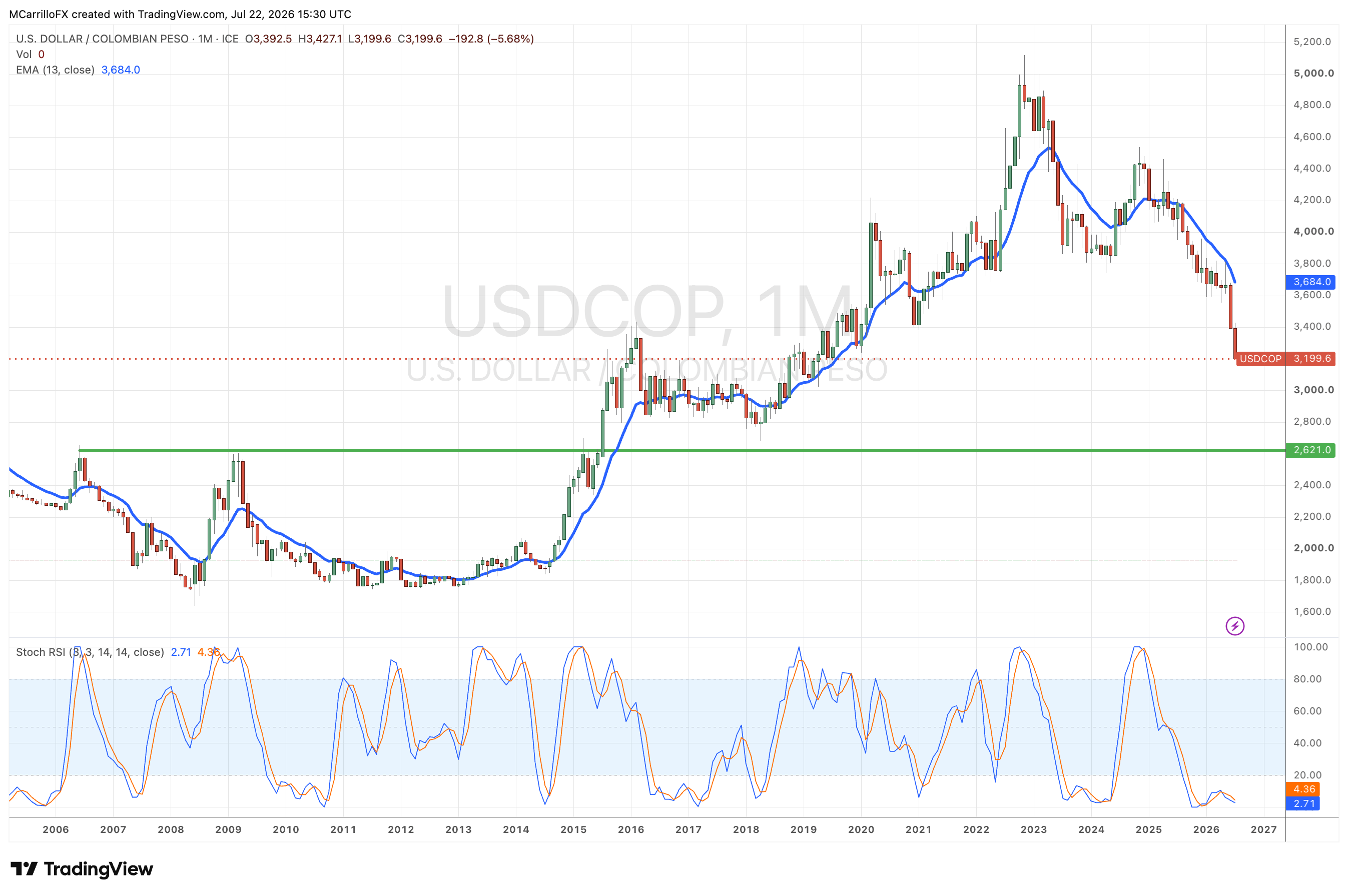
Base case: recovery toward 3,400–3,700 by year-end as carry returns become less attractive and fiscal concerns return to focus.
If the peso rally extends instead, the next zone is 2,800–3,000, last seen between 2016 and 2018, with major long-term support near 2,600.
A market-friendly election outcome could delay a dollar recovery. A fiscal scare could accelerate it.
Author

Mauricio Carrillo
Witbrew
Mauricio Carrillo is a financial journalist, fintech executive, and inter-markets analyst with fifteen years of experience at the intersection of traditional finance and digital asset infrastructure.