The Federal Reserve is shadowboxing inflation
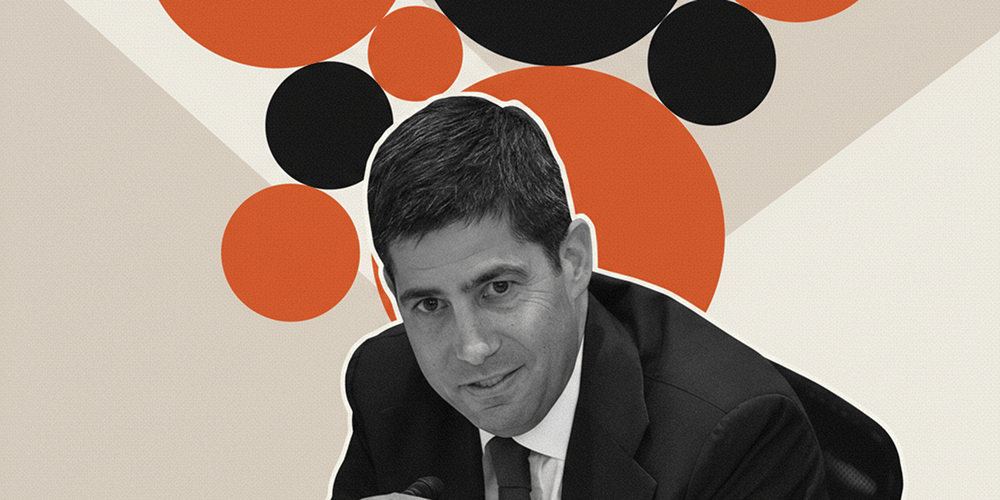
Kevin Warsh and his minions at the Federal Reserve are shadowboxing.
Mind you, they should certainly be battling inflation. But instead, they seem to be fighting rising oil prices.
That's not the same thing.
Inflation, properly defined, is an increase in the supply of money and credit. Price inflation – rising consumer prices – is one symptom of this monetary inflation. However, other things can cause price inflation, including oil shocks.
The difference between a price shock and inflation is that a price shock only raises some prices. Monetary inflation causes a rise in the general price level, and it’s the only thing that produces such an effect. As economist Milton Friedman put it, “Inflation is always and everywhere a monetary phenomenon, in the sense that it is and can be produced only by a more rapid increase in the quantity of money than in output.”
Don't get me wrong. There is plenty of inflation in the system, evidenced by the increasing money supply. By the M2 metric, inflation is running around 5 percent right now. However, Warsh and Co., along with the markets and pretty much everybody in the mainstream financial media, are fixated on oil prices.
I’m not saying rising fuel prices aren’t important. I’m not saying they won’t cause significant economic disruption. I’m not even saying the oil shock won’t drive up many other prices. It will, and we’ll see it reflected in the CPI.
But I am saying this is not the kind of “inflation” the Fed can stop by hiking interest rates.
If you doubt me, ask yourself: how does a quarter-point interest rate hike pump more oil out of the ground? How does it increase refining capacity? How does it open the Strait of Hormuz?
I’m sure some folks reading this are confused. You’ve been programmed to think that rising prices = inflation. We fight inflation by hiking interest rates. Ergo, the Fed is doing what it needs to do.
What's the problem?
The Fed has gone to war with inflation's shadow. In effect, it's the right fight with the wrong opponent. The central bank needs to drive down monetary inflation, but it's focused on a price shock. If that's the actual problem, the central bank shouldn't hike rates because rising oil prices aren't truly inflationary. While monetary inflation drives every price higher, some prices inevitably fall during a price shock.
In a recent interview, economist Daniel Lacalle pointed out this confused thinking, noting that policymakers and Keynesian economists always try to center the argument around individual prices.
“Oil prices are up; therefore, inflation is up. No, that's not true. If that was the case in 2022, 2023, and 2024, we would've had deflation. So, we need to differentiate between individual prices and aggregate prices.”
Lacalle went on to explain why an oil shock doesn’t cause “inflation” in the economic sense.
“For the same amount of money, if oil prices go up due to an energy shock, whatever it is, et cetera, the amount of money in the system to purchase the remaining goods and services is lower. Therefore, high oil prices don't mean higher inflation because, for the same amount of money, you would have less units of currency to purchase other goods and services. Therefore, the price of other goods and services would remain stable or come down. A lot of people say a war is inflationary. Oil prices are inflationary. No, they're not. They are disinflationary.”
So, if Warsh & Co. just raised rates because oil prices are up, they made a big mistake. Lacalle said the hike has “zero impact” on energy prices or government spending. It will only hurt small businesses and families.
“The Fed is not going to bring down the price of oil or the price of natural gas, and obviously hiking rates would be completely useless as a tool on that front. But in terms of employment, it is going to be absolutely brutal because 90 percent of the job creation in the United States, as in the Euro area or any developed economy, comes from small and medium enterprises. We have already seen that job creation is significantly less robust than other macro indicators, and that comes mostly from the very aggressive levels of financing costs that small and medium enterprises suffer in the United States.”
All that said, there is plenty of inflation in the system. One can make a strong argument for raising interest rates based on the increasing money supply. But that just brings us back to the Fed’s Catch-22.
All these things are simultaneously true:
- The Fed rate hike last week won’t create more oil or lower energy costs
- Nevertheless, one can argue for a rate hike based on the growing money supply and core CPI that continues to run warm.
- In fact, you can further argue that a quarter-point rate hike is like spitting in the ocean given the level of inflation injected into the system during the pandemic (and the Great Recession before that). The Fed never did enough to slay inflation to begin with.
- At the same time, one can argue for a rate cut to keep the debt-riddled bubble economy floating along. An economy dominated by a Debt Black Hole does not function in a high-interest-rate environment.
- If the Fed keeps rates higher for longer, it will almost certainly tip the economy into a recession, as Lacalle noted.
- Failing to hold rates higher for longer will allow inflation to continue to run free.
What is a dutiful Fed person to do?
Apparently, deliver a token quarter-point hike and hope like hell the economy can hold together long enough for oil prices to ease so they can plausibly cut rates.
It will be interesting to see how it plays out.
In the meantime, all roads lead to inflation. Prepare accordingly.
To receive free commentary and analysis on the gold and silver markets, click here to be added to the Money Metals news service.
Author

Mike Maharrey
Money Metals Exchange
Mike Maharrey is a journalist and market analyst for MoneyMetals.com with over a decade of experience in precious metals. He holds a BS in accounting from the University of Kentucky and a BA in journalism from the University of South Florida.