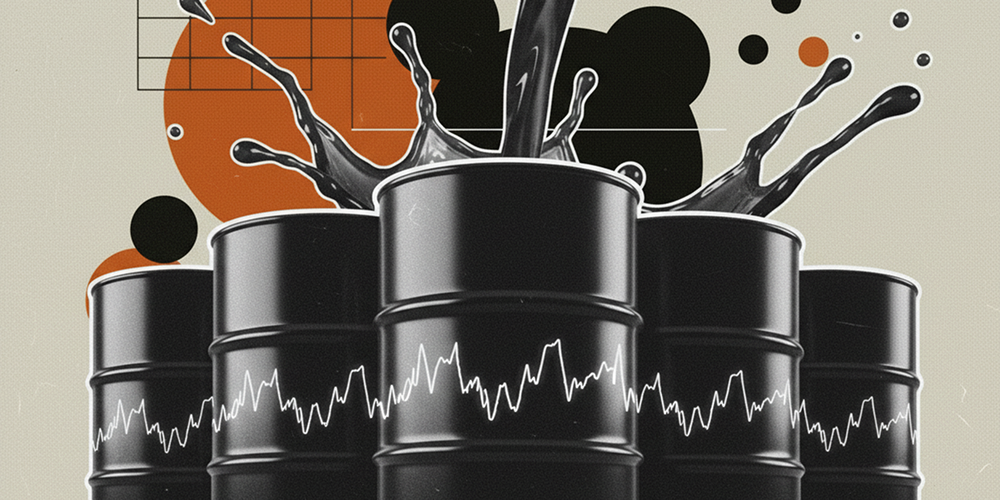
The scarcity trade is accelerating – And hard assets could be the biggest winners

There are moments when markets do more than move. They change regime.
2026 increasingly looks like one of them.
A major conflict is reshaping the Middle East. Russia’s war in Ukraine continues to disrupt energy and commodity infrastructure. The United States is heading towards its November Midterm Elections, while Central banks have begun tightening monetary policy again for the first-time in more than three years.
Sovereign debt is approaching historic extremes, alongside an unprecedented artificial-intelligence infrastructure boom, which is demanding vast amounts of Electricity, Copper, Aluminium, Natural Gas and Critical Materials.
Individually, each of these forces are creating a powerful cascade of back-to-back lucrative trading opportunities.
Their convergence is what makes this cycle potentially historic.
“Few periods in modern market history have brought together geopolitical disruption, inflation, fiscal stress, resource scarcity and a once-in-a-generation infrastructure build-out at the same time,” says Lars Hansen, Head of Research at The Gold & Silver Club. “That is precisely the type of environment in which extraordinary wealth creation can occur.”
Markets are already paying a premium for scarcity. The evidence is visible in prices.
From their 2026 lows, European Natural Gas has surged 204%, Heating Oil 149% and Diesel 136%. Gasoline has more than doubled, Jet Fuel has gained 98%, while WTI and Brent have advanced 85% and 82%.
Agriculture has delivered equally dramatic moves. Cocoa has roughly doubled, Rice has gained 66%, Wheat 45%, Cotton 41%, Sugar 35% and Corn 32%. Arabica Coffee is up 71% this year.
And scarcity has moved beyond the commodity itself.
The benchmark cost of hiring a VLCC Supertanker from the Arabian Gulf to Asia has recently exceeded $1 million per day, compared with levels around $100,000 that would have been considered exceptional earlier in the year.
The world is being forced to pay dramatically more not only for the energy it consumes, but simply for the capacity required to move it.
That is an important distinction.
Scarcity is spreading from the barrel to the infrastructure surrounding it.
The shortage is moving into the real economy. Diesel offers perhaps the clearest warning.
U.S diesel inventories have fallen to their lowest September level since 1982, while prices have moved above $6 a gallon. European jet-fuel inventories have fallen to seven-year lows and Europe enters winter with gas storage around 69% full versus an 85% five-year seasonal average.
The IMF says the strategic oil and gas reserves used to cushion this year’s energy crisis will eventually need replenishing.
That matters enormously.
Future demand is no longer simply about normal economic consumption.
Governments and industries must also rebuild the buffers they have already spent.
“When inventories become strategic rather than optional, buyers become less sensitive to price,” Hansen says. “The question changes from ‘what should this cost?’ to ‘can we secure it?’ That is when scarcity can produce nonlinear moves.”
Then comes Artificial Intelligence.
The International Energy Agency expects global data-centre electricity consumption to almost double from 485 TWh in 2025 to around 950 TWh by 2030, while electricity consumption from AI-focused facilities is projected to triple.
AI may be digital.
Its foundations are intensely physical.
It requires Power Stations. Transmission Networks. Transformers. Copper. Aluminium. Natural Gas. Cooling Infrastructure. Data Centres. Land.
The technology revolution is therefore competing for many of the same finite resources already required by electrification, defence, urbanisation and energy security.
That collision could become one of the defining commodity demand shocks of the decade.
Wall Street is waking up to the rotation.
UBS now argues that broad commodities can provide a structural source of return and diversification, particularly when inflation and energy disruption challenge traditional stock-and-bond portfolios.
Its case extends beyond Gold into Industrial Metals, Energy and Agriculture, with AI, electrification, weather risk and physical supply constraints creating different sources of potential return across the commodity complex.
That is significant.
Conventional portfolios remain heavily concentrated in financial assets while many of today’s biggest economic risks are fundamentally physical.
If scarcity persists, pricing power could increasingly migrate towards those who own, produce, refine, transport and trade the resources the global economy cannot easily substitute.
That is how a commodity bull market can become something much larger:
A generational wealth rotation.
At the start of 2026, analysts at The Gold & Silver Club called it “The Year of Hard Assets.”
The performance since then has spoken for itself.
But 2026 may ultimately prove to be more than an outstanding year for commodities. It could be remembered as the moment a much larger cycle began.
“This is where fortunes can be made,” says Hansen. “Not by chasing yesterday’s winners, but by identifying where the next imbalance is developing before the rest of the market does.”
After moves of 50%, 100%, 200% and, in some corners of the hard-asset complex, considerably more, it would be easy to conclude that the opportunity is already behind us.
That could prove to be one of the biggest mistakes of this cycle.
The pullbacks, consolidations and periods of volatility ahead may create precisely the entry opportunities traders later wish they had recognized sooner.
Because if the forces driving this market continue to intensify, today’s prices may eventually be viewed not as expensive – but as early.
2026 may have been The Year of Hard Assets.
Q4 2026 and beyond could mark the beginning of something far bigger – The Hard Asset Decade and The Era of Scarcity.
The next phase will not reward hesitation.
Markets will reprice. Leadership will rotate. Opportunities will emerge across Metals, Energy and Agriculture and when they do, the moves could be fast.
The biggest commodity opportunities of this cycle may still lie directly ahead.
The question is whether you will be positioned before the next wave begins – or looking back at today’s prices wishing you had acted sooner.
Where are prices heading next? Watch The Commodity Report now, for my latest price forecasts and predictions:
Author

Phil Carr
The Gold & Silver Club
Phil is the co-founder and Head of Trading at The Gold & Silver Club, an international Commodities Trading Firm specializing in Metals, Energies and Soft Commodities.