USD-China Trade Agreement: Safety trade fallout for US dollar and the Japanese yen

The US-China trade dispute was a major factor in currency markets from its beginning in the first quarter of 2018 through the announcement of the agreement on October 13 to the signing of the pact on January 15 of this year. It primary impact was the threat that a full-fledged trade war between the world’s two largest economies would drive the global economy into recession.
That threat never materialized but as the rhetoric and negotiations waxed and waned the US dollar and the Japanese yen rose and fell on the perceived need for a safety hedge. When the rhetoric was hottest and tariffs flying both the yen and the dollar rose, only to subside as the sides returned from the brink and resumed negotiations.
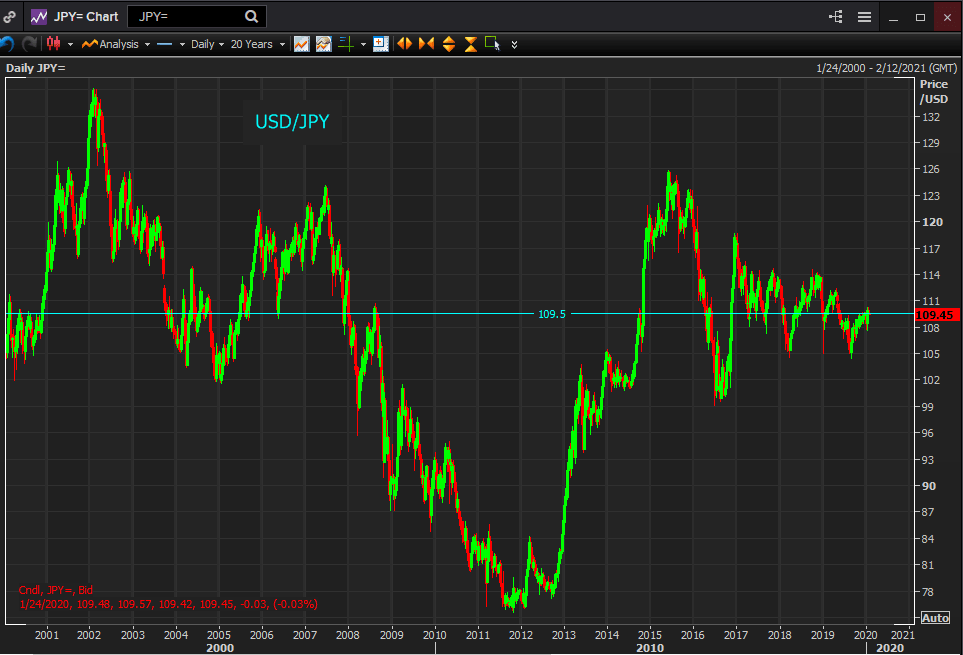
With the phase one deal delivered and signed most of the safe haven trade has been unwound and the Japanese yen has returned to where it was in the first quarter of 2018.
Reuters
The euro has not. The difference is that while the relative positions of the US and Japan economies and between the Bank of Japan and the Federal Reserve are largely unchanged from two years ago, that between the Eurozone and the ECB and their American counterparts is much altered.
The euro has suffered from the still unknown economic effect of the British exit from the EU, the continent’s own weak performance, the ECB’s inability to promote growth and the uncertainties of the various populist political movements in Italy, France, Germany and elsewhere.
The euro is substantially weaker than where it was in the first quarter of 2018. From its open on January 2nd 2018 at 1.2011 it has lost 7.9% against the US dollar. From its 2018 high of 1.2555 on February 15th of that year it is down 11.9% and from its high in the 21-day moving average of 1.2377 on February 20th, 2018 it is off 11.7%.
-637154290999240411.PNG&w=1536&q=95)
Reuters
Hence the starting point for the two currencies against the dollar now that the safety trade is laid to rest and the market assays the likely impact of the US-China pact is very different.
If the trade agreement succeeds in exciting US economic growth particularly if business investment returns and exports to China of agricultural goods and manufactured products recovers or surpasses previous levels the dollar stands to reassume its pre-trade war strength.
Against the yen that would return the greenback to the area of 111.00-115.00 in the upper portion of its range of the last two decades but far from the 2015 high of 125.85.
The euro is a different proposition. The trade war safety trade and its dominance of currency markets disguised the growing internal weakness of the euro and its domestic and internal disabilities. If the dollar returns to its pre-trade war levels it will be flirting with an almost 20-year high versus the united currency.
The trade cover for the euro has been blown. The EU, the eurozone, the ECB and its new President Christine Lagarde need to get their house in order.
Author
Joseph Trevisani
FXStreet
Joseph Trevisani began his thirty-year career in the financial markets at Credit Suisse in New York and Singapore where he worked for 12 years as an interbank currency trader and trading desk manager.