US100 extends slide as AI spending worries collide with Fed fears
- AI jitters and hot US CPI spark biggest equity selloff since July.
- US100 falls more than 2%, hitting a near one-month low around 29,650.
- Chinese competition and higher-for-longer rates weigh on sentiment.
- Earnings season now the key test for the AI trade.

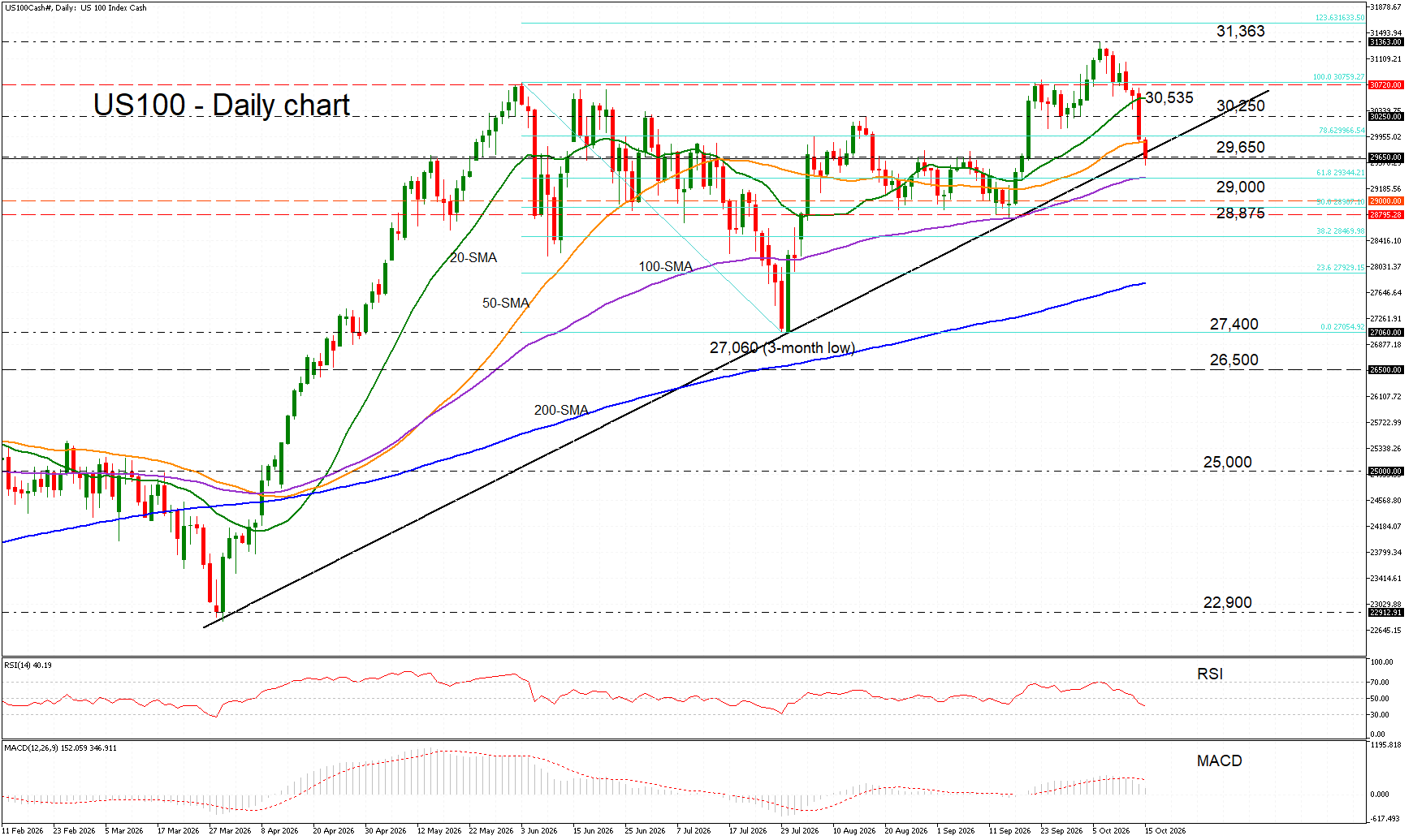
The US100 stock index (cash) is extending its decline for a fourth consecutive session, retreating from its record high of 31,363 to a near one-month low around 29,650. The move follows a drop of more than 2% in the previous session, with the tech-heavy benchmark logging its steepest daily decline in three months.
Concerns about Fed policy, reignited by a hotter-than-expected US inflation reading, collided with growing doubts over artificial intelligence-related spending on Wednesday. What began as a session driven by rising Treasury yields and higher expectations of another Fed rate hike ultimately culminated in Wall Street's sharpest AI-driven selloff in months, with chipmakers, cloud-computing firms and AI-linked stocks leading the decline.
Although Treasury yields initially surged after the CPI report, they later reversed lower as investors sought safety in government bonds. That shift highlighted a deeper concern: whether the billions being invested in AI infrastructure will generate sufficient returns, particularly as financing costs remain elevated.
Recent comments from industry executives questioning excessive enthusiasm in the sector, combined with rising competition from Chinese chipmakers, have fuelled concerns that AI-related valuations may have run ahead of fundamentals. Even strong earnings from semiconductor leaders such as ASML and TSMC have done little to shift that narrative, suggesting investors remain focused on the risks surrounding AI spending, rising competition and the sustainability of current valuations.
Such concerns could keep pressure on the US100, with a break below the 100-day SMA exposing the 29,000 area, followed by support near 28,875, a level that has held since April.
However, there are some offsets to the bearish pressure. With earnings season still in its early stages, upcoming corporate results could determine whether concerns about AI spending are justified or merely reflect a temporary unwinding of an overcrowded trade. Strong guidance on spending plans, demand trends and profitability could help restore confidence. Furthermore, Treasury yields have retreated from their post-CPI highs, easing some pressure on richly valued growth stocks.
Further, despite the recent selloff, the broader uptrend remains intact and the index remains within reach of record highs. The US100 is currently testing its 50-day SMA near 29,870 while continuing to hold comfortably above its key 200-day moving average. Momentum indicators suggest bullish pressure is fading, but do not yet point to aggressive selling, as the MACD remains in positive territory and the RSI has yet to enter oversold condition, reflecting the current stabilisation. This suggests the current weakness may technically represent a consolidation phase rather than a trend reversal. Therefore, a rebound remains possible, with a move above 30,250 potentially opening the door towards the 20-day SMA near 30,535.
Author

Nicole joined Trading Point as a Market Analyst in January 2025. She holds a BA in English Literature from Kingston University, London, and an MA in Applied Linguistics (Research Methodology) from the University of Southampton with distinction.

















