US Non-Manufacturing Purchasing Managers’ Index for March: The disaster may be delayed...until April
- PMI expected to take largest one month plunge in series history to the lowest level since the financial crisis.
- Data will not fully reflect the economic impact of the public health crisis.
- Dollar retains its safety preference until virus news improves.

The economic crisis that is accompanying the spread of the Coronavirus around the world as country after country has ordered its people indoors, shuttering large amounts of productive activity, has moved so quickly that most monthly based statistics have been rendered irrelevant.
In the US initial jobless numbers have seen an astonishing jump from 281,000 to 10 million in two weeks. The reality of these job losses, on a scale and rapidity that have never been close to being equaled, has made all economic data that does not reflect their impact largely moot.
Initial jobless claims

PMI
Manufacturing PMI released on Wednesday by the Institute for Supply Management fell to 49.1 in March from 50.1. The employment index dropped to 43.8 from 46.9 and the new orders gauge plunged to 42.2 from 49.8.
Prior to the onset of the virus the January US-China trade agreement had been expected to bring the American factor sector out of its two year slump and five month contraction. That estimate has disappeared and the question now is how far down will the indexes sink in April.
The same calculation takes precedence in the March non-manufacturing indexes. Services represent about 85% of US GDP and the sector is far less involved in international trade than manufacturing. However, it is unknown how deeply its businesses have been affected by the widespread closures and stay at home orders in various pats of the country.
The overall non-manufacturing index is expected to plunge to 44 in March from 57.3 in February. If accurate it would be the largest single month drop in the 23 year history of the series and the lowest reading since the financial crisis. It would also be just the third time that the general index has fallen below 50 and into contraction.
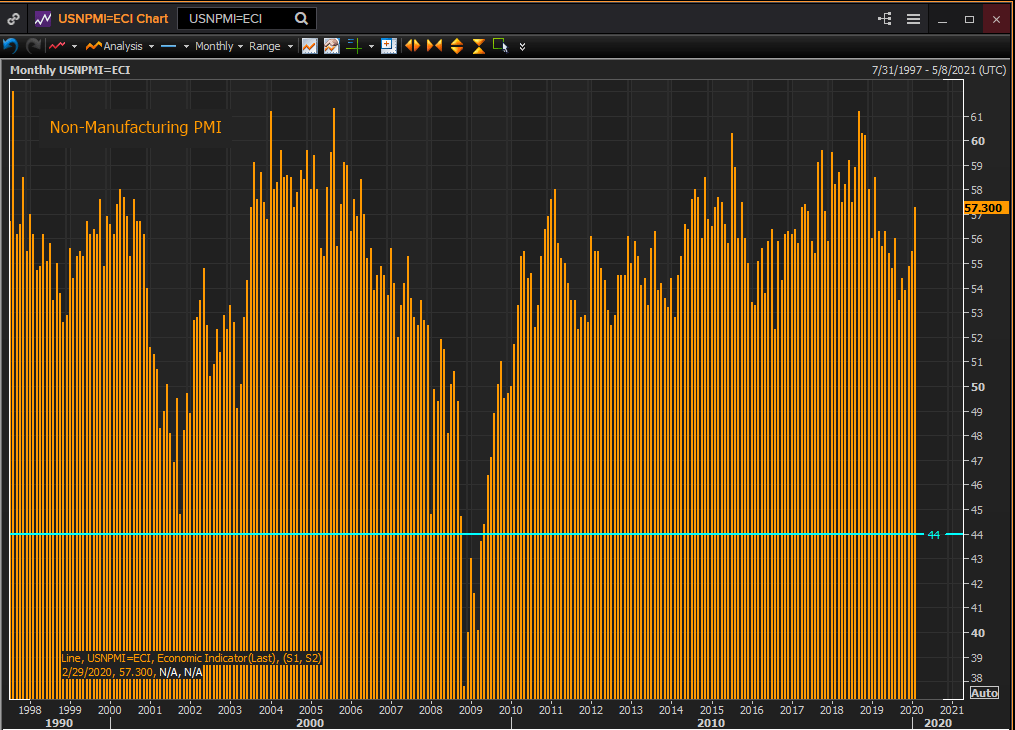
New orders are predicted to decrease to 56.6 from 63.1 and employment is thought to fall to 53 from 56.6. The forecasts for these important component indexes are far more sanguine than the overall gauge. It is unknown whether service businesses are actually more resilient or the swift moving crisis struck after responses were sent back to the institute.
Economic indicators
Non-farm payrolls averaged 231,000 in the three months to February. Unfortunately this tells us nothing about March, where 100,000 jobs are forecast to be lost and is likely a low estimate. April is expected to be far worse.
Private payrolls from Automatic Data Processing (ADP) fell 27,000 in March much less than the -150,000 forecast but the speed of the month’s descent probably short-circuited the full accounting.
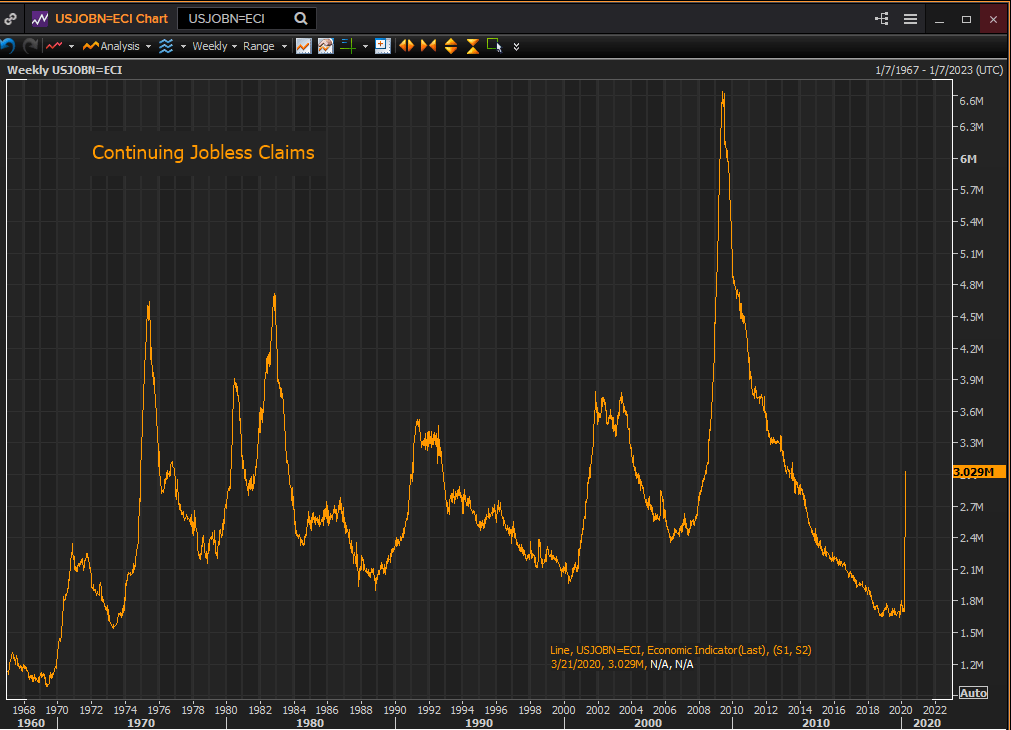
Jobless claims cited above were 3.283 million and 6.648 million in the weeks of March 20 and 27. The four-week moving average jumped to 2.61 million and continuing claims soared to 3.03 million in the March 27 week. Nothing like these weekly claims numbers have ever been seen before and the continuing claims figures hark back to the financial crisis. In May 2009 reached their all-time high of 6.635 million.
Challenger job cuts from Challenger, Grey and Christmas which lists announced corporate layoffs ballooned almost four times to 222,288 in March from 56,660 in February
The JOLTS listing of employment vacancies for January was 6.96 million higher than the projection of 6.48 million and December’s 6.55 million but it is far out of date. The February list will be released on April 6, with March not until May 15.
Michigan consumer sentiment fell to 89.1 in March at the bottom of its three year range but it also likely does not show the full damage from the job losses as its survey ended mid-month.
The same is true for the Conference Board consumer confidence figure which dropped to 120 in March from 132.6 and is expected to fall further in coming months.

Dollar reaction
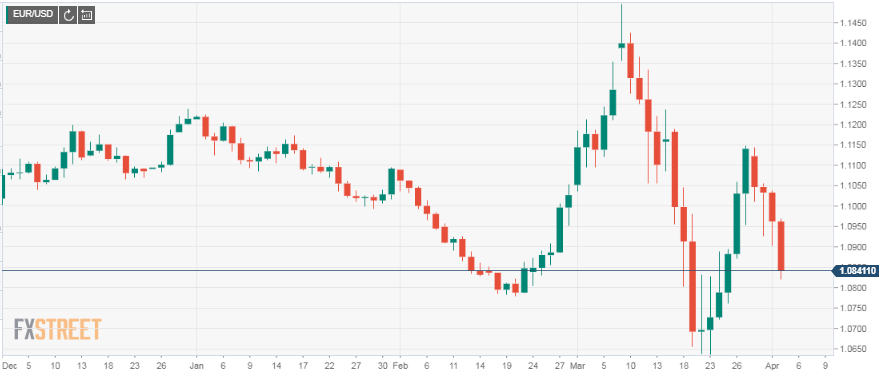
Market reaction to the US jobless claims of the last two weeks makes it clear that the dollar retains its safe-haven status. This week’s jump to 6.648 million, close to doubling the 3.5 million forecast and the prior 3.283 million, was followed by modest gains in the dollar against the euro and the yen.
With that response in mind reaction to the NFP figures will be limited.
If they are as predicted or better, far worse will be forecast for April and traders will simply ignore the March results. If job losses are higher, they could hardly be more of a shock than six million jobless claims. Until the pandemic relents the US dollar seems destined to keep it safety status.
Author

Joseph Trevisani
FXStreet
Joseph Trevisani began his thirty-year career in the financial markets at Credit Suisse in New York and Singapore where he worked for 12 years as an interbank currency trader and trading desk manager.