US Non-Farm Payrolls March preview: If it’s terrible, it’s expected, if it’s not, April will be
- Payrolls expected to lose 100,000 in March, first decrease since September 2010.
- Initial jobless claims average 4.9 million for two weeks.
- Dollar retains safe-haven status as public health crisis is unabated.

American data has begun to reflect the impact of the Coronavirus health crisis on the US economy. Initial jobless claims, a weekly number, and the first to reflect the enormity of the economic cost, has set an astonishing pace of almost 10 million over the last fortnight.
Non-farm payrolls for March will show some of the damage though less than the claims numbers as many of the layoffs did not begin until the latter part of the month. The consensus estimate of -100,000 has to be considered low in light of current information.
Unemployment (U-3) is expected to rise to rise to 3.8% from 3.5%. The rise should be limited by the strict definition required by the Labor Department. In order to be counted as jobless an individual had to have looked for work in the prior month. Since most of the newly unemployed still had jobs in February that should keep them from being counted as out of work.
Average hourly earnings forecast at 0.2% after February’s 0.3%, unchanged on the year at 3% and the weekly hours and the underemployment rate (U-6) moving to 7.1% from 7.0% are old news and will have no little market impact.
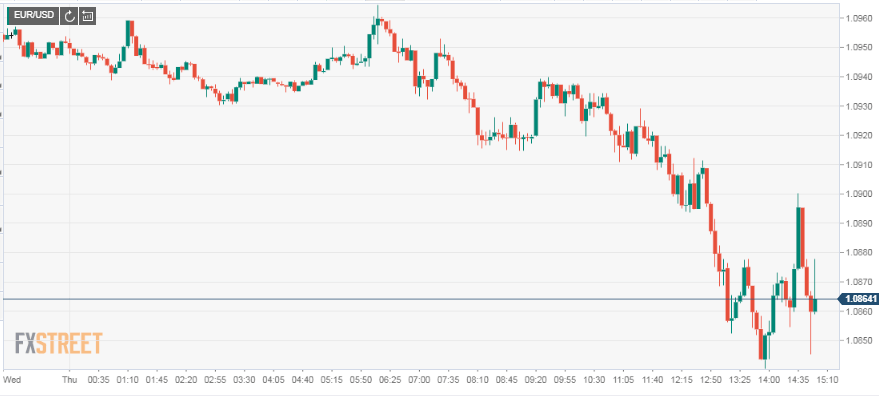
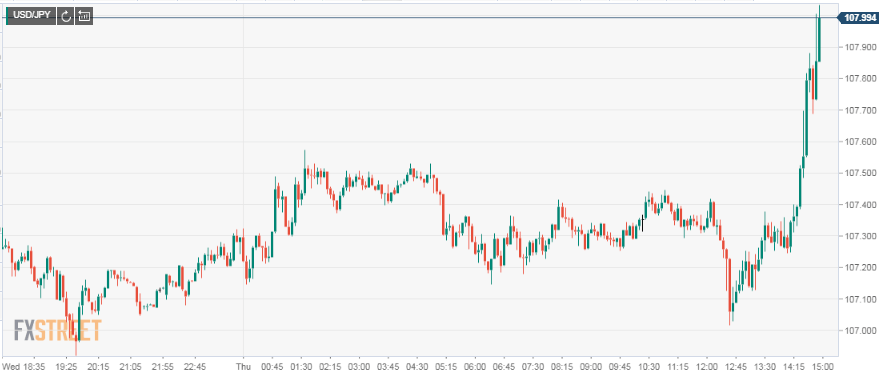
The dollar’s response to the initial claims numbers at 8:30 EST on Thursday was evidence that risk aversion and the safety trade remain paramount. After initial hesitation the greenback gained against both the euro and the yen.
Employment indicators
The rapid spread of the Coronavirus and the draconian responses of many local and national governments have rendered most economic statistics from March and all from earlier months moot. That non-farm payrolls averaged 231,000 in the three months to February tells us nothing about March and April except setting a height from which to fall.
Private payrolls from Automatic Data Processing (ADP) fell 27,000 in March far less than the -150,000 forecast but the speed of the March layoffs has likely delayed the full accounting.
Jobless claims mentioned above averaged 4.97 million over the weeks of March 20 and 27. The four-week moving average jumped to 2.61 million and continuing claims soared to 3.03 million in the March 27 week. Nothing like the first number has ever been seen before and the second harks back to the financial crisis and will continue to rise in the weeks ahead.
The purchasing managers’ report for manufacturing from the Institute for Supply Management was better in March at 49.1 than the forecast of 45 and just a point down from February. The employment index was 43.8 down from 46.9. The service sector numbers for last month will be reported on Friday at 10:00 am after the NFP report. The overall index is expected to plummet to 44 from 57.3 in February and the employment gauge to fall to 53.7 from 55.6.
Challenger job cuts from challenger, Grey and Christmas which tracks announced corporate layoff ballooned almost four times to 222,288 in March from 56,660 in February
The JOLTS listing of employment vacancies for January was 6.96 million higher than the projection of 6.48 million and December’s 6.55 million but it is far out of date. The February list will be released on April 6, with March not until May 15.
Michigan consumer sentiment fell to 89.1 in March at the bottom of its three year range but it does not show the full damage from the job losses as its survey ended mid-month.
The same is true for the Conference Board consumer confidence figure which dropped to 120 in March from 132.6 and is expected to fall further in coming months.

Dollar reaction
It is hard to imagine a worse economic statistic or one with greater import for the consumer led US economy than the last two weeks of initial jobless claims.
With than in mind the market’s reaction to the claims numbers likely limns the NFP reaction for the single reason that whatever the payroll number the overriding assumption is that April will be far worse. For the moment risk aversion and the US dollar safety trade rule the markets.
EUR/USD
Market reaction to the claims is the telltale for risk. With grimmer numbers ahead in the US and Europe risk to the downside for the united currency.

The yen's traditional role as a secondary safe-haven currency has been mitigated somewhat by the severity of the crisis and overwhelmed by some of the recent flows. The USD/JPY's rise after the claims numbers was mild and a notice that the yen is still preferred by some investors.

GBP/USD
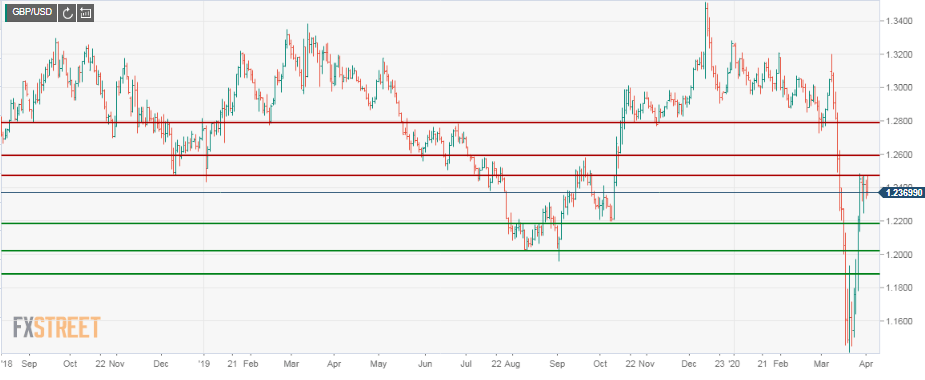
The pound's rise over the last week is a reflection of the British governments response to the domestic health crisis. As such it is apart from the dollar seeking risk response in the euro.
AUD/USD
The aussie's unfortunate case as a resource commodity tied to China tells most of the tale of its two-year fall against the US dollar. Until the global economy seems ready to returns to growth aussie is unlikely to recover.

Author

Joseph Trevisani
FXStreet
Joseph Trevisani began his thirty-year career in the financial markets at Credit Suisse in New York and Singapore where he worked for 12 years as an interbank currency trader and trading desk manager.