|

US industrial production - it will get worse

Weak industrial output is a concern. With supply chains set to face more disruption, and the energy sector hit by plunging prices, we see little prospect of near-term improvement. A rate cut before the end of 2Q20 looks ever more likely on the cards. 

Industrial production fell 0.3% month on month in January versus predictions of a 0.2% decline. 

The data shows the effects of the very warm January weather (it reached 69F in Manhatten the weekend of 11 January and 12th as I wore a T-shirt while watching my son play rugby down by Hudson River Park). Utility output plunged 4% in January after having declined 6.2% in December given no need for heating (and barely any need for the very expensive winter coat I was advised to buy after moving to New York).

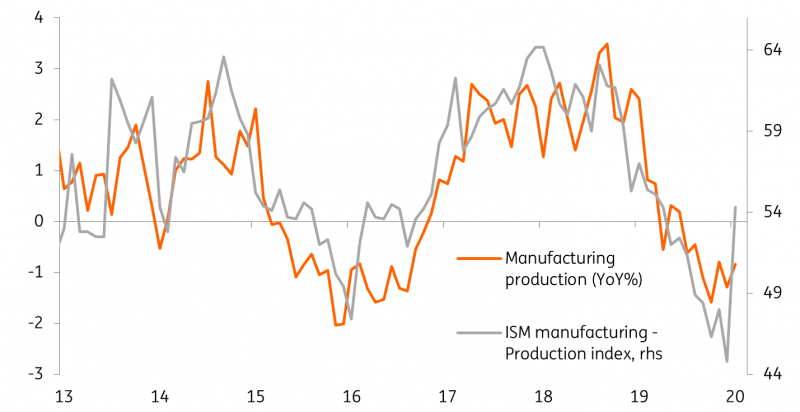
Manufacturing output was also weak (-0.1%MoM, matching expectations) despite the surge in the ISM production component (see chart). Given the ISM is a survey, it may well be that it over-represents the true situation as sentiment rebounded in the wake of the US-China phase one trade deal and participants felt a wave of relief. Further weakness is likely too in manufacturing output figures given that Boeing 737 Max production only ended in the second half of the month, so it is more of a story for February. 
 

ISM manufacturing vs production
ism manufacturing vs production

Source: Macrobond

The new issue is, of course, supply chain disruption resulting from lower Chinese and Asian factory output due to the impact of the coronavirus. This is already leading to a shortage of components and parts in factories around Asia and it is only a matter of time before it becomes more of an issue for Europe and the Americas - they are that bit further away so there is longer shipping time and a greater delay to the impact.

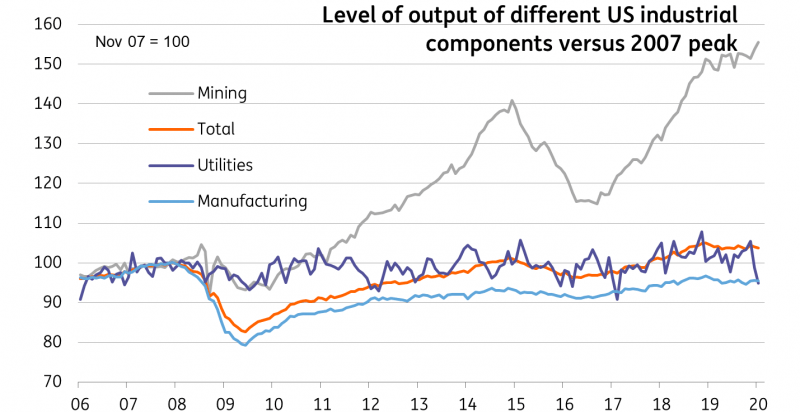
Rounding out, mining was actually pretty good, rising 1.2%MoM despite oil and gas rig counts being largely flat on the month, but with energy prices having plunged we have to be braced for declines in drilling in coming months. 
 

Industrial production breakdown
industrial production

Source: Macrobond, ING

We are not confident of a reversal in fortunes for the US industrial sector despite the positive trade conclusion. With the consumer story looking underwhelming after today's retail sales figures we still think a Federal Reserve rate cut is on the cards before the end of 2Q20.

Read the original analysis: US industrial production - it will get worse

Author

James Knightley

James Knightley

ING Economic and Financial Analysis

James Knightley is the Chief International Economist in London. He joined the firm in 1998 and has been covering G7 and Western European economies. He studied economics at Durham University, UK.


More from James Knightley
Share:

Editor's Picks

EUR/USD holds firm near 1.1850 amid USD weakness

EUR/USD remains strongly bid around 1.1850 in European trading on Monday. The USD/JPY slide-led broad US Dollar weakness helps the pair build on Friday's recovery ahead of the Eurozone Sentix Investor Confidence data for February. 

GBP/USD holds medium-term bullish bias above 1.3600

The GBP/USD pair trades on a softer note around 1.3605 during the early European session on Monday. Growing expectation of the Bank of England’s interest-rate cut weighs on the Pound Sterling against the Greenback. 

Gold remains supported by China's buying and USD weakness as traders eye US data

Gold struggles to capitalize on its intraday move up and remains below the $5,100 mark heading into the European session amid mixed cues. Data released over the weekend showed that the People's Bank of China extended its buying spree for a 15th month in January. Moreover, dovish US Fed expectations and concerns about the central bank's independence drag the US Dollar lower for the second straight day, providing an additional boost to the non-yielding yellow metal.

Cardano steadies as whale selling caps recovery

Cardano (ADA) steadies at $0.27 at the time of writing on Monday after slipping more than 5% in the previous week. On-chain data indicate a bearish trend, with certain whales offloading ADA. However, the technical outlook suggests bearish momentum is weakening, raising the possibility of a short-term relief rebound if buying interest picks up.

Japanese PM Takaichi nabs unprecedented victory – US data eyed this week

I do not think I would be exaggerating to say that Japanese Prime Minister Sanae Takaichi’s snap general election gamble paid off over the weekend – and then some. This secured the Liberal Democratic Party (LDP) an unprecedented mandate just three months into her tenure.

Bitcoin, Ethereum and Ripple consolidate after massive sell-off

Bitcoin, Ethereum, and Ripple prices consolidated on Monday after correcting by nearly 9%, 8%, and 10% in the previous week, respectively. BTC is hovering around $70,000, while ETH and XRP are facing rejection at key levels. Traders should be cautious: despite recent stabilization, upside recovery for these top three cryptocurrencies is capped as the broader trend remains bearish.