US Federal Reserve Minutes Preview: Has the hurricane passed or is this the eye?
- Edited minutes of the July 28-29 FOMC meeting.
- Fed funds rate and emergency programs unchanged.
- Any mention of yield curve control is a negative for the dollar.
- Markets looking for indications of long term economic view.


The Federal Reserve was the earliest government agency to act on the coronavirus pandemic. The bank’s rate and loan programs enacted in March have helped to mitigate the effects of the shutdowns that devastated the economy and produced the worst unemployment since the Depression.
Fed funds rate
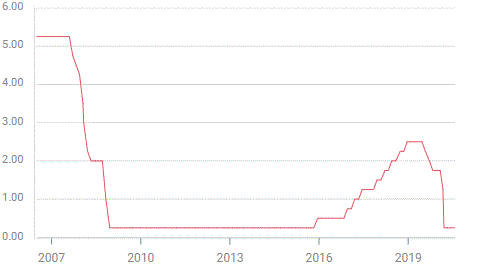
Since that intervention the Fed has maintained its policies, using bond purchases to push mortgage rates to their lowest levels on record but has eschewed other action while warning of the long-term impacts of the pandemic.
Markets are chiefly concerned about the governors’ forward view. Employment and economic growth are the Fed’s main concerns, followed at a discrete rhetorical distance by inflation.
Pessimistic optimistic or neutral whatever light the minutes can shed on the FOMC’s future sight will be taken as pronouncements by the trading markets.
Employment and growth
The dismal tale of the shutdown crash of employment is well known. Over 22 million American lost their jobs in March and April in the non-farm payrolls accounting. About 42%, just more than 9 million have since been rehired. The losses were heaviest among hourly and lower wage workers the same labor groups that before the pandemic had some of the lowest unemployment on record and the highest wages gains in a generation.
Non-farm payrolls
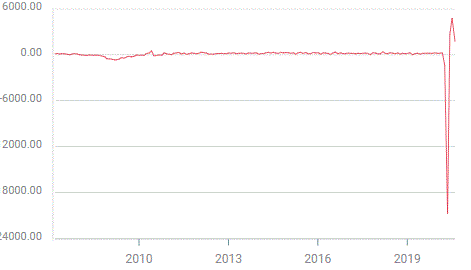
Growth collapsed in the second quarter falling at an unheard of 32.9% annualized rate. The prospective recovery in the July, August and September, as charted by the Atlanta Fed’s GDPNow program has jumped from 11.9% in its first estimate to 26.2% in its August 14th version.
Inflation
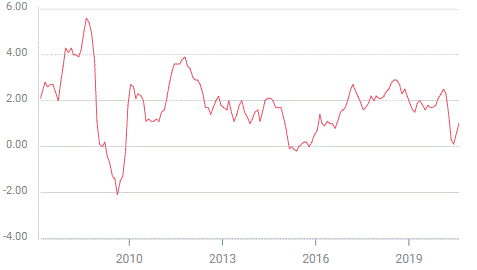
Inflation has been for a decade and more the step-child of Fed policy as the Fed focused on recovery from the financial crisis and recession. The crash in consumer demand as most Americans were locked in their homes in March and April drove prices into reverse. Their partial revival in prices has been a function of returning demand rather than any reflationary efforts by the central bank.
CPI
Minutes and markets
The FOMC minutes are edited productions designed to enhance and elucidate current Fed policy. All of the Fed’s three main concerns, growth, employment and inflation, are answerable to the same policy: lower interests rates.
There is one area in which the minutes may provide useful clues to future Fed decisions. Yield curve control, or as we like to call it Y2C, the extension of Fed rate setting to the longer end of the yield curve. Was there a serious discussion of Y2C as the next step in Fed policy?
Yield curve control was not mentioned in the FOMC statement or by Chairman Powell in his prepared remarks or in the news conference. If there was any consideration it will show here. If the topic was more than academic it will be a sign that the governors are more worried than they have let on and the implications for the dollar will be detrimental and serious.
Author
Joseph Trevisani
FXStreet
Joseph Trevisani began his thirty-year career in the financial markets at Credit Suisse in New York and Singapore where he worked for 12 years as an interbank currency trader and trading desk manager.

















