Gold's 14-month low looks mild next to Silver's fall from $121 to $44


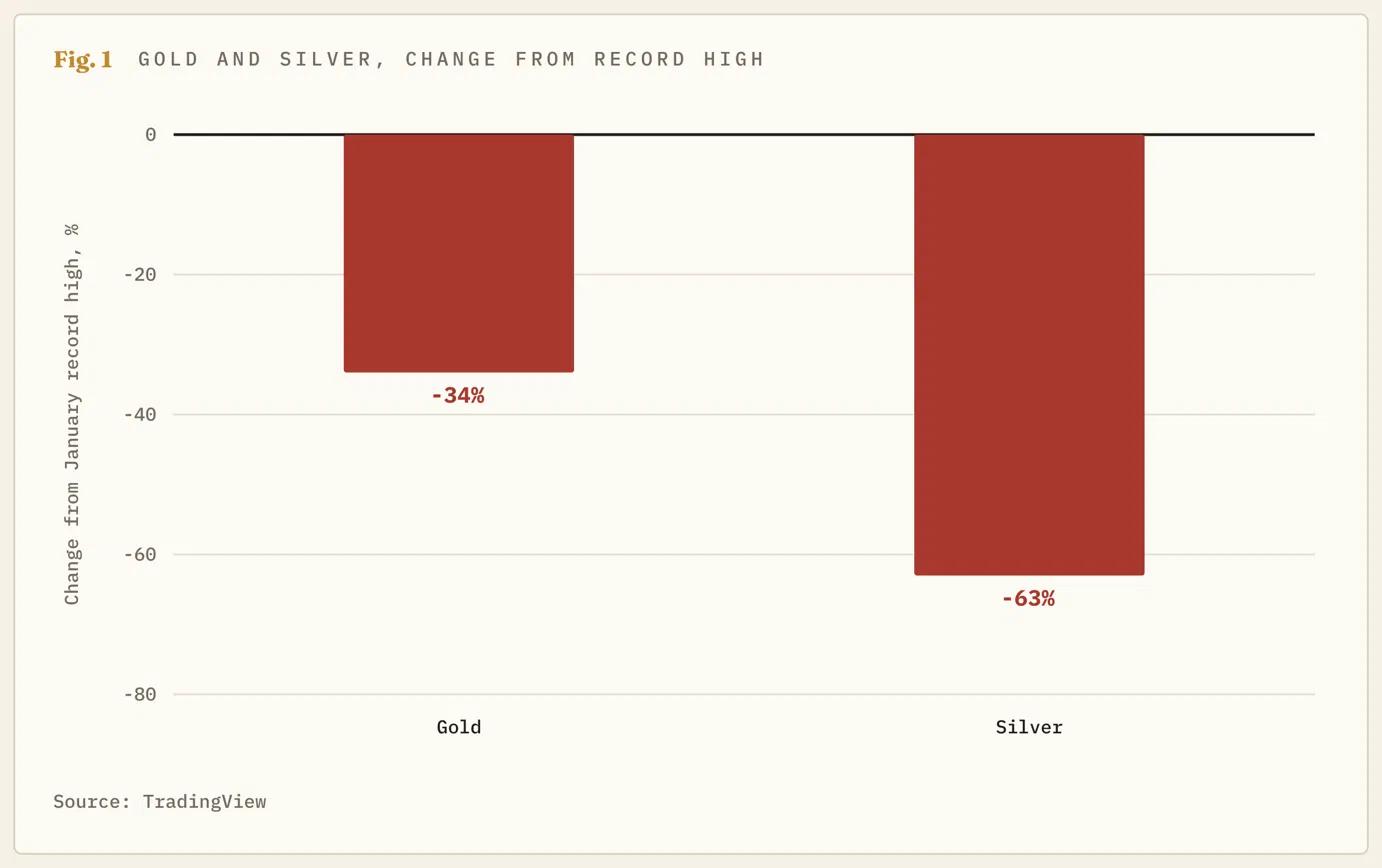
Gold has lost a third of its value since January as traders bet on more Federal Reserve rate increases. Silver has lost nearly two-thirds, because the buyers still holding Gold up have no equivalent in the Silver market.
Gold is trading below $3,700 for the first time since September 2025, a little more than a third under the record near $5,600 it set in late January. Silver peaked above $121 in the same week and now trades under $45, a fall of almost two-thirds. Of the two, the metal that lost a third of its price got off lightly.
Traders are selling both for the same reason: a Federal Reserve (Fed) that has started raising interest rates and is expected to keep going. That shared cause explains the direction, but not why one metal has fallen nearly twice as far as the other. The gap between them is the more useful number, because it shows what Gold still has going for it and what would have to change for the fall to stop.
One Fed, two very different falls
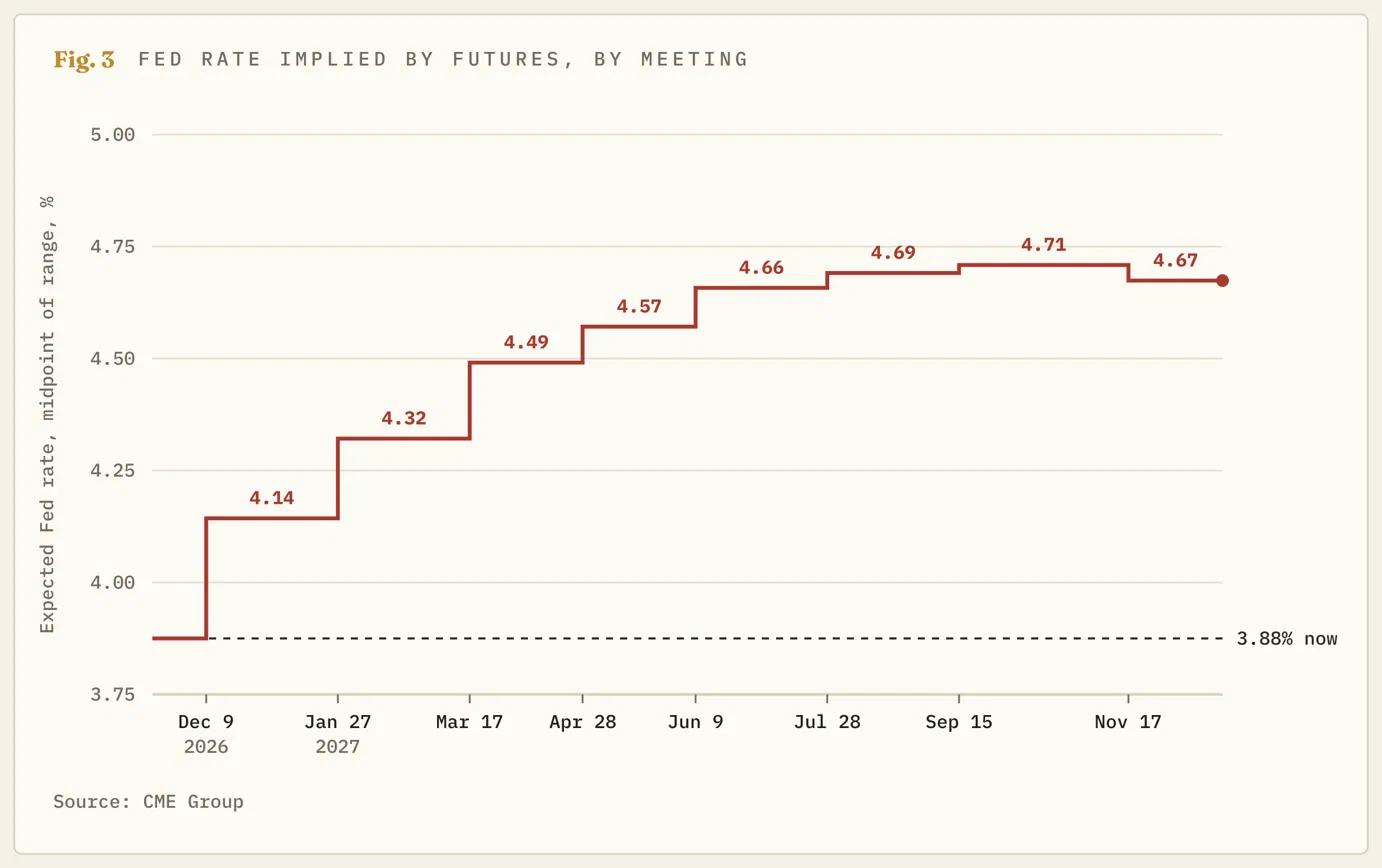
The Fed raised its rate in September for the first time in three years, then held it at 3.75%-4.00% in October despite objections from two officials who wanted another increase. Minutes of that meeting, published on Wednesday, showed almost all officials expecting another hike in the months ahead, and a couple willing to consider more than a quarter-point in December. In futures markets, where traders bet on the Fed's next moves, a December increase is fully pencilled in, and three increases are expected by June.
For holders of either metal, those expected increases are a cost. A bar of Gold or Silver pays its owner nothing, while a 10-year Treasury, the bond the US government sells to borrow for a decade, now pays more than 5% a year. The same expectations have lifted the Dollar to around a 19-month high, which makes both metals dearer for buyers paying in other currencies. Neither cost is any lower for Silver than it is for Gold.
The price collapses are not the same. In January, an ounce of Gold bought 43 ounces of Silver, the fewest since 2011, and it now buys more than 80. Had Gold fallen as far as Silver has since their records, it would be trading near $2,050, a price it last saw in early 2024.
Gold still has a buyer that ignores interest rates
Central banks bought 321 tonnes of Gold in the third quarter, according to the World Gold Council. That is 42% more than a year earlier and well above the 227 tonnes they have averaged per quarter over the past five years. China's central bank was the largest reported buyer, followed by Poland's. These institutions hold Gold to spread their reserves across more than one asset, and they don't own it for income, so a higher Fed rate changes very little about why they buy.
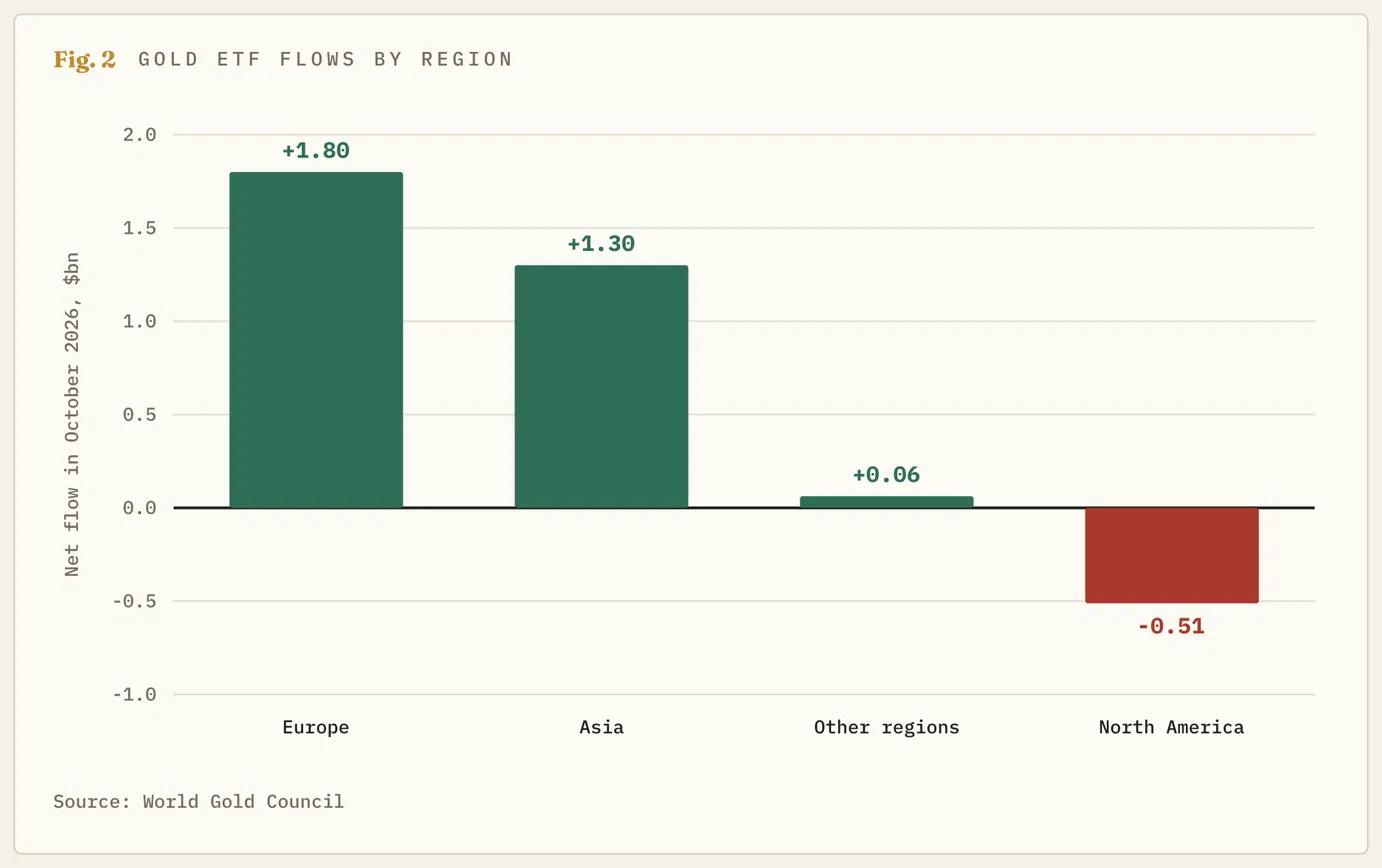
Alongside them, fund investors outside the US have kept buying. Gold-backed exchange-traded funds (ETFs) took in $2.7 billion in October, their fourth straight month of inflows, with $1.8 billion arriving in Europe and $1.3 billion in Asia. North America was the only region where investors pulled money out, $512 million of it, and US investors are the ones with a 5% Treasury to buy instead. The funds ended October holding 4,275 tonnes, the most on record, in a month when the value of that Gold fell 6%.
A third off the record is still a third
None of this makes Gold's bear market decline small. On the London benchmark price, Gold lost 15.1% in the 12 weeks to November 13, which the bullion dealer BullionVault ranks as the fifth-steepest fall of that length in 20 years. Every buyer described above was in the market while that happened, and Gold still fell in September, in October, and so far in November.
So far, the buying has slowed the fall without stopping it. The investors still selling are the ones weighing Gold against a 5% Treasury, and they expect at least three more increases before the Fed is done. Gold's ordinary buyers have stepped back as well, with demand for bars and coins down 19% in the third quarter.
On top of that, the central bank figure deserves some care. Only 120 of the 321 tonnes were reported by the banks themselves, and the rest is the World Gold Council's estimate of purchases that were never announced. That makes Gold's most reliable buyer mostly an estimate.
The Fed can only rescue one of them
December 9 is the fork. Traders already have a quarter-point increase pencilled in for that meeting, so what matters is the set of new forecasts the Fed publishes alongside it. If officials signal that the increases will continue through 2027, the cost of holding metal would rise again, and both would likely keep falling. In that case, Gold has its central bank and European buyers to slow the pace, and Silver doesn't.
If instead the Fed raises and signals it is nearly done, the pressure the two metals share would ease. Gold would likely recover first in that case, since the Fed is the only thing it has been falling on. Silver would still be left with panel makers using less of it and funds selling more than the shortfall, so a Fed pause repairs neither.
For anyone holding either metal, the number that keeps score is how many ounces of Silver one ounce of Gold buys, and Gold's advantage holds while that figure stays above 80. It breaks if Silver starts gaining on Gold while rate expectations are still rising, which would suggest the factory problem is already priced in. It also breaks if the World Gold Council's next quarterly count shows central banks buying less in the fall. Until one of those shows up, Gold is the metal with one problem, and the Fed has put a date on it.
Author
Joshua Gibson
FXStreet
Joshua joins the FXStreet team as an Economics and Finance double major from Vancouver Island University with twelve years' experience as an independent trader focusing on technical analysis.