US Dollar Weekly Forecast: The Dollar survives the midterms; now comes inflation
- The US Dollar added to previous gains after digesting the midterm elections.
- Bets post-US elections seem to favour a sooner end to the Middle East crisis (and tariffs?).
- Investors now see the Fed hiking once again at its December meeting.
The week that was
The US Dollar (USD) weathered the post-US midterm election results better than expected, adding to the previous week’s bullish move and managing to keep the trade above the key 102.00 barrier on the US Dollar Index (DXY).
Indeed, the Greenback dodged the wave of selling pressure that followed Democrats' big win on Wednesday, recovering ground lost in the second half of the week and picking up pace after US Nonfarm Payrolls crushed analysts’ consensus in October (+165K jobs).
The US Dollar’s recovery, however, appears to have been propped up by safe-haven demand amid a global rout in AI-linked stocks (again, betting on a different scenario now that Democrats hold the key to both the Senate and the House).
That said, there was no support from the usual suspects: US Treasury yields traded in the red across the curve, crude Oil prices retreated markedly, and there was no news whatsoever about the US-Iran-Hormuz conflict.
Some questions, among others, have been raised:
- Will the Middle East crisis find a diplomatic solution sooner?
- Will AI-related investment suffer from, say, new legislation?
- Will inflationary pressures finally start to subside?
It is all about inflation
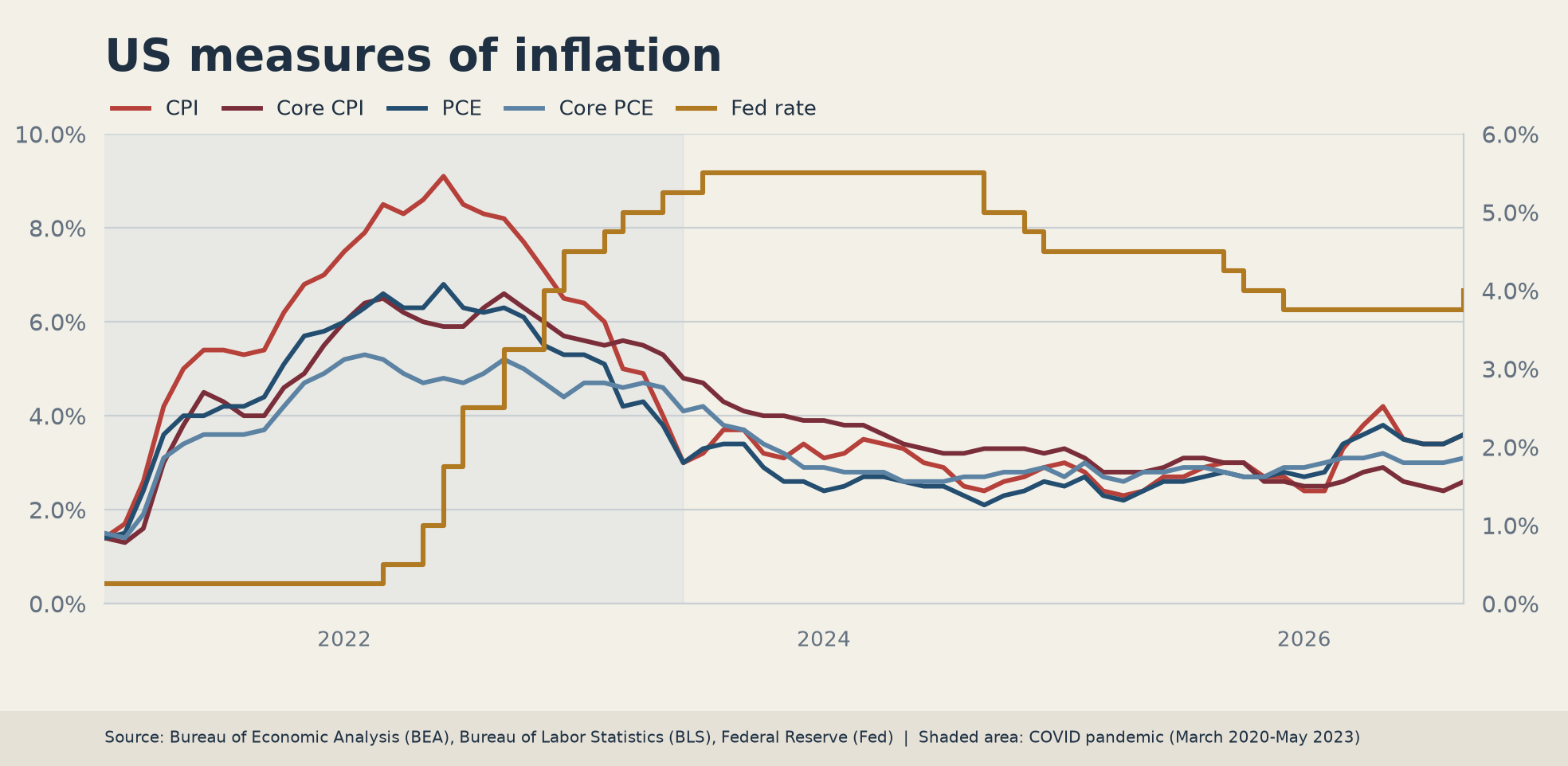
The performance of US inflation was once again at the centre of the debate during the press conference held by Chair Kevin Warsh, following the Federal Reserve (Fed) decision to maintain its Fed Funds Target Range (FFTR) at 3.75%-4.00%.
This week’s comments from Fed officials point in only one direction: inflation is still too high, and interest rates may need to rise further. However, there seems to be less consensus regarding the timing of said hikes, as most policymakers appear to favour a gradual approach that gives the economy time to absorb tighter policy:
- Beth Hammack (Cleveland) said monetary policy must move into restrictive territory, arguing that smaller, measured increases would limit the risk of a sharp slowdown. When it comes to inflation, she warned it has been moving in the wrong direction for too long.
- Thomas Barkin (Richmond) also advocated for patience, saying the direction of travel was clear, but the pace was the real question. He also described an economy with plenty of underlying momentum, adding that the AI investment boom is adding to demand and has already pushed up prices in parts of the supply chain. Barkin, curiously, said interest rates would have only a limited effect on the technology sector.
- John Williams (New York) offered the clearest argument for waiting. He said the economy and labour market remained remarkably resilient, but inflation had been too high for too long. Since monetary policy can take a year or two to have its full effect, he believes the Fed should look ahead and use the current period to gather more information.
- Alberto Musalem (St. Louis), meanwhile, pointed to strong consumption and investment, with energy costs and the AI buildout still adding to inflation.
The overall message is hawkish but measured, as officials appear to agree that policy is not restrictive enough, yet they are not calling for an abrupt tightening campaign. Indeed, with inflation expectations still anchored and the labour market in solid shape, the Fed has room to raise rates gradually and assess the effects along the way.
Positioning remains mildly supportive
According to the latest Commodity Futures Trading Commission (CFTC) data, speculators trimmed their net longs in the US Dollar in the week ending October 27. That said, non-commercial net longs shrank to two-week lows near 14.1K contracts, while the four-week change dropped to around 2.2K contracts. So far, the broader trend remains positive, but the pace of improvement has slowed considerably.
Additionally, open interest declined to its lowest level in the past six weeks with nearly 48.3K contracts. Following this, and amid shrinking speculative positioning and total participation, the move appears to reflect liquidation of longs rather than a decisive build-up of fresh shorts.
Extra data showed speculative exposure easing to 29.26%, while its percentile slipped to 49.4. The same happened to the net position percentile, as it declined to 56.7, all suggesting that both measures remain close to, or modestly above, neutral. We can then conclude that USD positioning is still supportive but far from historically stretched.
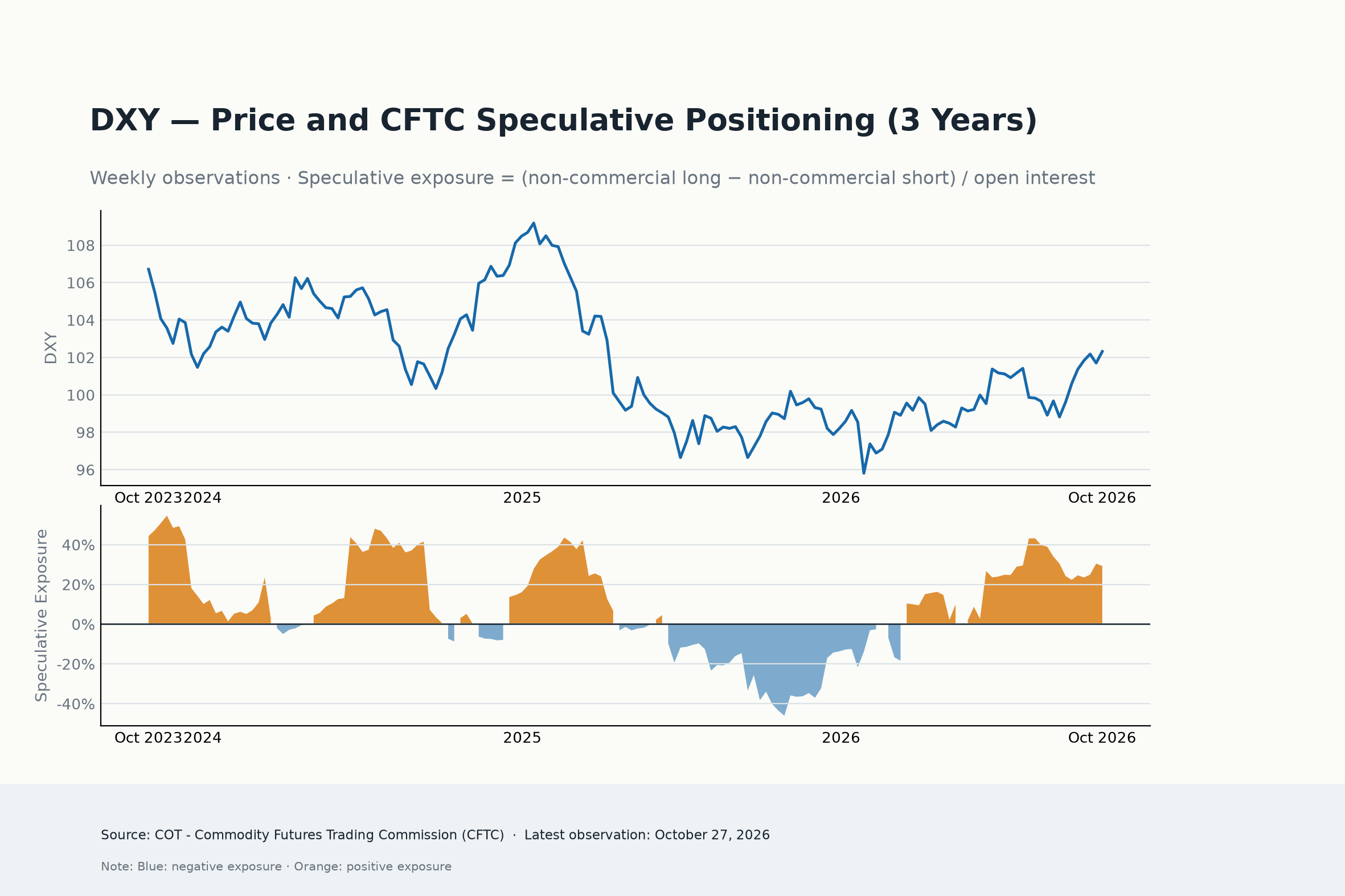
All in all, the USD positioning backdrop remains mildly constructive, although bullish momentum has weakened. While the positive four-week change shows that net-long exposure is still higher than it was a month ago, the latest decline in net longs and open interest suggests that the recent recovery is losing some of its conviction.
What's next for the US Dollar?
Next week will focus on inflation data, with the Consumer Price Index (CPI) and Producer Price Index (PPI) releases as the main events.
In addition, it will be interesting to keep assessing the markets’ response to the US midterm election results and their potential impacts on the economy going forward, while geopolitics is also expected to garner the usual attention.
The Dollar has recovered, but can it convince?
For the US Dollar, and looking at the immediate term, much will depend on whether next week's inflation figures give the Fed another reason to bolster its view that higher interest rates may be needed.
A fresh upside surprise would strengthen the case for further tightening and could help the buck extend its recovery, particularly if risk appetite remains fragile. Softer readings, however, could challenge the recent advance, particularly as US Treasury yields provide little support and speculative positioning shows signs of fatigue.
For now, the Greenback appears to have found its footing, but whether it can build on that recovery is another matter.
Inflation may well have the final say.
Author

Pablo Piovano
FXStreet
Born and bred in Argentina, Pablo has been carrying on with his passion for FX markets and trading since his first college years.

















