Week ahead – Inflation and geopolitics in focus as US political landscape shifts
- Post-midterm election euphoria fizzles out as risk aversion prevails.
- US CPI, PPI and Fedspeak on the radar as Fed hike bets remain supported.
- Oil retreat pauses on mixed hopes about the ongoing conflicts.
- Treasury bond auctions in focus, while dollar/yen and gold seek direction.

A week of three tales
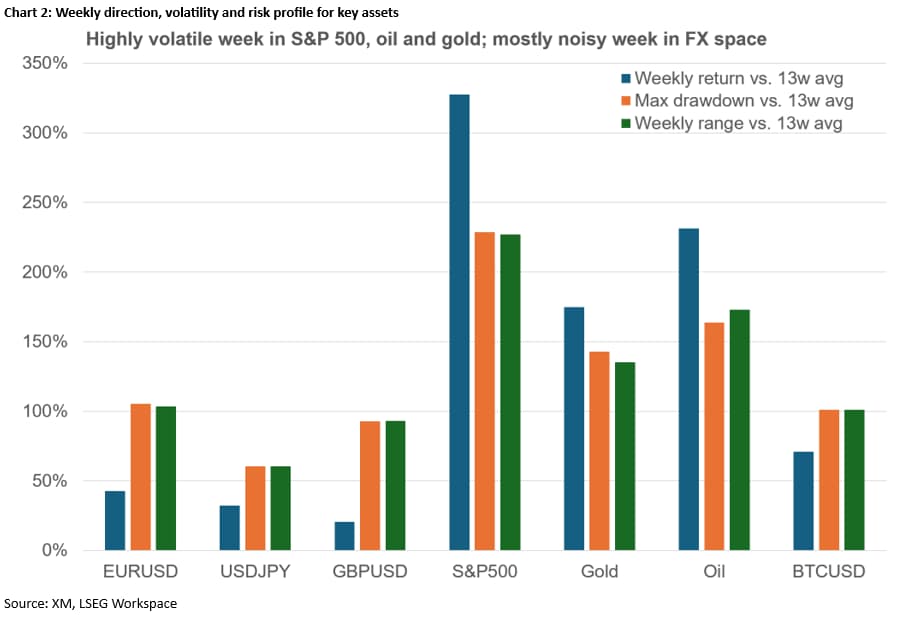
It has been a rollercoaster week, with the initial market nervousness being replaced by strong risk appetite on Wednesday, which proved very short-lived, as risk assets suffered on Thursday. The result of the US midterm elections, with the Democrats performing exceptionally well and taking control of Congress, confused investors, although it is too early to judge if current trends will persist.
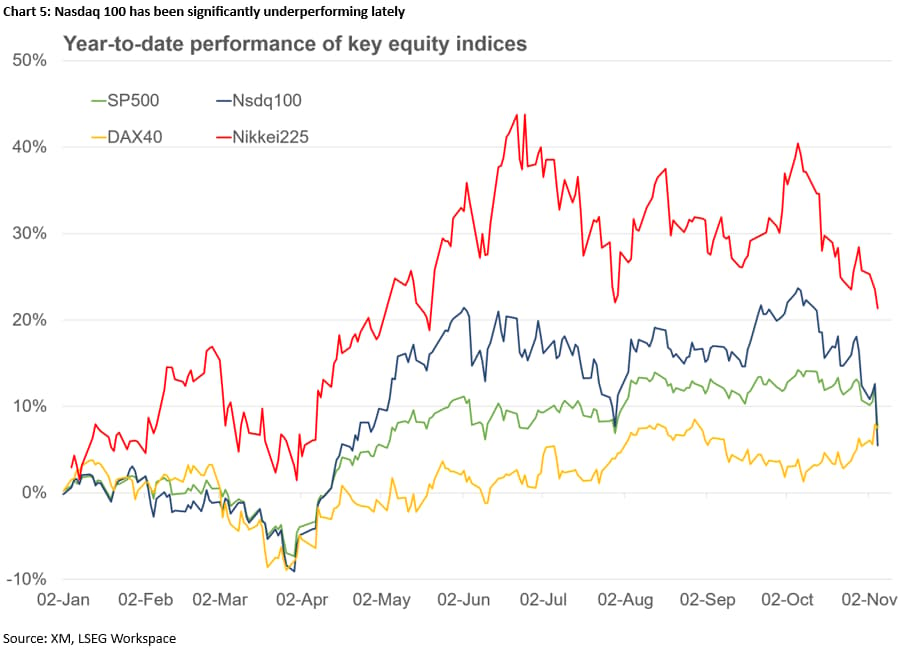
Equities, gold and bitcoin saw the strongest reaction to the new political status quo in the US, erasing early-week losses and turning positive, after three weeks of persistent declines. However, market angst took over, with the technology-dominated Nasdaq 100 index leading the sell-off, underperforming the broader S&P 500 index, while European stock markets have shown real strength on expectations of a less aggressive President Trump.
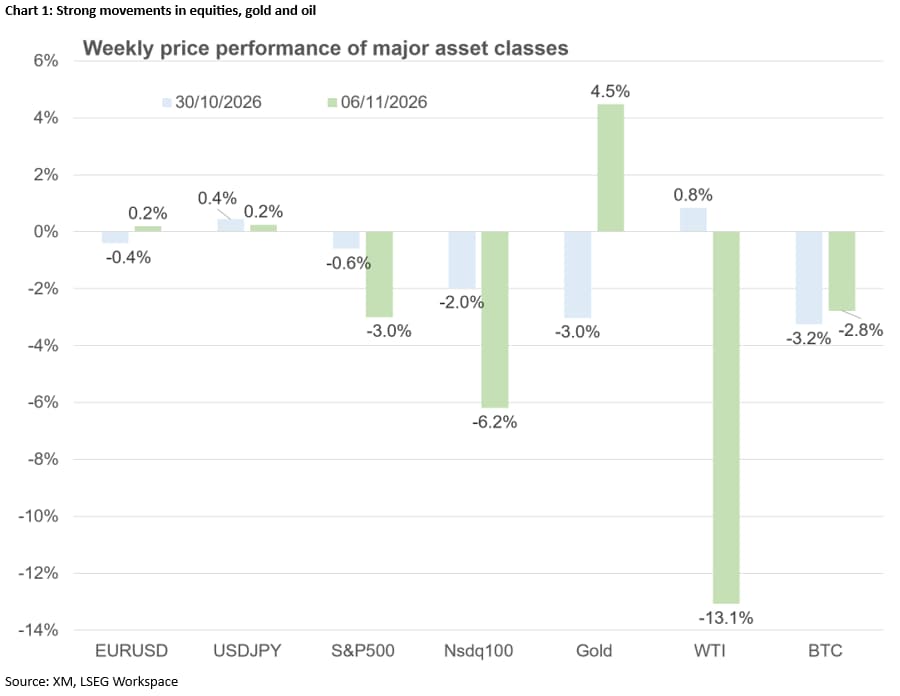
The post-midterm elections rally appears to have completely fizzled out in bitcoin, as investors are potentially coming to terms with the Democrats’ known stance about crypto legislation and wider crypto adoption. Interestingly, despite Thursday’s drop, gold is still retaining a good chunk of the rally since October 30, reconfirming the importance of the $4,000 level. That said, both assets continue to face old and new challenges.
On the other hand, the sharp drop in oil prices found strong support in the $88 area on a potential misguided belief that tariffs could be used less often by Trump going forward, while he might be forced to adopt a more conciliatory stance regarding the ongoing conflicts.
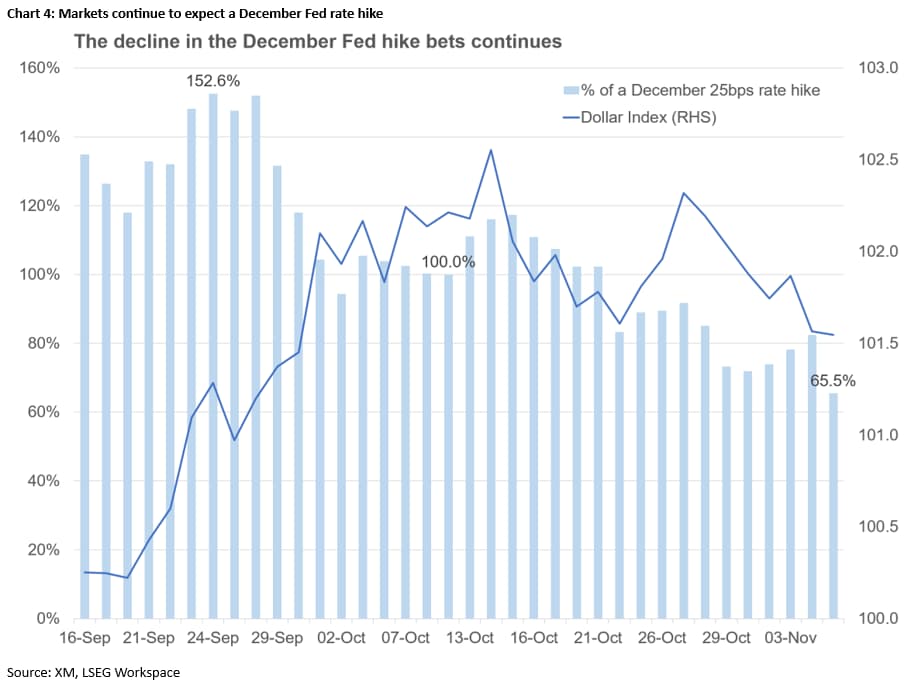
The connecting link between these moves has been the US dollar. Following an uninspiring October, the greenback started November on the back foot, underperforming the pound, Swiss franc, and even the troubled euro. However, despite the lower sovereign bond yields this week, soft risk appetite tends to favour the dollar, also supported by the decent Fed rate hike bets for the mid-December meeting.
Could the new political status quo bring about developments in the Middle East?
The new status quo in US politics could potentially affect Trump’s foreign policy stance going forward. Could his limited leeway trigger a more appeasing stance, or is he determined to remain undeterred in using foreign policy to advance US interests, often at the expense of his allies? For example, could tariffs take a back seat with Trump deciding to restore the sour relationships with major trading partners like Canada?
The critical test, though, will be Trump’s willingness to resolve the two ongoing conflicts. Some progress has been made in the Qatari-mediated US-Iran talks, but obviously an agreement remains elusive. Interestingly, the situation in the Ukraine-Russia conflict is more promising, as trilateral talks are planned for next week in Abu Dhabi. That said, high expectations could prove disappointing for markets, even after Trump’s promising commentary.
Oil prices fell after the midterm election results, but the move might prove short-lived as concrete developments on the ground are needed to support the prevailing oil-negative momentum. Meanwhile, central bankers are paying attention to energy prices, with the December rate hike bets for both the Fed and the ECB edging lower lately. Notably, this move could pick up speed if oil resumes its decline, potentially hurting both the dollar and the euro.
The Fed is focused on incoming inflation data
While digesting the latest US labour market data, and given that another nonfarm payroll report will be published ahead of the mid-December meeting, next week, the Fed’s focus will be on the incoming CPI and PPI reports for October, and Fedspeak. Notably, following a quiet period when most Fed members chose to stay on the sidelines to avoid being seen as meddling in the elections, numerous speeches are planned for next week.
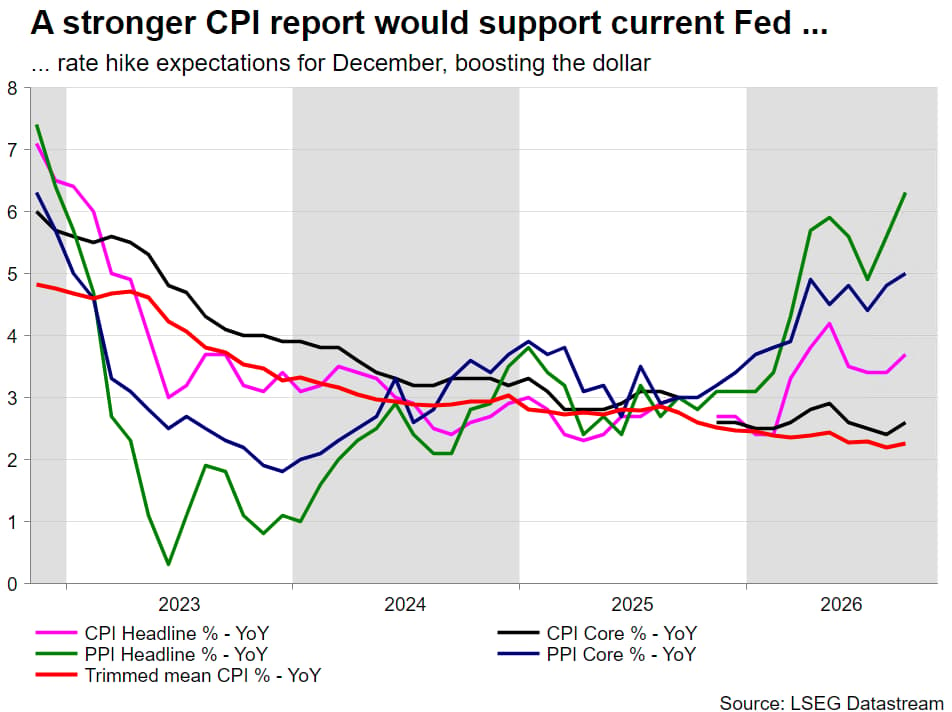
The deceleration seen in inflation rates since the May peak has been reversing, with both headline and core inflation rates climbing lately. Given the 15% rally in oil prices in October, and the equivalent drop back in October 2025, there is a strong chance of upside surprises on Tuesday. A headline CPI reading above 4% and a value close to 3% in the core indicator, along with a similar surprise in the PPI report and hawkish Fedspeak, would strengthen Fed rate hike bets and offer a valuable boost to the dollar.
Stock market weakness could persist
Domestically, the main question is whether Trump is willing to work with the Democrats, now that they hold the keys to legislation, including fiscal spending, healthcare policy, etc. While the US President could decide to work with them to support the US economy, it is very likely that the next two years will be full of attacks, animosity and vetoes, stalling any initiatives from both sides.
AI could end up being a key battleground as the US President and Democrats have opposing priorities. Democrats’ fondness of legislation, and oversight could hit data centre buildup, energy producing and even limit oil extraction. Coupled with the lingering concerns about profitability, the implementation, the funding sources and the cost of the enormous investment plans announced, the AI-related stock weakness might linger, despite the Nasdaq 100 index falling below the key support of the 200-day simple moving average (SMA).
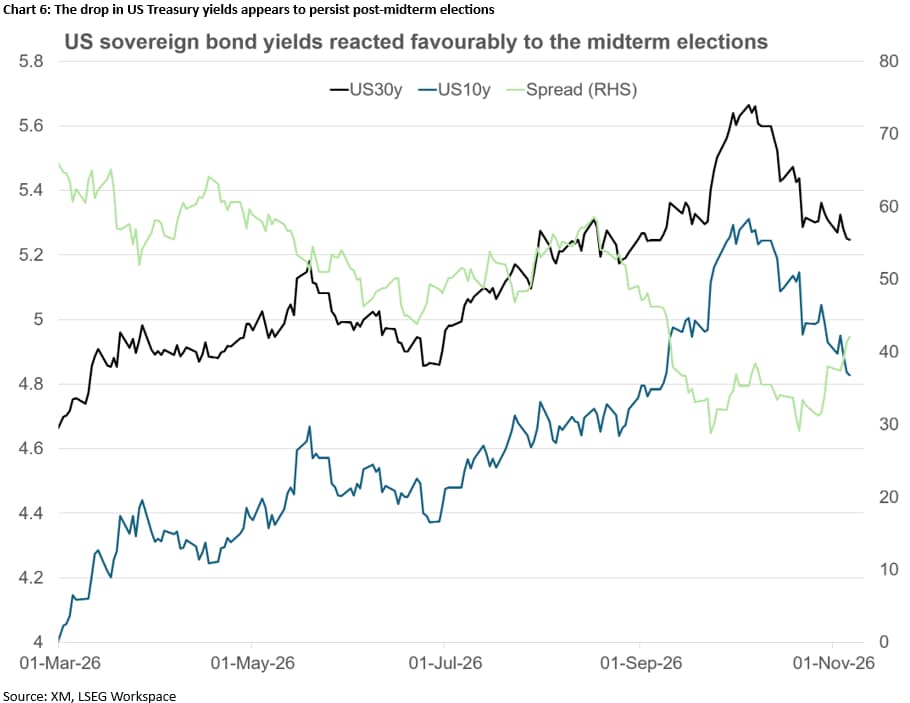
The new balance of power in Washington, DC, Fed hike expectations, risk appetite and the prevailing oil trend are expected to impact the usual early-month 3-, 10- and 30-year US Treasury auctions scheduled for next week, split by Wednesday’s bank holiday. Notably, with the 10-year bond yield falling sharply below 5%, demand at these auctions is a double-edged sword. Strong demand from domestic accounts could signal risk aversion, while weak demand could suggest investor unwillingness to accept lower yields, thus revealing angst about the US fiscal situation.
Could Dollar/Yen break out of its current range?
Since mid-September, dollar/yen has been range-trading, with bouts of dollar strength and weakness failing to trigger a breakout. The combination of the expected tighter fiscal stance, lower oil prices, softer US data prints and dented Fed hike bets could weaken the dollar, while BoJ rate hike expectations could linger due to the significant benefit to the Japanese economy from lower energy prices, potentially boosting consumer spending, and the continued fiscal spending. A drop below the 156.74 level would open the door to a move towards the 155 area, especially if the Fed doves appear to hold the upper hand in next week’s Fedspeak.
Is Gold primed for a new bullish trend?
Gold quickly took advantage of the new political status quo in the US, climbing sharply towards $4,150 on increased chances of a more fiscally responsible US administration going forward. With gold’s short-term trend remaining negative due to high real yields and a strong dollar, a move above $4,280, retracing 50% of the August-October slide, could really trouble gold bears, with the bulls’ ultimate target being the 200-day SMA at $4,470.
Author

Achilleas joined Trading Point in November 2022. He holds a BSc in Business Economics from Middlesex University and a MSc in Mathematical Trading and Finance from Bayes Business School, City University.