US Dollar Weekly Forecast: Inflation won't blink, the Fed won't back down
- The US Dollar climbs to fresh 19-month tops, up for the third week in a row.
- Market participants continue to see the Fed hiking its FFTR in December
- The FOMC will publish its Minutes of the October 27-28 meeting.

The week that was
The US Dollar’s (USD) rally appears anything but abated so far. Indeed, the Greenback advanced to levels last visited in April 2025, well past the 103.00 barrier when gauged by the US Dollar Index (DXY).
As was the case in the last sessions, the Greenback’s firm tone was propped up by rising bets on further tightening by the Federal Reserve (Fed), with the next rate raise expected at the December gathering.
In the meantime, the buck appears to have gained extra support from the likelihood of a larger rate hike (50 basis points?), particularly following the release of hotter-than-expected inflation figures in October, according to the Consumer Price Index (CPI).
This time, US Treasury yields advanced in tandem with the move higher in the US Dollar, hitting multi-week tops across the curve. Another factor feeding into the USD’s robust performance.
Curiously, the Greenback managed to extend its uptrend further despite crude Oil prices correcting markedly in a context where hopes of a diplomatic solution to the Middle East confrontation keep sounding more and more like wishful thinking.
Inflation, inflation and more inflation
What the new statements from Fed members show is a shared worry that inflation is no longer only an energy or tariff issue. Demand is holding up, businesses are reporting widespread cost pressures and are preparing to pass those on, and price increases are spreading into services and categories not related to energy.
Inflation is becoming more persistent than some officials anticipated. Christopher Waller, of the Board of Governors, described the September figures as “bad” and cautioned that producer prices and energy costs might continue to filter through. Inflation in services was a particular concern, said Chicago’s Austan Goolsbee, while San Francisco’s Mary Daly warned inflation was “bleeding” into services, where pricing pressures tend to remain around. Vice Chair Michelle Bowman said she anticipates core PCE inflation to have hit 3.3% in October and wants to see the AI and Middle East shocks dissipate before she is convinced that inflation will decline next year.
The policy message was more hawkish. Lorie Logan of Dallas said the Fed needed at least two more quarter-point hikes and may accelerate during the winter. Waller left the door open to a half-point raise in December if core CPI remained steady, while Susan Collins (Boston) warned further tightening may be needed soon and rates may eventually have to go higher than planned. Cleveland’s Beth Hammack, Philadelphia’s Anna Paulson and Richmond’s Tom Barkin voted for a less aggressive approach, but all agreed that policy has to tighten.
Inflation expectations are still anchored widely, but policymakers are obviously less ready to bet that stability will last. The Fed is worried that energy, AI-related and demand-driven pressures might become entrenched in pricing and expectations if they continue. So the developing agreement is not whether inflation has to come down but how fast and how hard the Fed should intervene to make sure it does.
USD positioning holds steady as bullish momentum stalls
Speculative positioning in the USD remained generally unchanged in the week to November 3, Commodity Futures Trading Commission (CFTC) data showed. Net longs indeed rose slightly to around 14.2K contracts, with the four-week change slipping to +2,179 contracts. The larger trend is still somewhat positive, but momentum has mostly halted.
Open interest rose to about 49.1K contracts. That is, the current numbers suggest a balanced market rather than a major build up of new US Dollar longs or shorts, with net positioning little altered despite increasing activity.
Also, speculative exposure eased moderately to 28.91%, and its percentile declined significantly to 49. The Net Position Percentile rose to 57.4, showing both metrics continue to be close to neutral overall, with net positioning being mildly supportive of the Greenback.
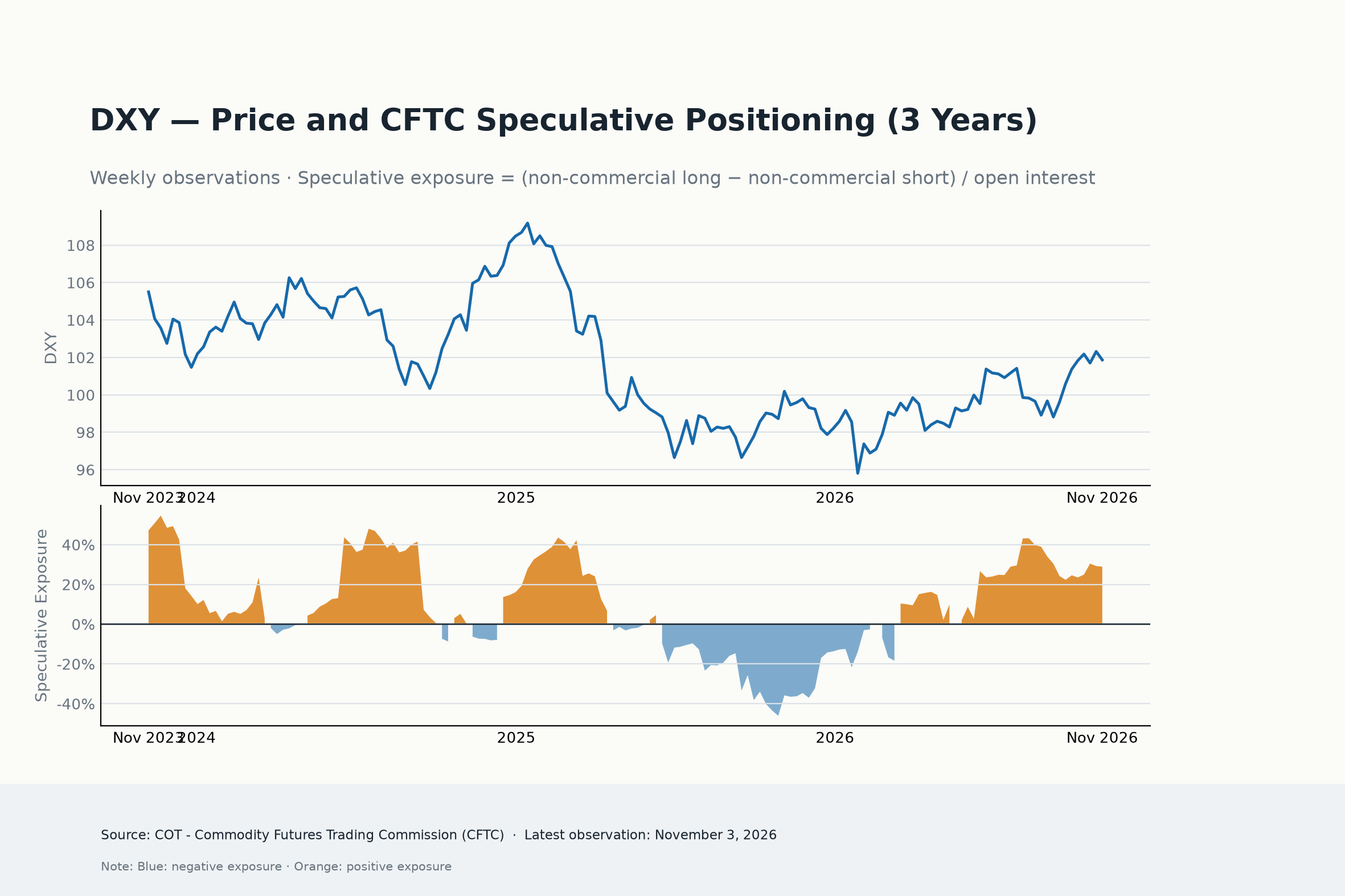
So the background for the buck’s situation is solid but without a clear trigger. Net longs are still above levels seen four weeks ago, but the near-zero weekly change and weakening four-week momentum imply the current bullish comeback has halted rather than picked up additional impetus.
Next on tap for the US Dollar
Next week will focus once again on the Fed, this time with the release of the Minutes of its October 27-28 meeting. Still on the docket, Retail Sales should shed further light on consumer spending last month.
Additionally, comments from Fed officials would remain focused on domestic inflation and the potential rate path.
The USD is running hot, but are bulls running out of fuel?
The US Dollar heads into another week with the wind firmly at its back. Inflation is proving stubborn, the Fed is sounding increasingly uncomfortable, and the prospect of another rate hike in December is keeping Treasury yields elevated and the Greenback in demand. With a 50-basis-point move no longer unthinkable, betting against the buck looks like a dangerous game.
But there is a catch. Speculative positioning has barely budged, suggesting the Dollar's latest surge is not being matched by a fresh wave of bullish bets. That divergence does not necessarily spell trouble, but it raises an awkward question: how much further can the rally run without stronger conviction from investors?
For now, the path of least resistance remains higher, with the Fed's October Minutes and Retail Sales next in line to test the market's hawkish expectations. Unless incoming data give policymakers a reason to soften their stance, Dollar bears may have little to celebrate.
The Greenback is firmly in the driver's seat, but the next leg higher will need more than hawkish rhetoric to keep the engine running.
Inflation FAQs
Inflation measures the rise in the price of a representative basket of goods and services. Headline inflation is usually expressed as a percentage change on a month-on-month (MoM) and year-on-year (YoY) basis. Core inflation excludes more volatile elements such as food and fuel which can fluctuate because of geopolitical and seasonal factors. Core inflation is the figure economists focus on and is the level targeted by central banks, which are mandated to keep inflation at a manageable level, usually around 2%.
The Consumer Price Index (CPI) measures the change in prices of a basket of goods and services over a period of time. It is usually expressed as a percentage change on a month-on-month (MoM) and year-on-year (YoY) basis. Core CPI is the figure targeted by central banks as it excludes volatile food and fuel inputs. When Core CPI rises above 2% it usually results in higher interest rates and vice versa when it falls below 2%. Since higher interest rates are positive for a currency, higher inflation usually results in a stronger currency. The opposite is true when inflation falls.
Although it may seem counter-intuitive, high inflation in a country pushes up the value of its currency and vice versa for lower inflation. This is because the central bank will normally raise interest rates to combat the higher inflation, which attract more global capital inflows from investors looking for a lucrative place to park their money.
Formerly, Gold was the asset investors turned to in times of high inflation because it preserved its value, and whilst investors will often still buy Gold for its safe-haven properties in times of extreme market turmoil, this is not the case most of the time. This is because when inflation is high, central banks will put up interest rates to combat it. Higher interest rates are negative for Gold because they increase the opportunity-cost of holding Gold vis-a-vis an interest-bearing asset or placing the money in a cash deposit account. On the flipside, lower inflation tends to be positive for Gold as it brings interest rates down, making the bright metal a more viable investment alternative.
Author

Pablo Piovano
FXStreet
Born and bred in Argentina, Pablo has been carrying on with his passion for FX markets and trading since his first college years.

















