US CPI March Preview: Oil’s plunge make’s it to the corner store
- Consumer inflation expected to decline sharply in March.
- West Texas Intermediate drops 53% on the month.
- Federal Reserve rate cuts and liquidity provisions will not impact prices.
- Currency markets keep their focus on risk.

Consumer inflation is set to take it biggest monthly dip in three years hit by the dual pressures of cascading global oil prices and lower consumption from extensive US layoffs.
The overall price index that tracks prices consumers see in the stores, gas stations and on-line is forecast to drop 0.3% in March, the first decline since -0.1% in March 2018 and the largest one month drop since -0.3% in March 2017. The annual change should fall to 1.6% from 2.3% in February for the largest one month decrease since December 2014 when -0.1% followed November’s 0.8%.

Reuters
Underlying inflation measured by the core rate which excludes energy and food is predicted to edge lower to 0.1% on the month from 0.2% in February. The annual rate will slip to 2.3% from 2.4% the year. It has been between 2% and 2.4% for two years.
Oil and gasoline prices
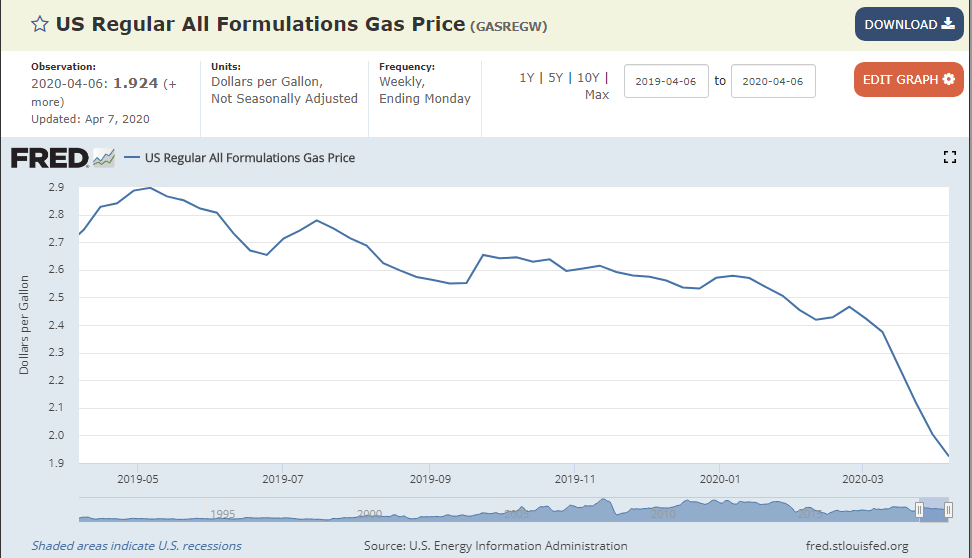
West Texas Intermediate (CLc1) the US standard for crude fell 53% in March from its open at $43.20 on the 2nd to the close on the 31st at $20.48. A gallon of regular gasoline in the nationwide average has followed the commodity lower with an 18% decline from $2.43 in the week of the 2nd to $2.00 in the 30th.
CPI, PCE and the Federal Reserve
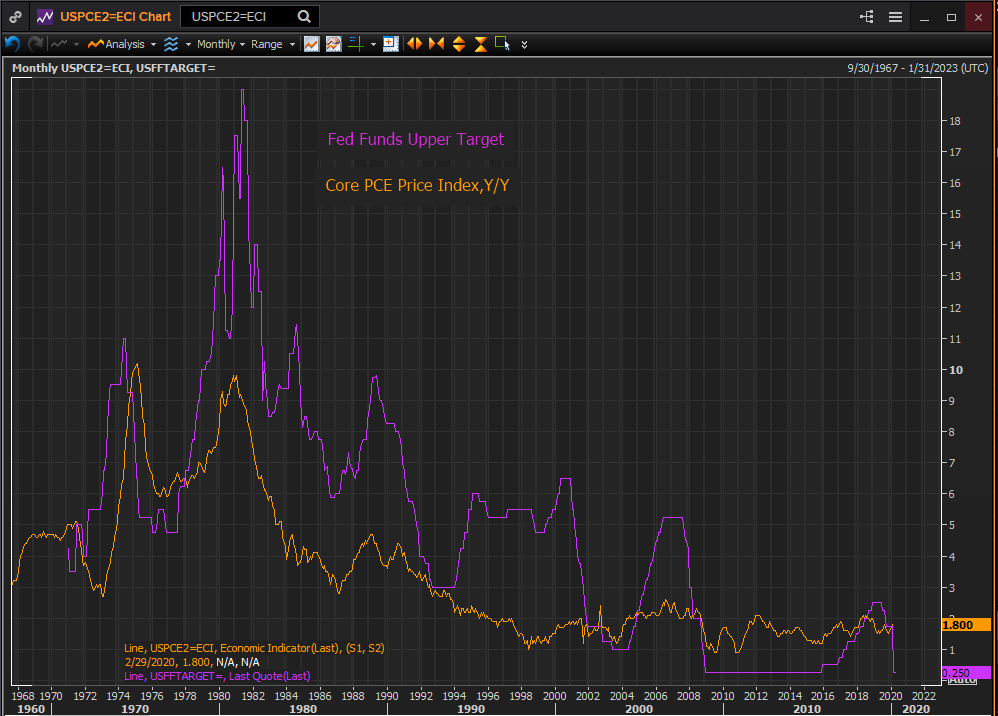
Inflation has not been an economic threat for more than two decades. Since the financial crisis it has been disinflation and the economists’ rarely seen but much feared deflation that has preoccupied Federal Reserve inflation policy.
Federal Reserve officials have expended a good deal of rhetoric over the past ten years assuring markets that raising the core personal consumption expenditure price index (PCE) to the bank’s 2% target is still a policy goal. The words were necessary because inflation has consistently run below the target and the governors’ focus, assertions aside, has been economic growth, employment and wages.

Reuters
The consumer price index is an older measure of inflation that has several data features that tend to produce a higher rate of price movement than the Fed’s preferred PCE measure. Over the past twenty years the CPI rate, whether core or overall, has steadily run between one-quarter and one-half point hotter than PCE.
In the current economic context, with massive job and demand destruction, CPI is a market notice for PCE and the potential for sustained disinflation. If this last month is the beginning of a lower trend in prices the Fed will surely note the development though with its zero interest rate and quantitative easing policies it is already prescribing the correct medicine for falling prices.
Conclusion and the dollar
Inflation is a sidelight for Federal Reserve monetary policy and for global markets. Traders remain intent on the economic fallout from the pandemic and the fiscal and monetary policy responses. The dollar in particular is still keyed to the evolving risk parameters of the health crisis.
In that environment falling prices will serve to confirm the economic ravages of the pandemic but they cannot elicit new policies or impact the dollar’s reserve and safety status.
Author

Joseph Trevisani
FXStreet
Joseph Trevisani began his thirty-year career in the financial markets at Credit Suisse in New York and Singapore where he worked for 12 years as an interbank currency trader and trading desk manager.
















