Upbeat US factory activity lift Dollar, stocks edge up

Aussie, Kiwi Underperform, CAD Flat, EUR, GBP Lower
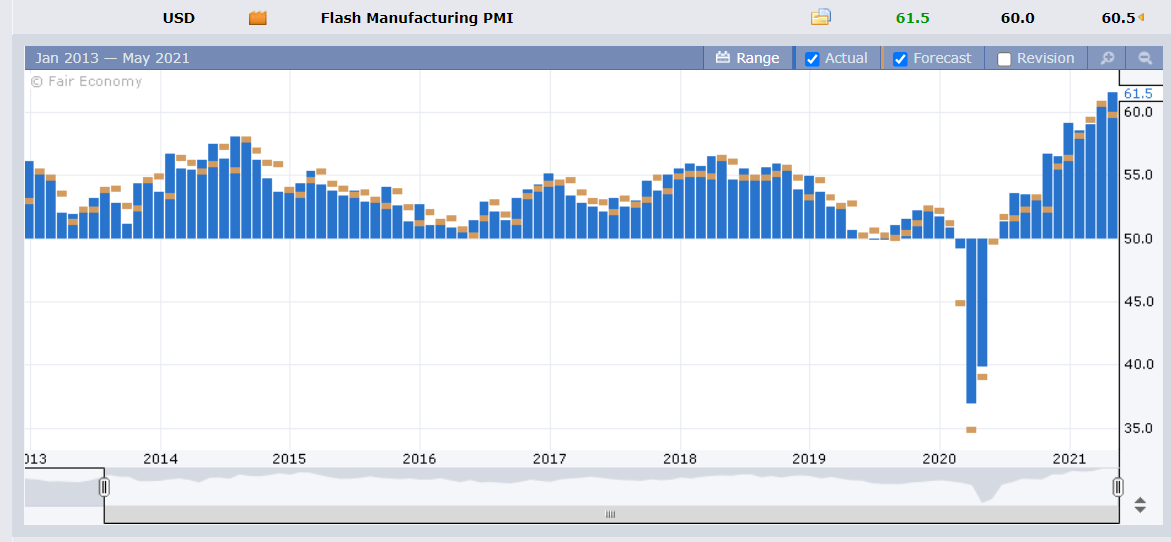
Summary: Upbeat US Factory activity provided a boost for the Dollar which began the end of the week under pressure. Elsewhere, global PMI reports (Australia, Eurozone, and UK) were mixed. In another report, a fall in US Existing Home Sales (to 5.85 million from 6.01 million) was the result of a disrupted labour supply due to the coronavirus. The Australian Dollar was the worst performing currency against the Greenback, down 0.67% to 0.7730 (0.7772 Friday morning). Australia’s Composite PMI on Manufacturing and Services missed expectations at 58.2 (from 58.9). New Zealand’s Kiwi Dollar (NZD/USD) slipped 0.48% to 0.7170 (0.7202) ahead of Wednesday’s RBNZ Monetary Policy Meeting where no changes are expected to New Zealand’s Official Cash Rate (0.25%). The Euro fell to the lower end of its recent range, finishing 0.41% lower at 1.2180 (1.2225). Sterling dropped to 1.4150 from 1.4190 as the Greenback rallied across the board. European, Eurozone and UK PMI’s were mixed and uneven. Germany’s Manufacturing PMI report underwhelmed with a 64.0 print, from a previous 66.2. Against the Japanese Yen, the Dollar edged higher to 108.95 (108.75), up 0.16%. Japanese Flash Manufacturing PMI dropped to 52.5 from 53.6, missing forecasts at 53.0. USD/CAD (Dollar- Canadian Loonie) finished little-changed at 1.2065 from 1.2060. Canada’s April Retail Sales rose 3.6%, beating estimates at 2.3%. The Dollar was higher against the Asian and Emerging Market currencies. USD/SGD (US Dollar-Singapore Dollar) edged higher to 1.3320 (1.3307) while USD/CNH (US Dollar-Offshore Chinese Yuan) rallied to 6.4380 from 6.4300. Wall Street stocks managed to reverse losses and edge higher on the economic progress. The DOW was last at 34,250 (34,100) while the S&P 500 settled at 4,160 (4,155). Global bond yields were mostly lower. The US 10-year Treasury yield dipped to 1.62% (1.63%). Germany’s ten-year Bund yield settled at -0.13% from -0.11% Australia’s 10-year bond rate slipped to 1.73% (1.76%).
- AUD/USD – The Aussie Battler slumped to 0.7730 at the close of New York trade, down 0.66% from Friday’s opening at 0.7772. The failure of the Australian Dollar to trade comfortably above strong upward resistance at 0.78 cents last week as well as overall USD strength pressurised the currency. The fall in Australia’s Composite Index offset the strong rise in Retail Sales driving the Battler to the lower end of its trading range.
- EUR/USD – Speculative long Euro bets headed for cover following the contrast between the US (upbeat) and Eurozone (mixed) PMI reports. Germany’s Manufacturing PMI report underwhelmed with a 64.0 print, from a previous 66.2. The shared currency reversed lower after hitting an overnight peak at 1.2240, to 1.2180 at the New York close. Overall US Dollar strength is weakening the upside momentum in the Euro.
- USD/CAD – Canada’s Loonie was marginally lower against the Greenback, the USD/CAD pair closed at 1.2065 (1.2060). Canadian Headline Retail Sales rose 3.6%, beating median estimates at 2.3% as consumer spending continued to grow. The ability for the USD/CAD to hold and rally off the lows show signs of an exhaustion on the downside. Indeed, much of the good news from Canada may be fully priced in current levels of the US Dollar-Loonie.
- NZD/USD – New Zealand’s Kiwi finished as second worst performing currency against the Greenback, down 0.48% to 0.7170 (0.7202). Like its northern, and bigger cousin, the Aussie, the Kiwi as failed to clear above upward resistance at 0.7250. New Zealand releases its Q1 Headline and Core Retail Sales reports shortly (8.45 am Sydney). Headline Sales are forecast to improve to -1.8% (from -2.7%) while Core Sales estimates are to -1% from -3.1%. The big event for the Kiwi is Wednesday’s RBNZ monetary policy meeting and rate statement.
On the Lookout: Expect the Dollar to consolidate its gains within recent ranges established in the last couple of trading day. Bank holidays in Switzerland, Germany, and France (Whit or Resurrection Monday) and Canada (Victoria Day) will keep trading subdued. Economic data releases are light but will increase later this week. New Zealand just released its Q1 Headline and Core Retail Sales reports. New Zealand’s Q1 Headline Retail Sales beat estimates, climbing to 2.5% from -2.6% while Core Sales were up 3.2% from a previous -2.9%. The Kiwi is little changed at 0.7173 from 0.7170.
Later today (10.05 pm Sydney) Bank of Japan Governor Haruhiko Kuroda is due to deliver the opening remarks in an online conference hosted by the BOJ and Japanese Institute for Monetary and Economic Studies. Which could be of interest. China releases its Conference Board Leading Index for May, the previous read was a rise of 1.0%. Bank of England Governor Andrew Bailey is due to testify on the BOE Monetary Policy Reports in London. The US Chicago Fed National Activity Index for April (March 1.71, no forecasts given) rounds up the day’s reports.
The week ahead sees Germany’s Q1 GDP and May IFO Business Climate data and US House Price Index and S&P/Case-Shiller Composite-20 HPI and US Conference Board Consumer Confidence data released on Tuesday. Thursday sees US Q1 Preliminary GDP, and GDP Price Index, Pending Home Sales, Headline and Core Durable Goods Orders, as well as US Weekly Unemployment Claims. On Friday we see the release of Japan’s Tokyo Core CPI, French Preliminary Q1 GDP, US Core PCE Price Index (May), US Goods Trade Balance, Personal Spending and Personal Income and Chicago PMI reports.
Trading Perspective: The rise in US factory activity compared to a mixed European PMI result (Germany’s disappointment), and weaker Australian and Japanese PMI’s enabled the Greenback to rebound. While the Fed has declined to signal any tapering, economic activity in the US continues to pick up. The bank holidays in mainland Europe and Canada as well as the light economic calendar today should keep trading subdued. This will change as we head further into the week. While US bond yields dipped, so did the rates of the rest of the globe. Expect the US Dollar to stabilise and consolidate its gains today given its modest upside bias.
- AUD/USD – The Aussie currently changes hands at 0.7728 in early Sydney trade. AUD/USD has immediate support at 0.7710 (overnight low) followed by 0.7670/80. A break of the 0.7670/80 level will bring us to strong support at 0.7650, where a break lower will take us to 0.76 cents. Immediate resistance can be found at 0.7750, 0.7780 and 0.7810. The failure of the Aussie to trade higher should see momentum gain on the downside. The catalyst will be the release of this week’s data. Look to sell into any strength, ideally around the 0.7750/60 area. Likely range, 0.7680-0.7760.
- EUR/USD – Once again the Euro bulls were disappointed at the lack of upside momentum for the shared currency. Disappointing German Manufacturing PMI data gave the weak speculative longs a reason to pare their positions. EUR/USD finished 0.41% lower to 1.2180 from 1.2227 with the overnight low traded at 1.21606. Immediate support lies at the 1.2050/60 area, and a break lower could see 1.2100. Look for a likely trading range today of 1.2140-1.2210. Preference is to sell rallies.
- USD/JPY – Look for the Greenback to consolidate against the Yen and trade a likely range of 108.70 (overnight low 108.610) and 109.40. The dip in the US 10-year bond yield (to 1.62% from 1.63%) kept the USD/JPY from climbing higher. Immediate resistance today lies at 109.20 followed by 109.50. Immediate support can be found at 108.70 followed by 108.40. Look to buy dips to 108.70, we may be in for a move back towards 110.00.
- USD/CAD – The Greenback saw only modest appreciation against Canada’s Loonie, finishing at 1.2065 from 1.2058 Friday. The current levels on USD/CAD are not far from 4-year lows (1.2015). Overnight the USD/CAD traded to a low at 1.20273 before rebounding to its finish at 1.2065. While Canada’s Retail Sales beat forecasts, much of the good news from Canada seems to be fully priced into the currency. Immediate support lies at 1.2030 followed by 1.2015. Immediate resistance can be found at 1.2100 followed by 1.2150. Look for a likely range trade between 1.2050-1.2150. Prefer to buy any dips in the USD/CAD pair.
Happy Monday all, have a good trading week ahead
Author

Michael Moran
ACY Securities
Michael has over 40 years’ FX experience, including running FX trading desks for some of the largest banks in the world.