|

United States: The timid return of the pandemic’s vanishing labour force

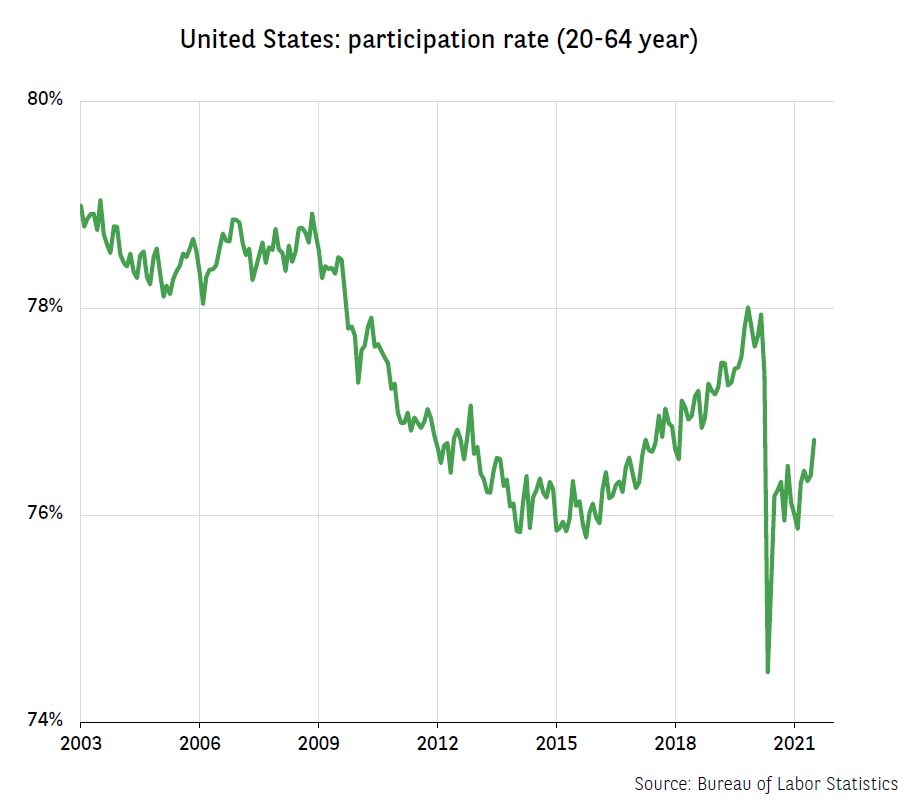
With the onset of the Covid-19 pandemic, the labour force participation rate – the percentage of the population who are working or seeking employment – dropped to an all-time low in April 2020: barely 74% of the 20-64 age group, which is unprecedented for the United States. Although it has picked up in recent months, it still has not returned to pre-crisis levels. Nearly 3 million Americans who were active in the labour force prior to the pandemic have disappeared from the ranks. The workers who have “fallen off the radar” are mainly from low-skilled, low-paid social categories. According to the Bureau of Labor Statistics, people with a high school education or less make up only 30% of the active population, but account for 75% of the post-Covid collapse. Certain categories of workers (extras earning tips, seasonal workers, etc.) who were unable to work during the crisis have had more trouble than others justifying revenues that make them eligible for unemployment benefits. With the closing of schools and day care centres, many single mothers with children have had no choice but to halt or postpone their job searches. Exclusion from the labour market may also have been accentuated by the digital divide and trouble accessing the internet. Yet things should gradually return to normal with the very strong upturn in hiring in sectors such as hotel & restaurant services, leisure and transport. For the Federal Reserve, which has made full employment a priority of its monetary policy, the rebound in the participation rate will be a key factor.
Chart

Download The Full EcoFlash

Author

BNP Paribas Team

BNP Paribas Team

BNP Paribas

BNP Paribas Economic Research Department is a worldwide function, part of Corporate and Investment Banking, at the service of both the Bank and its customers.


More from BNP Paribas Team
Share:

Editor's Picks

EUR/USD challenges 1.1800, two-week lows

EUR/USD remains on the defensive, extending its leg lower to the vicinity of the 1.1800 region, or two-week lows, on Tuesday. The move lower comes as the US Dollar gathers further traction ahead of key US data releases, inclusing the FOMC Minutes, on Wednesday.

GBP/USD looks weaker near 1.3500

GBP/USD adds to Monday’s pessimism and puts the 1.3500 support to the test on Tuesday. Cable’s marked pullback comes in response to extra gains in the Greenback while disappointing UK jobs data also collaborate with the offered bias around the British Pound.

Gold loses further momentum, approaches $4,800

Gold recedes to fresh two-week troughs around the $4,800 region per troy ounce on Tuesday. The precious metal builds on Monday’s downtick following a marked rebound in the US Dollar and mixed US Treasury yields across the board.

Crypto Today: Bitcoin, Ethereum, XRP upside looks limited amid deteriorating retail demand

The cryptocurrency market extends weakness with major coins including Bitcoin (BTC), Ethereum (ETH) and Ripple (XRP) trading in sideways price action at the time of writing on Tuesday.

UK jobs market weakens, bolstering rate cut hopes

In the UK, the latest jobs report made for difficult reading. Nonetheless, this represents yet another reminder for the Bank of England that they need to act swiftly given the collapse in inflation expected over the coming months. 

Ripple slides to $1.45 as downside risks surge

Ripple edges lower at the time of writing on Tuesday, from the daily open of $1.48, as headwinds persist across the crypto market. A short-term support is emerging at $1.45, but a buildup of bearish positions could further weaken the derivatives market and prolong the correction.