UK starts the second quarter on the back foot


UK GDP fell faster than expected in April, but these figures have been volatile lately owing to tariff frontloading, coupled with some possible issues with seasonal adjustment. After a strong first quarter, a weaker jobs market and economic uncertainty point to more muted growth rates for the remainder of this year.
April was a disappointing month for the UK economy, judging by the 0.3% drop in GDP across the month. In truth, this isn’t hugely surprising. The figures have been enormously volatile recently. That’s partly because of frontloading activity ahead of tariffs. Manufacturing surged in February and has unwound since.
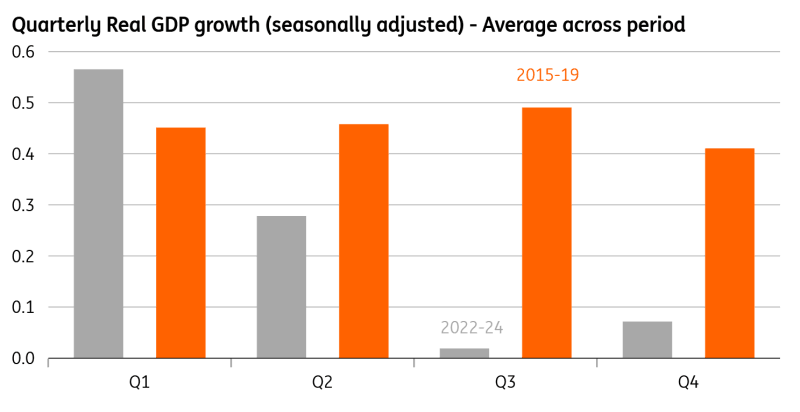
But there is also a curious trend emerging, where the GDP figures show the first half of the year – and in particular the first quarter – as stronger than the second. This has happened every year since 2022 and hints that there is an issue with the way the data is being seasonally adjusted.
Growth typically starts the year strong and gets weaker thereafter
Source: Macrobond, ING analysis
The bottom line is that we should be taking these figures with a hefty pinch of salt. And the reality is that for some time, the Bank of England hasn’t been putting a huge amount of emphasis on this data.
That said, this week’s particularly weak jobs report hints that the risks surrounding the UK growth outlook are building. Though the figures may ultimately get revised up, they showed the biggest fall in employee numbers outside of the Covid-19 pandemic since the data began in 2014. Vacancies are falling more quickly, too.
The combination of apparent seasonality in the data, a cooling jobs market and uncertainty about the global economy suggests growth will slow materially for the remainder of the year. April’s disappointing GDP figure sets up growth of 0.1-0.2% through the second quarter, down from the eyebrow-raising 0.7% seen in the first.
All of this is a headache for Chancellor Rachel Reeves. Yesterday's spending review – an exercise which divvies out budgets across government departments – carried few surprises. Yet it was a reminder that there's not enough money to go around and that the overall spending pot for the next few fiscal years will likely end up rising more quickly.
We think the Office for Budget Responsibility is highly likely to revise down its 2026 growth forecast at the Autumn Budget later this year, which alone would wipe out half of the Treasury's slim fiscal headroom. Further downgrades to trend productivity growth projections, as well as net migration, mean the Chancellor is likely in the red, before even considering the mounting pressures on the public purse. The overall shortfall may amount to at least £20bn, and that means tax rises are highly likely.
Read the original analysis: UK starts the second quarter on the back foot
Author
James Smith
ING Economic and Financial Analysis
James is a Developed Market economist, with primary responsibility for coverage of the UK economy and the Bank of England. As part of the wider team in London, he also spends time looking at the US economy, the Fed, Brexit and Trump's policies.