UK Labor Market Preview: Unemployment is seen steady as wages decelerate

The UK unemployment rate is seen steadily holding close to 40-year low of 4.3% in September as the total number of job seekers is expected to rise by mere 1.7K people during the same months.
The total number of people seeking unemployment benefits in the UK is expected pick up slightly to 2.3K in October, the report from the Office for National Statistics is expected to deliver on Wednesday at 9:30 GMT.
The market focus though will be on wage growth that is seen decelerating in September to 2.1% y/y including bonuses, while wages excluding benefits are seen rising by 2.2% y/y, at the unchanged rate from August.
Wages as policy instrument
The combination of inflation rate well above the Bank of England’s 2% inflation target and relatively slower growth rate of nominal wages means that the real, inflation-adjusted wages are negative. With prices raising steeper than wages the real buying power of households decreases, adding pressure on economic growth rate to decelerate.
Although the Bank of England have sufficiently reasoned it 25 basis points rate hike at the beginning of November by easing off the pressure on consumers stemming from negative wage growth, deceleration of inflation by one-tenth of the percent for October from 3.1%y/y in September to to 3.0% in October returns the same negative real wages, should nominal earning also decelerate by the same extent. Such a scenario is putting Bank of England into the squeeze, as it has no tool to influence earning and due to increased inflation rate it has been forced to act with monetary tightening.
GBP reaction
Sterling has been under pressure recently with the UK political scandal and the Brexit talks uncertainty weighing heavily on the UK currency since the beginning of this week.
Although the prevailing trend on GBP/USD is bearish, the currency pair has always been able to bounce off the key support area of $1.3040-$1.3070 so far this week.
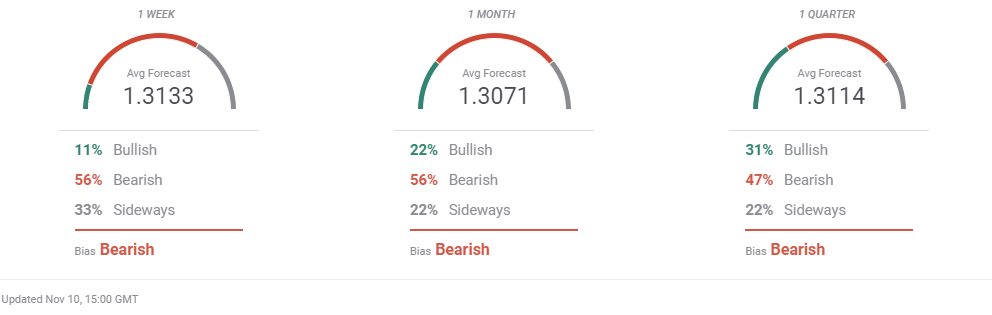
It will take a disappointing unemployment rate or steeply decelerating wages for GBP/USD to break below the strong technical support line.
-636462720607936343.png)
Author

Mario Blascak, PhD
Independent Analyst
Dr. Mário Blaščák worked in professional finance and banking for 15 years before moving to journalism. While working for Austrian and German banks, he specialized in covering markets and macroeconomics.