UK inflation stagnates in a miss to rate hike expectations
- The Consumer Price Index (CPI) in the UK rose 2.4% over the year in June 2018, unchanged from May.
- The core inflation stripping the consumer basket off food and energy prices decelerated to 1.9% y/y in June from 2.1% y/y in May, the lowest since March last year.
- With June inflation missing the forecast the Bank of England rate hike on August 2 becomes more optional even with labor market strength.

The Consumer Price Index (CPI) in the UK rose 2.4% over the year in June, missing the market estimate of 2.6% y/y increase while core inflation stripping the consumer basket off food and energy prices decelerated to 1.9% y/y in June, the official data from the Office for National Statistics said on Wednesday.
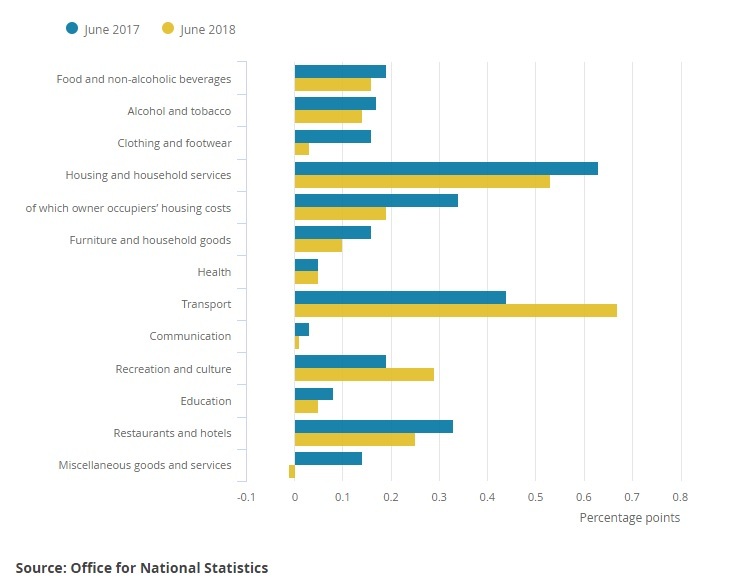
The largest upward contribution to the UK inflation in June came from transport, where prices rose by 5.3%over the year to June, leading to a contribution of 0.67 percentage points to the overall inflation rate of 2.4%.
Transport prices were the highest since April 2017 when they increased 6.2% y/y. The largest contribution within the transport group came from motor fuels, where prices rose by 11.6% y/y. Housing and household services also continue to make a large upward contribution of 0.53 percentage points on a combination of owner occupiers’ housing costs, domestic utilities, and Council Tax.
With headline inflation rising 2.4% over the year in June, unchanged from May, but the core inflation decelerating to 1.9% y/y, the prospects for the Bank of England hiking the Bank rate on August 2, when releasing the August Inflation Report become dim as prices dwell closer to the inflation target. With the monetary policy looking at the long-term horizon, the August rate hike is still the main scenario for the market as domestic inflation driving forces including solid wage growth are set to replace external drivers like the currency depreciation.
Inflation dwelling near inflation target is the good news for the UK households as the real, inflation-adjusted wages remain in a positive territory boosting the prospects for future spending and the economic growth.
Contribution to the UK inflation 12-month rate
Author

Mario Blascak, PhD
Independent Analyst
Dr. Mário Blaščák worked in professional finance and banking for 15 years before moving to journalism. While working for Austrian and German banks, he specialized in covering markets and macroeconomics.

















