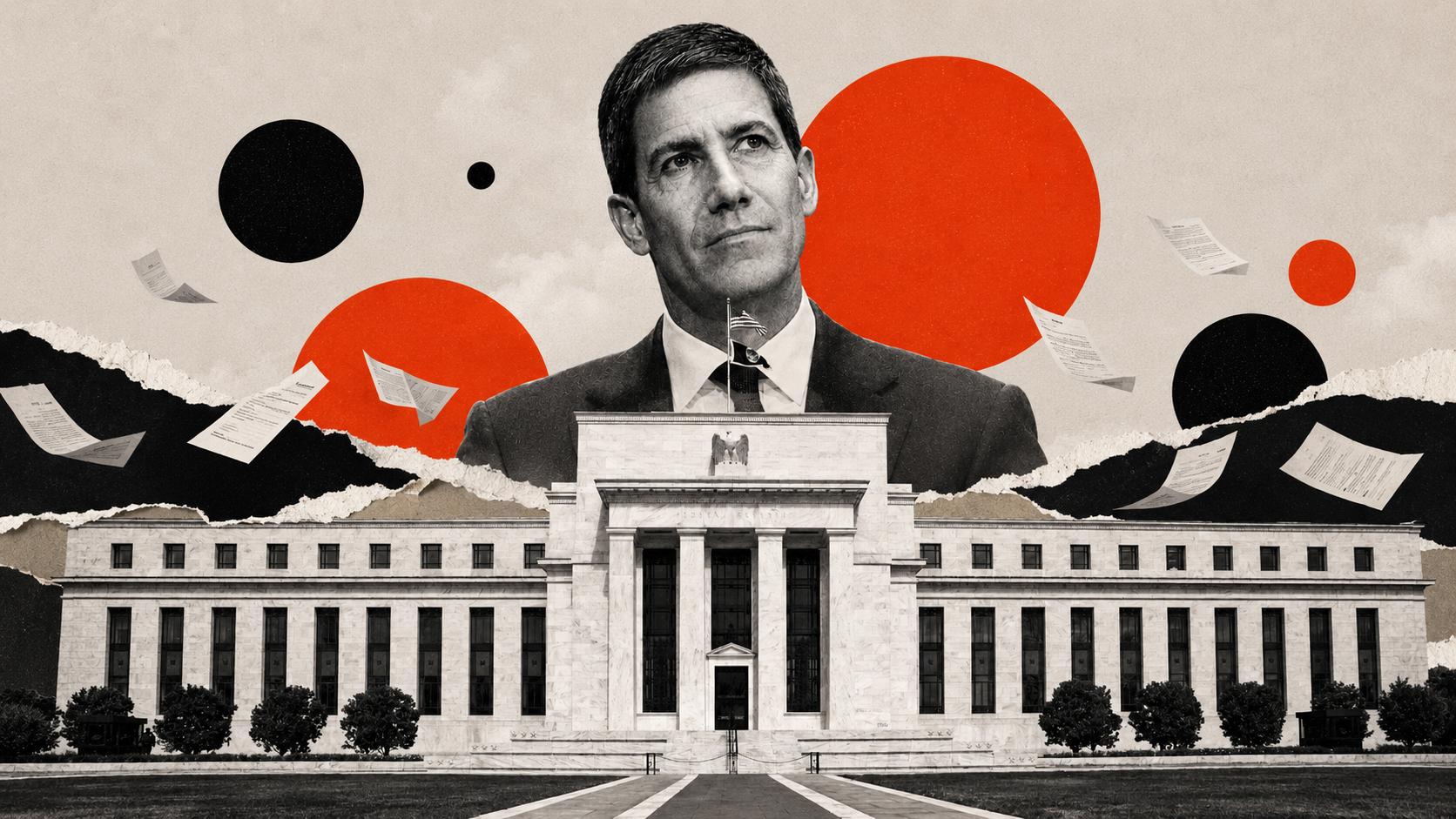
Trump takes aim at Powell
We’ve continued to see significant chop across financial markets as investors try and make sense of where President Trump’s gaze will fall next.
Fresh from announcing a 90-day pause on tariffs the President has shifted his attention to Fed chairman Jay Powell, criticising him for not cutting interest rates at the most recent FOMC meeting.
This has always been a familiar refrain from Trump, in his first term he criticised Janet Yellen for exactly the same thing, replacing her ironically with Jerome Powell who was nominated by Trump during his first term.
Now with US inflation running significantly north of the Federal Reserve’s 2% target, and Trump’s tariff policy creating significant ripples in the US economy, prompting a collapse in consumer confidence in the process and concerns over a sharp slowdown, Trump is amping up the pressure on the Fed to cut rates quickly.
Sadly, for Trump his very policies are the ones causing the Fed to pause, with Powell warning that the sheer size of the tariffs is complicating the central bank’s job when it comes to assessing the inflation, as well as growth outlook.
The chaos being unleashed by the US administration is also giving business cause for concern given that it makes budgeting much more difficult when it comes to making long term investment plans, against an increasingly uncertain economic outlook.
This is already being reflected in sharp swings in the stock markets as well as ripples of concern in the bond market.
It was only when the bond market started to show signs of destabilisation that Trump was forced out of necessity to call a 90-day suspension in his “Liberation Day” tariff policy.
With US yields higher than they were when Trump won the White House, the US President appears to think that the central bank cutting rates will somehow deliver the lower rates he is looking for.
Sadly, for him central bank rate policy doesn’t work that way, otherwise UK rates would now be lower than they were when the Bank of England started its own rate cutting cycle.
In taking aim at the Fed chairman the US President appears to be looking for someone to blame for the shortcomings of his own scattergun approach to fiscal policy, as well as undermining confidence in the Federal Reserve’s independence.
There is a reason that central bank independence is better than the alternative of being subject to the whims of individual politicians.
It gives a level of accountability that ensures that monetary policy cannot be used for political means, as used to happen pre-independence when incumbent governments used to set interest rate policy as a political lever ahead of elections.
By seeking to undermine the incumbent Fed chairman, Trump is undermining the independence of the central bank to set US interest rate policy in accordance with financial stability, which is its primary function, along with a dual mandate to target unemployment, as well as a 2% inflation target.
In criticising the Fed chair in such extreme terms, by accusing him of playing politics, he is not only undermining the integrity of one of the US’s major institutions, but he is also raising concerns that he may take steps to force Powell out before his term expires in May next year.
This would be a huge mistake on Trump’s part, as it would not only prompt a further weakening of the US dollar, but also prompt further turbulence in the bond market.
The US is seen as a haven for many reasons, not least being the reserve currency of the world, but also due to the checks and balances of its constitution could prevent such an abuse of power.
With Powell claiming that the central bank’s independence to set interest rates is “a matter of law” markets will be hoping that Trump’s comments are mere bluster and nothing else.
It would be foolhardy in the extreme of the US President to test the market on something like this when he will get his wish for a new Fed chairman in 13 months.
The US President has already been forced to backtrack on his aggressive tariff program due to a sharp spike in bond yields as it is.
He is likely to get a similar, or even more aggressive response from bond markets, if he pushes his luck when it comes to Jay Powell.
The US is perceived as a safe haven for a reason, and Trump would be wise not to undermine that premise any further than he already has.
Trump would be wise to pay heed to reported private warnings that are said to have been made by his own Treasury Secretary Scott Bessent to White House officials that any attempt to fire Powell could risk destabilising financial markets even further.
Author

Michael Hewson MSTA CFTe
Independent Analyst
Award winning technical analyst, trader and market commentator. In my many years in the business I’ve been passionate about delivering education to retail traders, as well as other financial professionals. Visit my Substack here.