|

Three different scenarios for US debt

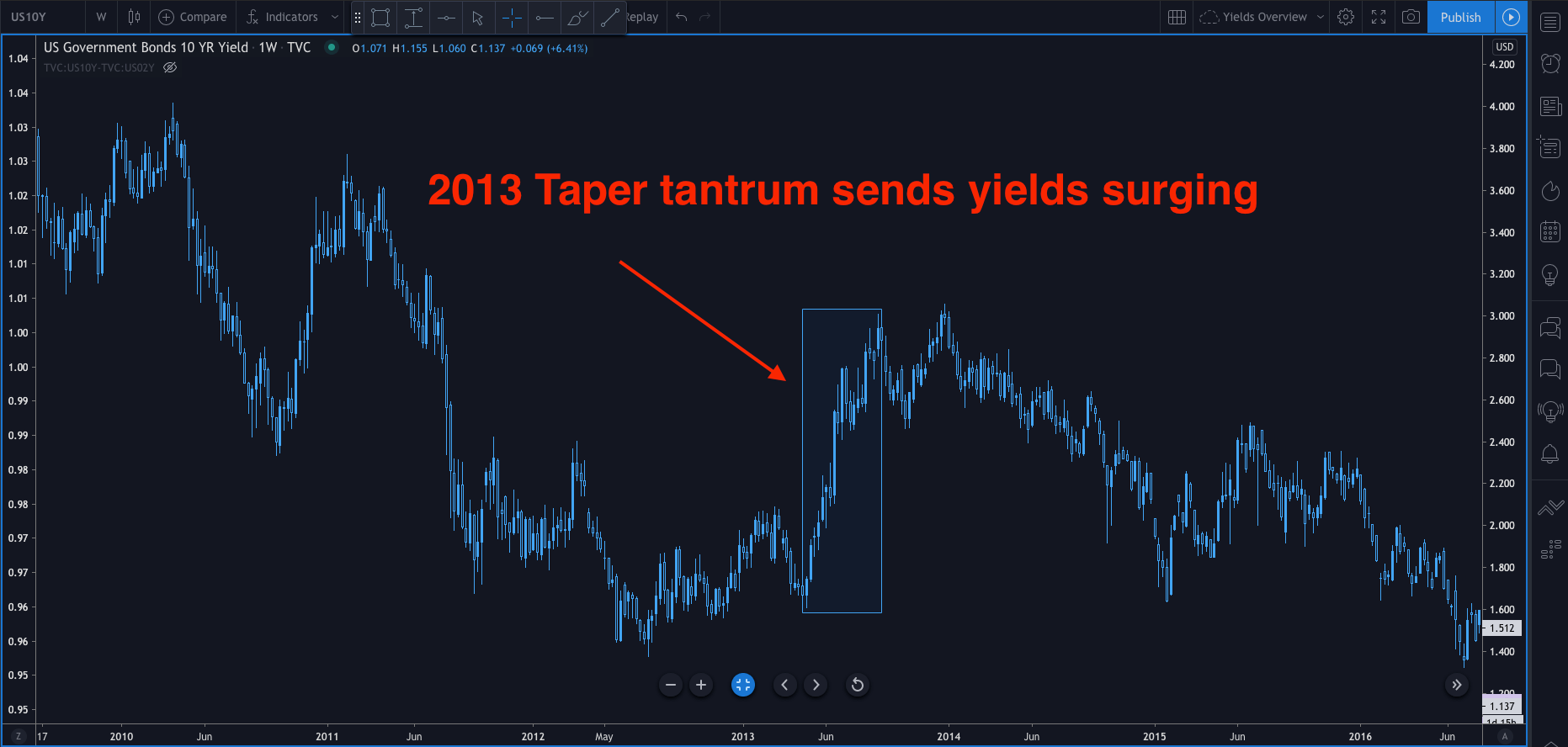
Back in 2013 the then-Fed Chair, Bernanke, promoted a surge in bond yields. Memories of this event have come back to investors at the start of the year as a couple of Fed speakers spoke about the Fed tapering bond purchases by the end of this year. This sent US bond yields higher. However, Powell was quick to quieten the impact of those voices on the market as he did not want a repeat of the ‘taper tantrum’ back in 2013. Why? It is due to this simple dynamic. Rising yields equals rising interest costs for the US in servicing their debt. See here for the impact on the US 10 year bond yields in 2013.
Chart

Rising debt costs

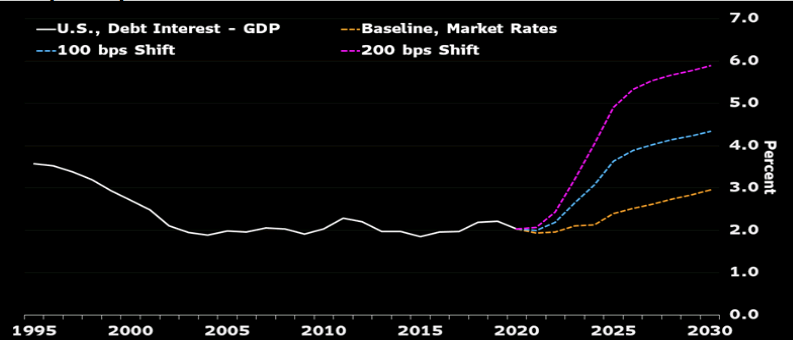
Bloomberg Economics published a chart that projected debt interest rate costs as a share of the United States GDP. They looked at three different scenarios. A 100bps shift in the yield curve (similar to 2013’s shift). A 200bps shift and a base rate case.

You can see the impact of these scenarios on the chart below.
Chart

Extra debt means larger repayments.

Why the Fed fears another ‘taper tantrum’?

It is no surprise that an increase in debt levels for world governments will necessarily mean larger repayments. However, a 100bps rise in the yield curve will mean a debt interest payment that is over 4% of the US’s GDP. A 200bps rise will equate to around 6%. So, this is why the Fed does not want to repeat the taper tantrum of 2013 and would like to keep rates as low as possible, for as long as possible.

Learn more about HYCM

Author

Giles Coghlan LLB, Lth, MA

Giles is the chief market analyst for Financial Source. His goal is to help you find simple, high-conviction fundamental trade opportunities. He has regular media presentations being featured in National and International Press.


More from Giles Coghlan LLB, Lth, MA
Share:

Editor's Picks

AUD/USD bounces back toward 0.6950 on fresh USD supply

AUD/USD bounces back toward 0.6950 in the Asian session on Friday. The US Dollar retreats from 17-month highs as traders take profits off the table ahead of the all-important US Nonfarm Payrolls report. Meanwhile, the Australian Dollar draws support from reviving expectations of a November interest rate hike amid elevated global yields and inflation risks.


USD/JPY struggles near 158.00 as USD retreats ahead of NFP

USD/JPY is struggling for fresh impetus near 158.00, moving away from the top end of its weekly range in the Asian session on Friday, after hotter-than-expected Tokyo CPI and amid a broad US Dollar retreat. Traders reposition themselves ahead of US Nonfarm Payrolls.

Gold fades the earlier optimism; back below $4,200

Gold could not sustain the post-NFP bull run past the $4,200 mark per troy ounce, receding toward the $4,180 region at the end of the week. The precious metal’s inconclusive price action comes amid fresh selling pressure hurting the US Dollar as investors assess the latest NFP data.

Crypto Today: Bitcoin, Ethereum and XRP gains reinforce bullish outlook

Cryptocurrency prices are broadly recovering on Friday, led by Bitcoin moving above $86,000. Ethereum has reaffirmed its bullish outlook, rising above $2,700 while the immediate area at $2,800 caps upside. Meanwhile, Ripple hovers near $1.54.

Week ahead – Fed minutes in the spotlight amid bond market rout

Energy crisis and soaring bond yields to stay in driver’s seat in quiet week. Fed minutes eyed after drop in October rate hike bets. ISM services PMI and Treasury auctions to be watched too. Canadian employment, Japanese wages and ECB minutes also on tap.

The Euro is near a one-year low: Inflation could trigger its rebound, not its fall

EUR/USD has fallen to its lowest level since May 2025. The pair hit 1.1312 on Wednesday and trades well below the January peak of 1.2082. The decline reflects a powerful combination of US Dollar strength, geopolitical uncertainty and renewed concerns about Europe's exposure to higher energy prices.















