The week ahead: A critical week as earnings and CPI test market

The Oil price is relatively stable this morning, and US and European stock markets are poised to open higher, as risk sentiment shrugs off an escalation in the Middle East and concerns about rising bond yields. However, beneath the surface calm, there is growing concern about the plumbing in financial markets, everything from the cost of capital to the sustainability of the AI trade.
High impact week for financial markets
This is a high impact week for financial markets. Earnings season will ramp up with Q3 reports from the major Wall Street banks. US CPI, the UK’s August GDP reading, Eurozone CPI and US retail sales will dominate the economic calendar. Geopolitics are also in focus as the war in the Middle East shifts deeper into the Gulf after Saudi Arabia’s airport suffered drone damage from Houthi attacks. All eyes will also be on the bond market as we lead up to key central bank speeches throughout the week at the IMF/ World Bank conference.
Bond yield breakout a key theme for 2026
We have witnessed extremely choppy price action in recent months, however, US stocks reached fresh record highs last week, the S&P 500 rose more than 1%, at the same time the 10-year Treasury yield rose to 5.35%, the highest level since 2002.
The bond yield breakout is turning into the defining story of 2026, not only are US yields surging, but the 30-year UK yield reached 6% last week, and France now pays more to borrow money than Italy and Greece. Both countries have high stakes budgets coming up, at the same time as fiscal deficits are coming under the gaze of bond investors.
Why the stock market rally doesn't feel like a true bull market
Although US blue chip stock markets are at or near record highs, it feels like a bull market with no horns. The foundations are weak, for example, only 25% of US blue chip stocks rose last month, and concentration risk is growing, with the top 10 largest companies listed in the US now making up 40% of the index. The Russell 2000, which is less tech-heavy and includes medium-sized US companies, is down nearly 5% in the past month, even as the S&P 500 surges.
Narrow breadth in the US stock market rally is a problem for investors as we move into Q3 earnings season. However, it is not a reliable sell signal, and this is why stock markets have risen for most of this decade, even though concentration risk has often been cited as a major risk factor for markets.
US AI trade props up the Dollar
Are investors being complacent? We are about to find out. Market valuations have fallen this year, even as stocks have risen to record highs. The world’s savings are pouring into the AI trade, over other equity sectors, and the AI trade is largely centred in the US. This is why the dollar is rallying, and why the dollar may not act like a safe haven if the AI trade falters and we see foreign buyers rush to the exits all at once.
Is the non-tech trade about to make a comeback?
Although chips, and memory chips in particular, is where the real money is being made in the AI trade, the market seems to be cooling on this sub-sector. The Korean Kospi, which is loaded with chip makers, fell last week to the tune of 2%. Added to this, last week’s outperformance by US stocks was led by the non-tech trade, with energy, consumer staples, healthcare and real estate the top-performing sectors. The technology sector fell by 0.5% along with industrials.
Within the AI trade, there has been a subtle shift in demand in recent days. As the memory and semiconductor stocks have struggled, Nvidia fell nearly 3% last week, and SanDisk, the memory chip maker, was down more than 10%, software stocks have improved.
Q4 battle between stocks and bonds
However, the AI trade has a formidable foe in the bond market. Not only do rising bond yields erode the value of future tech earnings, rising yields now support bond ownership over equities. Last week, bond funds attracted more interest than equities. This suggests that investors have a preference for income (yield) over speculation. As fears rise that the AI trade is in a bubble, the market may focus on the attractiveness of holding government debt, even if there are concerns about the fiscal position of many developed countries including the US, France, the UK and Japan.
Two opposing forces for energy prices
Energy prices will also be in focus and there could be two opposing forces at play for oil and fuel prices this week. The first is geopolitical risks in the Middle East. Brent crude closed the week above $100 per barrel, and the oil price remains stubbornly elevated. The market will have to digest a broadening out of the US/ Iran war to include Saudi Arabia, which was attacked over the weekend by the Iranian-backed Houthis. Although no energy infrastructure was damaged at the weekend, Saudi has been extremely efficient at rerouting oil supplies and keeping oil flowing through the Strait of Hormuz, which is back to 80% of pre-war levels, according to some reports. Any threat to this could add to the risk premium attached to the oil price, as freight and logistics costs could rise if Saudi Arabia is dragged into the war. Ultimately, this could keep upward pressure on the oil price in the coming weeks.
Diesel inflation is the key issue for central bankers
However, the problem for the central banks and governments around the world is that it is no longer an oil inflation story, and instead it is a diesel inflation story. On diesel, the news is more positive as we start a new week. President Trump announced a controversial agreement with Russia to release millions of tonnes of Russian diesel to US and global markets. This could ease some of the upward pressure on fuel costs as we get closer to the US midterms. However, countries including the UK have come out against Trump’s deal saying that sanctions on Russian fuel remain in place, so it is difficult to see what impact this news will have.
President Trump did not stop there. He also announced that Russia and Ukraine have agreed to an immediate energy ceasefire. However, late on Sunday, Ukraine accused Russia of striking its energy facilities. Thus, it is hard to see whether a ceasefire is actually in place and hard to deduce what this means for markets.
Key events for markets
It is a confusing time for markets, and this week’s event risks will be important to gauge where price action will go next. Below, we look at the main events that will drive market action in the coming days.
US CPI, the final reading before the Fed meeting
This is the main release for the week, and all eyes will be on the latest read on US inflation, which is scheduled for release on Wednesday at 1330 BST. The market is expecting US headline inflation to rise to 3.7% from 3.4%, driven by rising energy costs. The core rate of CPI is expected to rise a notch to 2.5% from 2.4% in August.
This is a key economic print before the FOMC meeting later this month. This reading will tell us if inflation is cooling, like the August PCE print suggested, or if it is becoming a problem again. Hotter inflation will keep interest rates higher for longer, and it will also weigh on bonds and push yields higher. Higher bond yields hurt corporate profits and may put pressure on equities later this week.
As the Middle East war enters its 8th month, can stocks continue to rally if inflation is rising? This is the question that could keep stock market investors on edge this week.
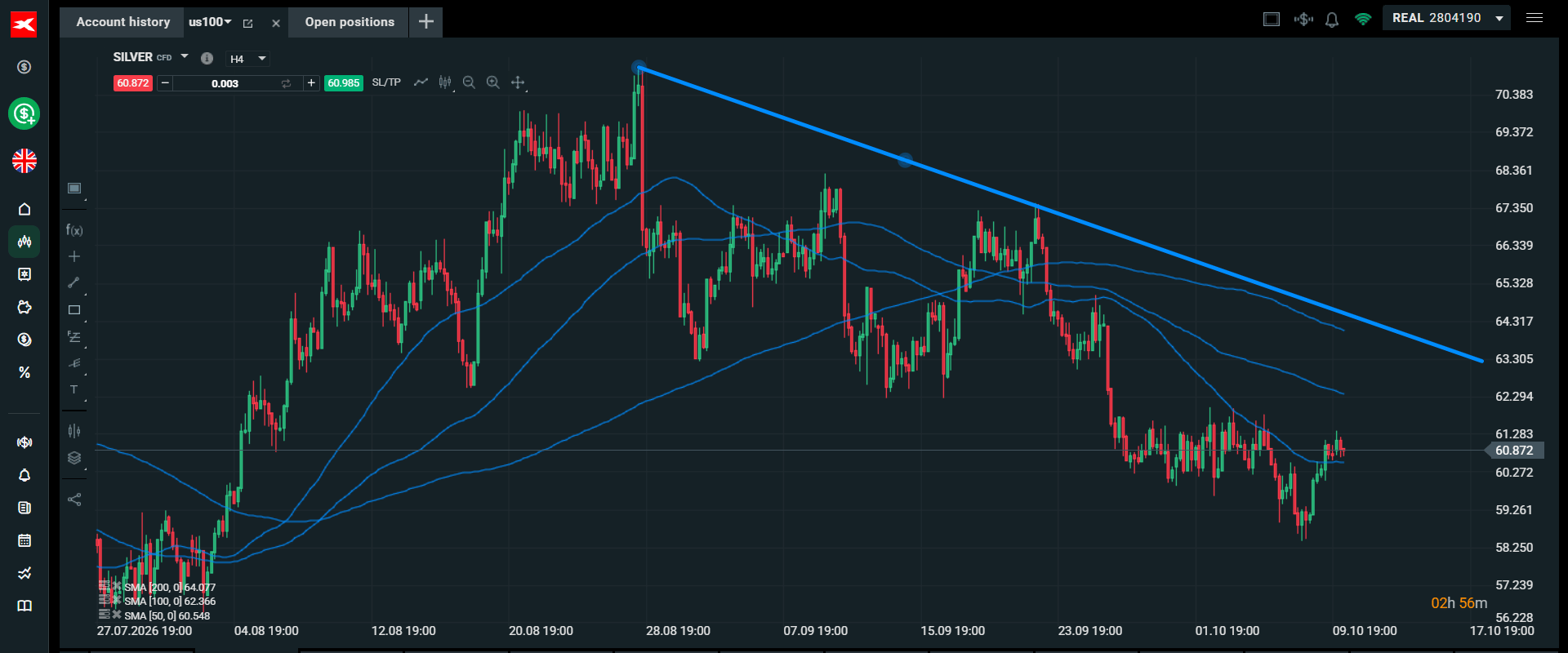
From a trading perspective, precious metals will be in focus during the CPI release. Gold and silver rallied on Friday, and gold managed to eke out a 1.1% gain last week. A weaker than expected reading for inflation could support the gold price through lower yields. This could help extend the rally in precious metals. However, a stronger reading could heap the pressure on gold and silver and it will be interesting to see if the silver price can hold above the critical $60 per ounce level.
We expect a large amount of volatility around this data release, alongside US retail sales and European inflation. Likewise, August GDP in the UK is also worth watching closely to see if it can surprise on the upside like it has done in recent months.
Chart 1: Gold
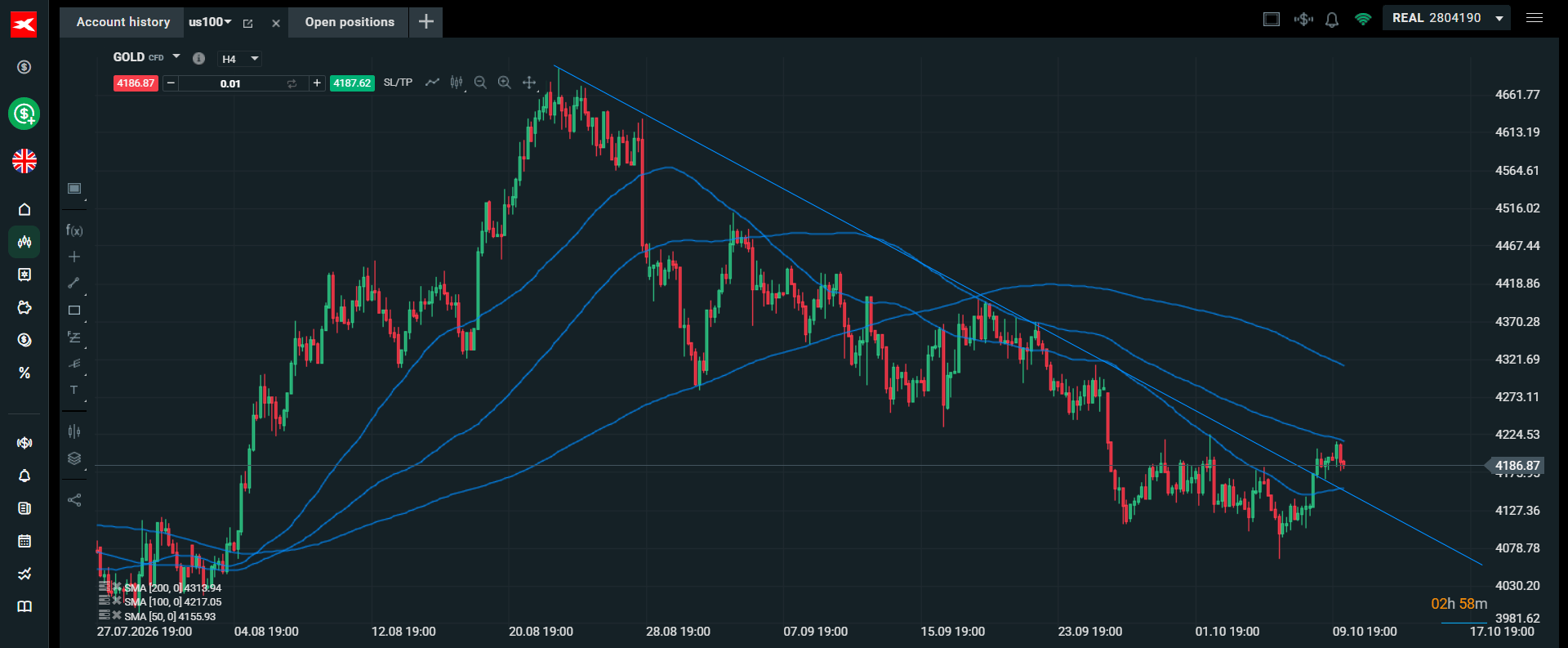
Chart 2: Silver
Earnings Season – Banks to give signal about US economic strength
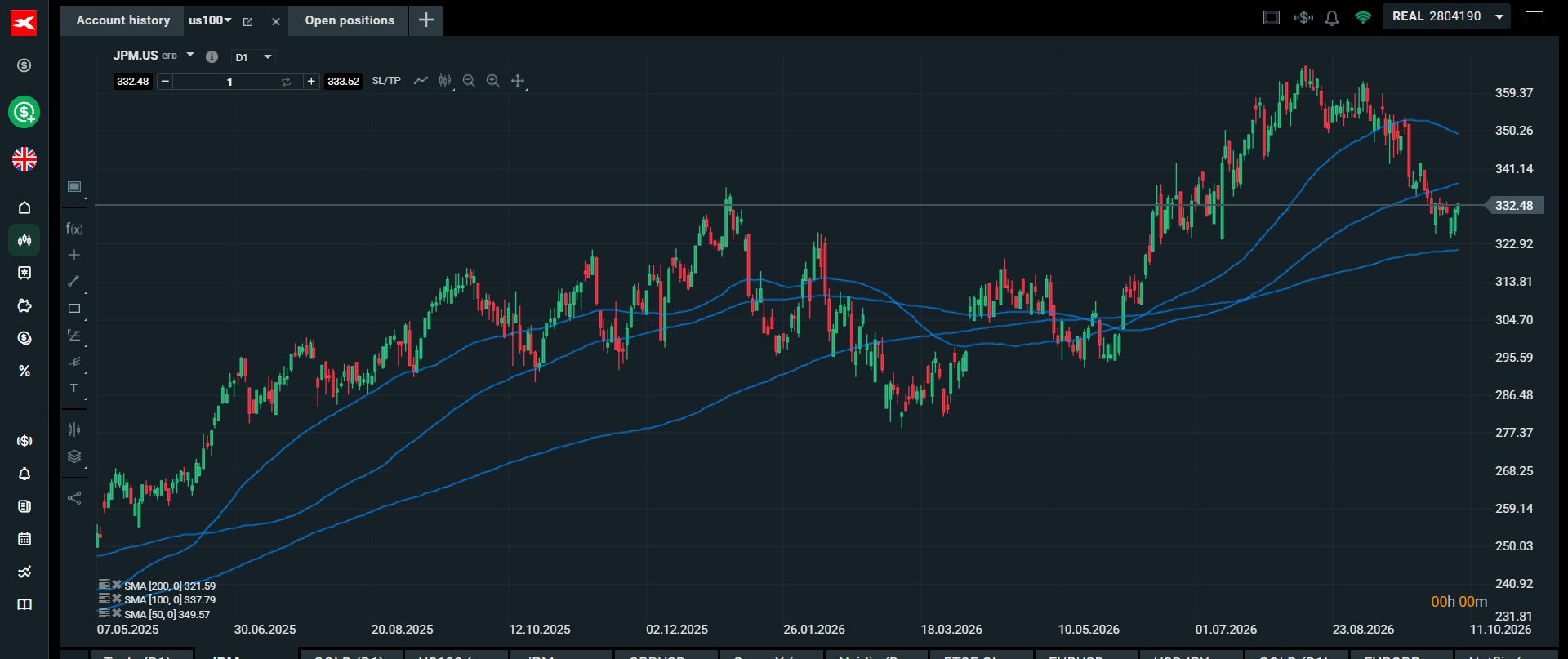
The highlight for this week will be the Q3 earnings reports for the major Wall Street banks including JP Morgan, Goldman Sachs, Morgan Stanley, Citi and Bank of America. These results can tell us important information about the health of the US economy. Are consumers still spending? What is the trend for loan arrears? Are businesses still borrowing at higher rates and are credit conditions tightening?
Traders may also focus on global M&A flows and whether the banks see a slowdown in advisory income due to rising interest rates making mega cap mergers less likely in the coming months. Any comment on IPOs, including delayed IPOs for some of the most important names in AI, will also be worth listening out for.
If banks paint a bleak picture of the US economy, this will be market-moving. While we could see bonds recover and yields fall, this could also be bad news for stocks, as traders could get spooked by signs of recession or weakening economic growth in the world’s economic powerhouse.
US financial names have been weaker than the overall US stock index this year, and the financial sector is up only 4% YTD. However, in the past month, as bonds have sold off and US Treasury yields have surged, the US financial sector has dropped by nearly 4%. An upside surprise could see this sector attempt to recover, while weak earnings, especially if it is centred in the consumer and economically sensitive areas of the bank, could trigger further declines.
Chart 1: JP Morgan stock price
Author

Kathleen Brooks
XTB UK
Kathleen has nearly 15 years’ experience working with some of the leading retail trading and investment companies in the City of London.

















