The waiting game: As the clock ticks toward Gulf War III
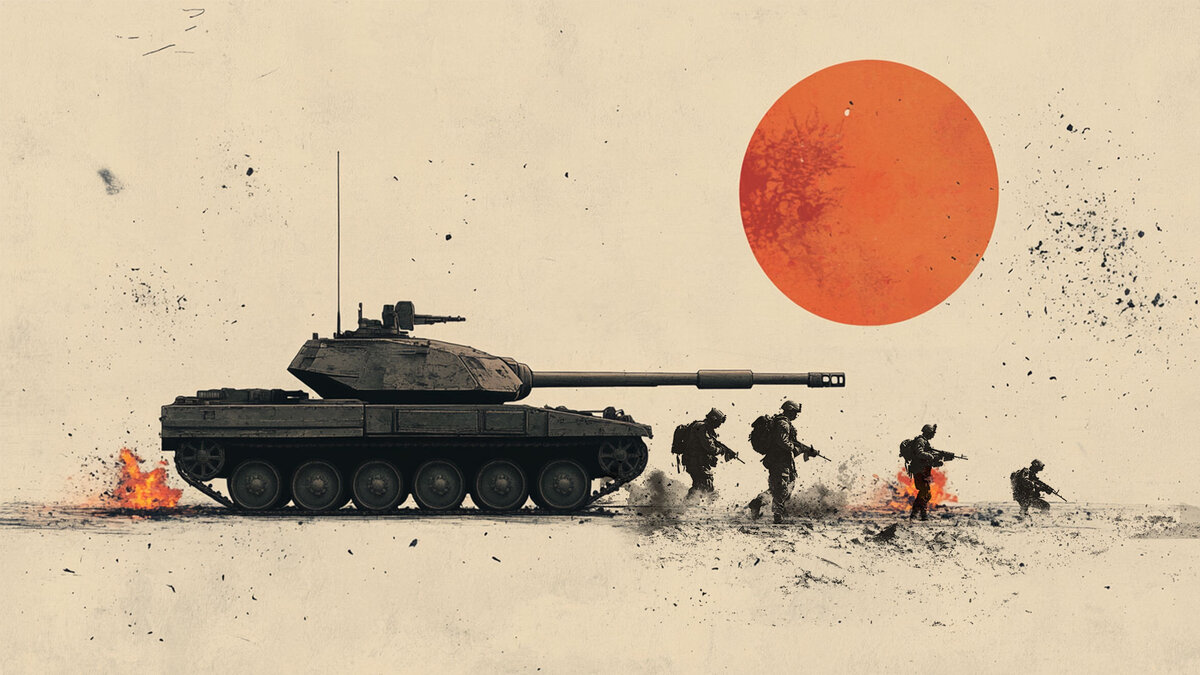

The hourglass is bleeding sand, and the world holds its breath. The Israel-Iran conflict has slipped the leash of shadow warfare and stepped fully into the sun. This is no longer a cold whisper behind closed doors—it’s a showdown at high noon, and the next move belongs to Washington.
President Trump has retreated into the Situation Room, surrounded by maps, advisers, and the ghosts of unfinished wars. Beyond those walls, the world scans the horizon like sailors awaiting the first flash of cannon fire. Every headline lifts oil higher, as if fear itself were combustible. The air is thick with static—charged, volatile, ready to snap. Some traders are quietly locking in P&L on oil market gains via the climb, but few dare to go short. This isn’t just a price move—it’s a powder keg with a fuse that’s still burning.
Trump’s demand for Iran’s “UNCONDITIONAL SURRENDER” wasn’t just political theatre—it was the thunderclap before the lightning. The rhetoric is no longer abstract. Israeli jets have turned Tehran’s skyline into a canvas of smoke and flame. Iran, cornered and calculating, readies its answer. The world knows the stakes. This isn’t another regional flare-up—it’s the ignition switch for Gulf War 3.
Above Iran, the skies hum with Israeli-flagged American war machines, circling like steel-winged vultures. Israel, emboldened by air superiority, continues its relentless campaign. But even the sharpest blade risks dulling with overuse. Netanyahu wants U.S. firepower on tap—bombers, bunker busters, and boots if needed. And Trump? He’s pacing the floor like a man deciding which wire to cut on a bomb with no timer.
The USS Nimitz steams toward the fire, an iron omen slicing through troubled waters. B-2 Spirits are spoken of in hushed tones, like ghosts built for judgment—silent, unseen, and devastating. The GBU-57—the Pentagon’s deepest punch—has re-entered the lexicon, not as a threat but as a promise. Its very mention sends a chill through diplomatic corridors.
The world’s energy corridors are bracing for impact. The Strait of Hormuz, through which a fifth of global oil flows, now feels like a bottleneck strung with dynamite. LNG tankers float in hesitation. Refineries burn. The map is changing—line by line, crater by crater.
In Tel Aviv, sirens wail. In Tehran, the exodus begins. Jerusalem’s U.S. Embassy shutters its doors. Proxies falter. Red lines blur. And behind it all, Iran’s leaders are boxed in by pride and pressure. Their options are dwindling. The threat of a desperate final act lingers like smoke after a spark.
Global markets sway like tightrope walkers caught in a desert wind. Tuesday’s selloff was no panic—but it was a warning shot. The calm is fragile. One misstep, one strike too far, and we’re in a world where oil doesn’t trickle—it surges. Where diplomacy isn’t the backstop—it’s the casualty.
This moment isn’t a lull. It’s the coil before the spring.
Trump has the match. The powder is dry. One decision, one breathless hour—and the world crosses into a new era. Fordow, Natanz, and whatever lies beneath the mountains could become the fault lines of a geopolitical earthquake.
We are not in a stable zone—we are in a minefield where the ticking isn’t metaphorical. Gulf War 3 may not be on the tape, but it’s already casting a long shadow across every desk, terminal, and trading floor.
If the order comes?
History won’t whisper. It will roar.
Author
Stephen Innes
SPI Asset Management
With more than 25 years of experience, Stephen has a deep-seated knowledge of G10 and Asian currency markets as well as precious metal and oil markets.

















