The UK manufacturing PMI falls to 17-month low
- The UK manufacturing PMI decelerated unexpectedly strongly to 53.9 in April, falling to 17-month low.
- With activity in the UK manufacturing sector looking subdued, the chances of the Bank of England hiking the Bank rate in May this year become dreams

The UK manufacturing PMI decelerated to 53.9 in April, down from 54.87 expected by markets and the Sterling fells sharply in reaction to the news past 1.3700 level.
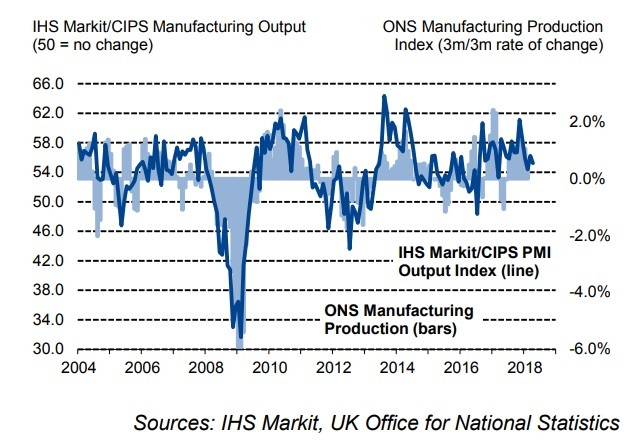
The UK manufacturing sector decelerated to the lowest level in last 17 months as the upturn in the UK manufacturing activity slowed further at the start of the second quarter and rates of
expansion eased for output, new orders and employment, in part reflecting a weakening in the
pace of expansion of new work from abroad.
With reading of above 50 point mark, the UK manufacturing sector is still indicating the economic expansion, but the rate of expansion decelerated, weighing on currency as the chances of the Bank of England hiking rates on May 10 this year diminish to the level of dreams after the first quarter GDP rose only 0.1% Q/Q.
The deceleration in the UK manufacturing PMI means that the chances for a quick upturn in the economic activity are lower. Rob Dobson, Director at IHS Markit, which compiles the PMI survey said in the report: “the start of the second quarter saw the UK manufacturing sector lose further steam. The eadline PMI dipped to a 17-month low as the growth of production, new business and employment all slowed.”
“Looking ahead, the trend in manufacturing production is likely to remain subdued. Weak demand meant firms are seeing backlogs of work fall and stocks of unsold goods rise, limiting the need for output to rise in May. Business optimism has also dipped to a five-month low as concerns about Brexit, trade barriers and the overall economic climate remained widespread,” Dobson further commented in the PMI report.
The UK manufacturing PMI and the Index of production
Author

Mario Blascak, PhD
Independent Analyst
Dr. Mário Blaščák worked in professional finance and banking for 15 years before moving to journalism. While working for Austrian and German banks, he specialized in covering markets and macroeconomics.
















