The rally in the USD may be just the beginning

The US dollar strengthened significantly against all other G10 currencies following the trade agreement struck between the United States and the European Union. It appears that the Trump administration has regained the upper hand in the global trade war after a deal with its largest trading partner, which accounts for approximately 20% of total US imports.
In the first half of the year, the euro had emerged as the strongest-performing currency—up 16%, or 1600 points against the dollar—buoyed by optimism around the EU’s accommodative fiscal stance and Germany’s landmark debt reform, which lifted sentiment towards the bloc’s economic prospects. Now, however, with the US-EU trade deal in place, investors appear to be regaining confidence in US assets, and the dollar’s rally, which began in July, may only be getting started.
The euro recorded its sharpest one-day decline against the dollar in two months, as uncertainties remain despite the last-minute deal being reached ahead of the 1 August deadline. Firstly, although the 15% tariffs on all EU imports are far lower than the previously threatened 30%, they will still substantially increase export costs—particularly for European car manufacturers. According to the US Census Bureau, US imports of EU goods totalled $303 billion in the first five months of 2025, implying an estimated $45.5 billion in tariff costs for exporters within the bloc. Meanwhile, the US will face zero tariffs on its exports to the EU—a deal that sounds distinctly one-sided. The US is the EU’s second-largest import partner, accounting for 13.7% of total imports, or just under $400 billion in 2024, according to the European Commission.
Secondly, it is difficult to believe that the EU can realistically commit to purchasing $750 billion worth of American energy over a three-year period. According to Bloomberg, total US energy exports amounted to just over $330 billion last year, with the EU accounting for less than $80 billion of that figure. Furthermore, the pledge of $600 billion in investment into the US also appears ambitious. Questions also remain about unclear tariffs on metals and pharmaceuticals, areas where the EU continues to face pressure in its trade relationship with Washington.
Consequently, the euro’s slump has largely been driven by mounting concerns over the continent’s economic outlook, as the era of transatlantic free trade is dead now. The EUR/USD pair dropped by 1.3%, falling below 1.16 for the first time since mid-July. At the same time, the US Dollar Index (DXY) rose above 98.6—its highest level in more than a month, having only briefly touched this level in mid-July. Given the euro’s heavy weighting in the DXY basket, continued weakness in the common currency will likely provide further support for the greenback’s upward momentum.
A bottoming-out pattern emerges in the US Dollar Index
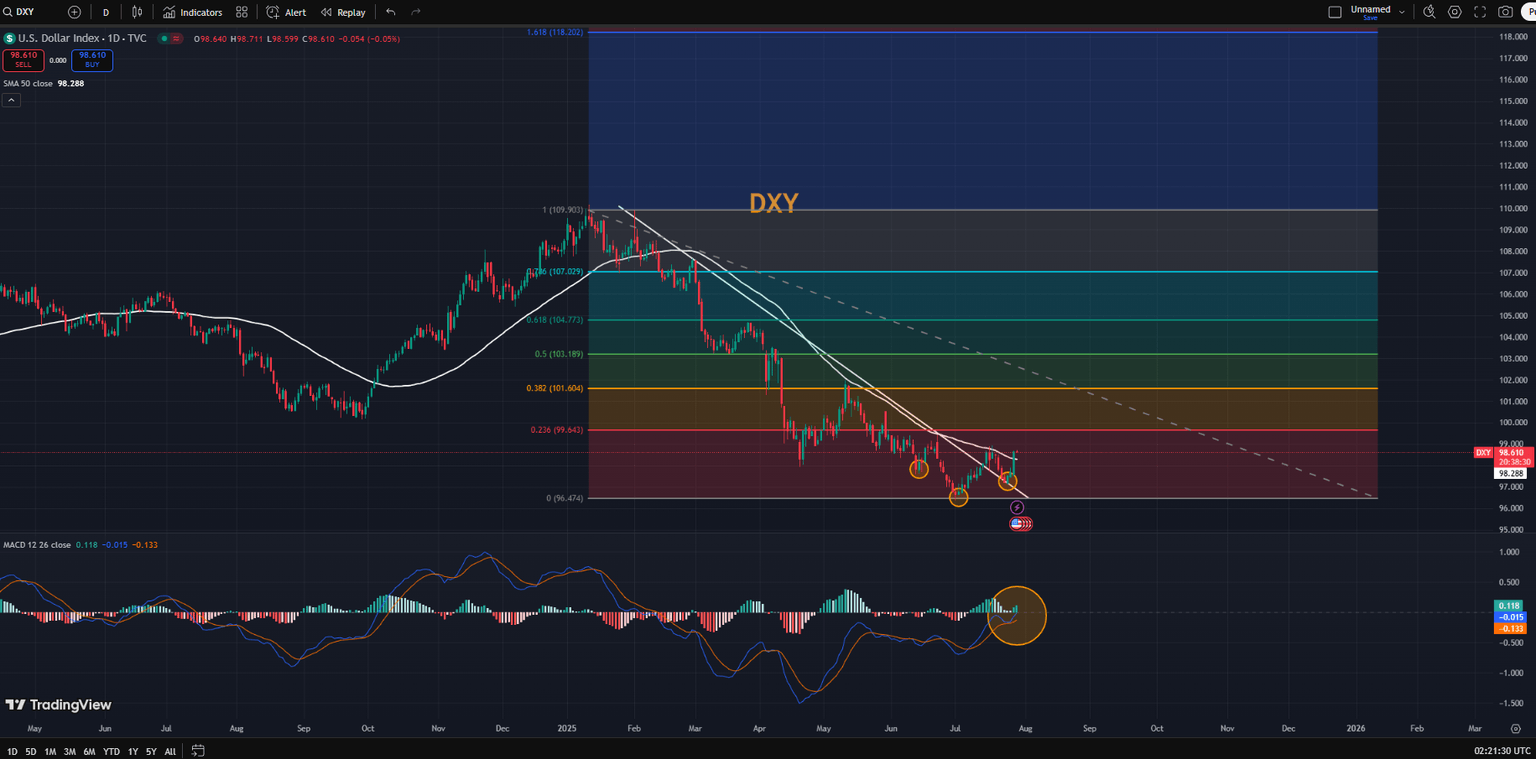
Chart 1 – The US Dollar Index (DXY), daily
Source: TradingView as of 29 July 2025
Yesterday’s rally saw the index break above resistance at the 50-day moving average. In the longer term, the DXY appears to have broken out of the descending trendline on 14 July, indicating a potential continuation of the rebound after consolidating near the recent support level at 97. A head-and-shoulders bottom pattern is also emerging, with the neckline potentially aligning with the 38.2% Fibonacci retracement level at 99.62.
The MACD is showing signs of a bottom reversal and is approaching mid-line resistance. A bullish crossover may suggest that the DXY is poised to enter a sustained upward trend.
Conversely, a decisive break below the monthly low of 96.62 could signal further downside risk.
Bearish divergence appears in EUR/USD
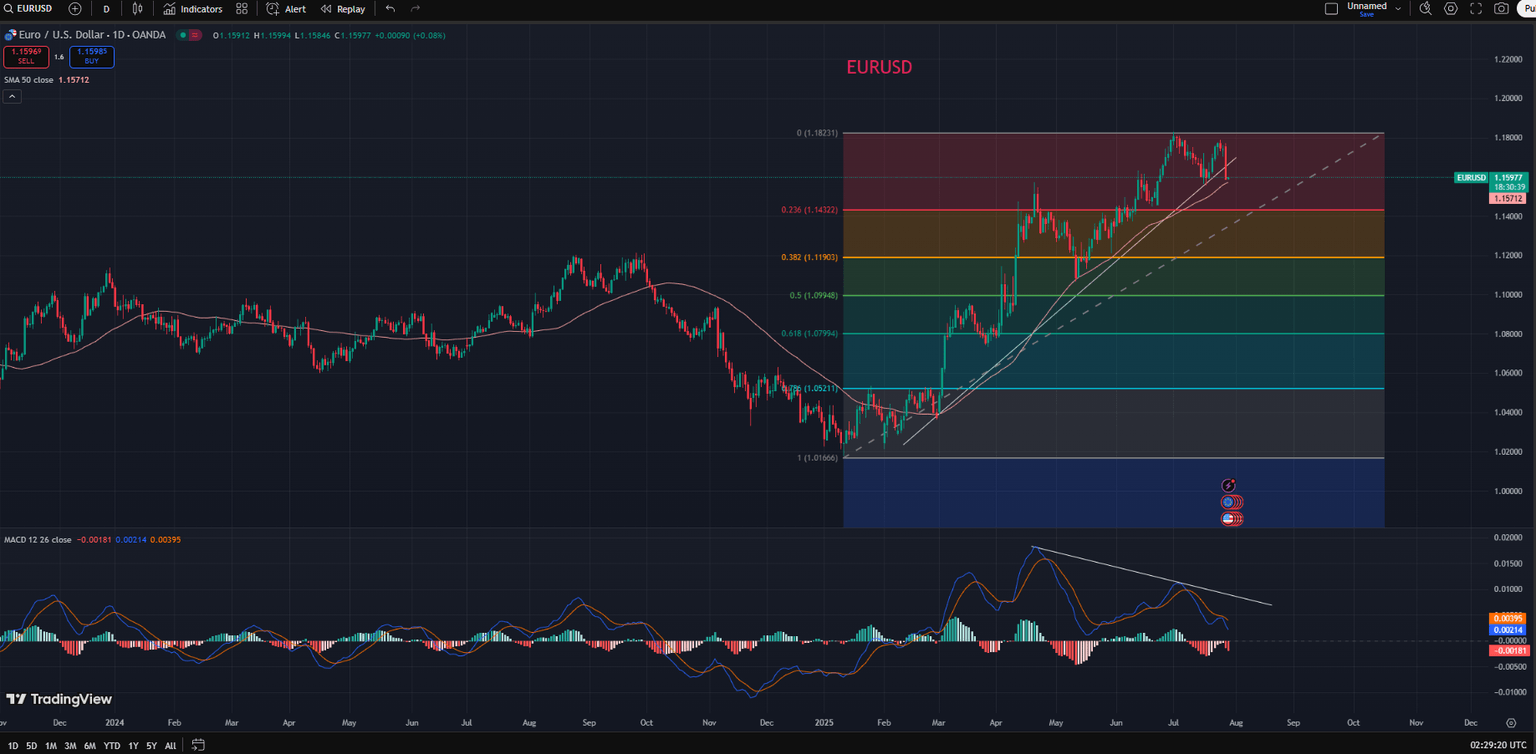
Chart 2 – EUR/USD daily
Source: TradingView as of 29 July 2025
The pair has formed a potential bearish divergence with the MACD, where the indicator is trending downwards while the price continues to move higher. This pattern typically signals that the instrument may have peaked and could be poised for a reversal. Immediate support is likely at the 50-day moving average, around the current price of 1.16. A breakdown below this level could lead to a further decline towards the 23.6% Fibonacci retracement at approximately 1.1430, followed by the 38.2% level near 1.1190.
On the flip side, a breakout above the recent high of 1.1830 could see the pair push even higher.
Author
Tina Teng
Independent Analyst
Tina was a Market Analyst at CMC Markets from 2015 to 2024, providing client education, market commentary, and media presentations. She specializes in technical analysis and market fundamentals.