The party isn’t over, but oracle just dimmed the lights
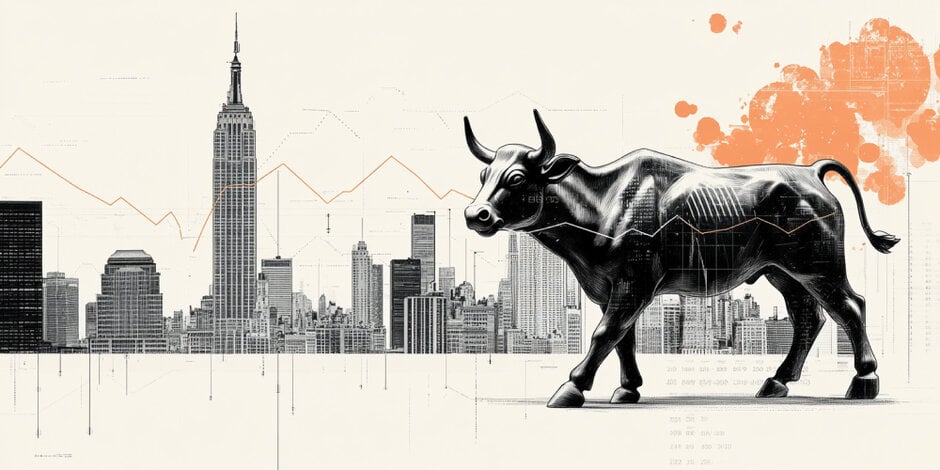

The melt-up finally blinked. After a series of all-time highs spurred calls for a breather amid signs of buyer exhaustion, the S&P 500 began to feel like a bar that had stayed open far too long. It was 3 a.m. on Wall Street — lights low, laughter loud, traders still ordering one more round even as the bartender started wiping the counter. Everyone knows that feeling: the night’s been good, the profits better, and you convince yourself one more drink won’t hurt. It always feels like the smart choice to stay — until the lights come up and you realize the hangover’s already waiting outside.
The first crack in the mood came when the Oracle whispers started making the rounds. Memos, screenshots, half-redacted spreadsheets began flying across trading desks — a kind of digital bar gossip that spreads faster than anyone can trace. The story wasn’t flattering. Oracle’s much-hyped AI cloud business, once sold as the champagne engine of this leg of the rally, was running on razor-thin profit margins — just 14 cents on the dollar, by the leaked math. Worse, there was a lag between when Oracle built its shiny new data centers and when customers actually began paying for them. No one could quite explain the gap, or how long it might last.
And in a market priced for perfection, any delay in cash flow — even a temporary one — feels like the bartender calling “last call.” Traders didn’t wait for clarification; they simply started easing out of their positions. The Oracle story didn’t crash the party, but it definitely sobered it. The same screens that had been glowing neon green all month began to fade into softer hues. The chatter grew cautious. Everyone knew what was happening, and the room got quieter. The energy shifted from chase to check, from hunger to hesitation.
Underneath it all, the market’s oxygen—liquidity—is slowly thinning. U.S. bank reserves at the Fed just slipped below $3 trillion, down nearly $300 billion since summer. It’s not an official danger zone yet, but it’s getting close to the line Governor Christopher Waller once sketched at $2.7 trillion—the level he considered the lower edge of “ample.” That number now hangs in the back of every trader’s mind, like the clock on the wall of a bar where nobody wants to admit it’s almost closing time.
The Fed, meanwhile, keeps topping up the punch bowl. Powell insists rate cuts are needed to cushion a “creaking” labor market, but financial conditions are already as loose as they’ve been in three years. Credit spreads are tight, valuations stretched, and optimism baked in. The paradox is glaring: the Fed’s easing is meant to soften a landing that hasn’t even begun, while at the same time inflating every asset in sight. It’s a high-wire act in a wind tunnel—impressive while it lasts, but one wrong step and balance disappears.
The bond market senses it. Long-end yields have been climbing like ivy up the walls, slow but unstoppable. Traders who once treated Treasuries as safety now trade them like equities—buying fear, selling calm. And as liquidity keeps draining, the market’s foundation feels a little less like bedrock and a little more like glass.
Then there’s gold—the one asset that doesn’t need the music to keep playing. Futures sliced clean through $4,000, and spot prices nearly matched it. It’s not euphoria driving it; it’s awareness. Gold’s rally is the quiet sound of traders hedging against their own exuberance—a hedge against the notion that balance sheets and promises can expand forever without consequence. Central banks keep buying, as if they too sense that every era of abundance eventually needs its reckoning.
So the melt-up hasn’t ended; it’s just sobered up. Oracle’s margins were the first flicker, Waller’s reserve line the second, gold’s glow the third. Somewhere between Powell’s cuts and the market’s thirst for more, traders realized they’ve been dancing on thinner ice than they thought.
The music’s still playing, but it’s softer now. The laughter’s still there, but it trails off quicker. And in the corner of every trading floor, there’s that unspoken understanding—the hangover hasn’t arrived yet, but it’s already on its way.
Author
Stephen Innes
SPI Asset Management
With more than 25 years of experience, Stephen has a deep-seated knowledge of G10 and Asian currency markets as well as precious metal and oil markets.

















