The impact of economic indicators and global dynamics on the US Dollar

The April employment report delivered a mixed bag of results. Job creation fell short of expectations, unemployment figures rose, and wage growth remained subdued. This data sets a potentially dovish tone for the upcoming statements from key Federal Reserve officials. The expectation of a softer stance on monetary policy could give US dollar bears a reason to rally. However, the currency might see some consolidation in the short term, especially with pivotal US inflation data on the horizon next week. Furthermore, unexpected currency movements in Asia and evolving market sentiments are shaping a complex backdrop for the dollar.
The fundamentals impacting the US Dollar
Recent labor market data suggest a cooling economy. The disappointing job creation and rising unemployment hint at a slackening demand for labor, which, coupled with subdued wage growth, could signal a slower economic trajectory. This development has led investors to expect a potentially dovish pivot from the Federal Reserve. If the Fed adopts a more cautious approach, it could reduce the likelihood of near-term interest rate hikes, thereby pressuring the dollar downwards.
Moreover, international factors also play a crucial role. The surprising underperformance of the Yuan, despite China's efforts to curb excessive currency weakness and promote growth through supportive policies, reflects the complex interplay of global economic forces. This situation illustrates the nuanced dynamics influencing the dollar. The market's response to these developments, including a recalibration of rate-cut expectations previously priced in, underscores the sensitivity of the US dollar to domestic economic shifts and international monetary flows.
Technical outlook
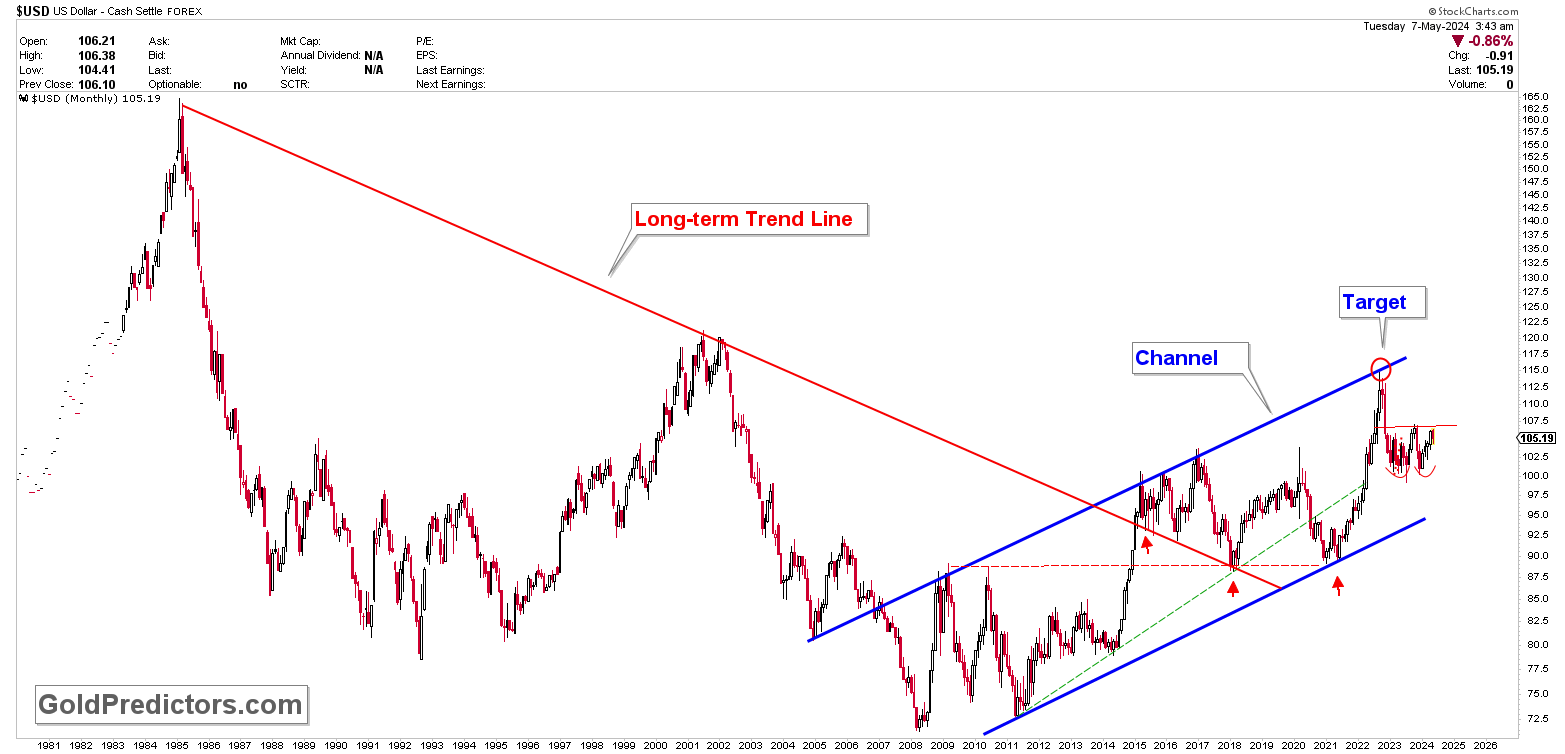
From a technical perspective, the US dollar presents an interesting scenario. Analysis of the monthly chart indicates that the dollar is trending upward within a defined channel, suggesting a continuation of its recent ascent. Despite breaking a long-term bearish trend line, the currency's trajectory points to sustained growth until a clear top formation is confirmed. Last week's drop, aligning with the neckline of a double-bottom pattern, appears to be a normal retracement within a larger bullish context. This pattern suggests that while the dollar may face short-term pullbacks, its fundamental upward trend is likely to persist in the medium term, barring significant economic upheavals.
Conclusion
In summary, while the US dollar faces potential headwinds from a softer Federal Reserve stance and mixed economic signals at home and abroad, the technical indicators suggest a continuing upward movement. The interplay of dovish policy expectations, influenced by domestic labor market trends, and international currency dynamics will be crucial in shaping the dollar's path forward. Investors and market watchers may stay alert to unfolding economic data and the Fed's communicative cues, which will be instrumental in setting the market tone for the coming months. As the landscape evolves, the dollar's journey remains a focal point of interest amidst a backdrop of global economic uncertainty.
Unlock exclusive gold and silver trading signals and updates that most investors don’t see. Join our free newsletter now!
Author

Muhammad Umair, PhD
Gold Predictors
Muhammad Umair is a financial markets analyst and investor who focuses on the forex and precious metals markets.